 Eurasia Press & News
As Damascus enters the US-led coalition against ISIS, its relationship with Syria’s Kurds, America’s longstanding ally, remains fraught with distrust
Syria became the 90th country to join the US-led multinational coalition against the Islamic State (IS) following interim president Ahmed Al-Sharaa’s cordial meeting with US President Donald Trump in the White House on 10 November.
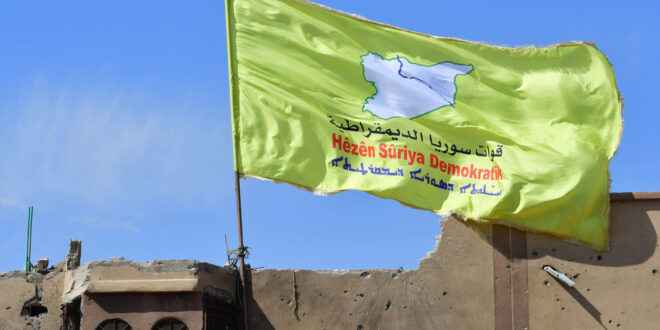
While the move will likely expand military coordination between the US and Syrian government, Damascus remains at odds with America’s longstanding ally, the Kurdish-led Syrian Democratic Forces (SDF), which controls and governs northeast Syria.
Joshua Landis, Director of the Centre of Middle East Studies and the Farzaneh Family Center for Iranian and Persian Gulf Studies at the University of Oklahoma, outlined how Al-Sharaa’s trip had three “main objectives”.
These are lifting the Caesar Act sanctions, enlisting Trump’s support for limiting Israel’s “encroachment on Syria’s sovereignty,” and convincing Washington to ditch the SDF as its primary counter-IS partner.
“Al-Sharaa is counting on the US pressuring the SDF to integrate into the Syrian military on terms favourable to Damascus,” Landis told The New Arab. “Ultimately, regaining control over Syria’s oil and gas wells in the northeast will be key to Al-Sharaa’s plans for economic revival.”
In the more immediate term, Syria’s coalition membership will facilitate greater cooperation between the Syrian and American militaries. While Damascus has already cooperated with the US military on at least five counter-terrorism operations, that cooperation has so far proven limited.
“US Central Command does not trust the Syrian military to participate in the actual raids,” Landis said. “It will take time to train the Syrian military and build trust between the commanders and men at all levels.”
Conversely, the SDF have fought IS alongside coalition forces for over a decade and were essential for combating and destroying the Syrian part of IS’s self-styled caliphate, sacrificing 11,000 male and female fighters to do so.
Deep distrust
Damascus accused the SDF of killing two government troops and injuring others in a 19 November attack in the Raqqa countryside. The SDF said it targeted sites used by IS for launching drones against them in government-held locations.
On Saturday, the Kurdish-led group also said it responded to attacks on their positions in eastern Deir az-Zour province by government-affiliated groups.
Landis cited the SDF accusation as demonstrative of the “abysmal level of distrust” between the two sides.
It’s unclear if Syria’s admission into the US-led coalition can resolve this ongoing dispute, avert more dangerous clashes like these, and build trust between the two sides.
The SDF counter-terrorism units are American-trained. They are more professional and have greater combat experience against IS than the forces in the new military’s current rank-and-file.
Abdi already suggested that these specialised forces can combat IS across the whole of Syria for the first time following their integration into the state army as units. Al-Sharaa has insisted that the SDF fully dissolve and rejoin the army individually. The SDF insists its personnel should retain their unit structures inside the new military.
Clashes like those on 19 November, along with other underlying issues, make this much easier said than done.
“There’s a lot of tensions and also worries that Damascus could attempt to spark an uprising in SDF-held, Arab-majority areas of Raqqa and Deir ez-Zour,” Wladimir van Wilgenburg, a freelance journalist and analyst specialising in Kurdish affairs and co-author of Accidental Allies: The US–Syrian Democratic Forces Partnership Against the Islamic State, told TNA.
The SDF, he explained, wants their units preserved and “untouched” during any integration, and for some of their commanders to be given positions in the new army.
“They have sent the names of several people to Damascus as suggestions,” Wilgenburg said. “Also, they want to keep the female units intact.”
“As the clashes in Raqqa show, it’s risky,” he added. “But now the US-led coalition is getting involved to calm down these tensions and has visited the area of the (Raqqa) incident.”
Centralisation vs. decentralisation
While the SDF and its commander-in-chief, Mazloum Abdi, agree in principle to absorbing their forces into the new national military, they demand decentralisation for Syria and greater rights and recognition for Syria’s ethnic and religious minorities. On the other hand, Al-Sharaa has staunchly pushed for firm centralisation.
Landis noted that the SDF, and Syrian Kurds in general, have “little or no faith in Al-Sharaa’s men,” given their previous experiences with them during the civil war.
“The (post-Assad) massacres carried out by Syrian forces in the Alawite and Druze regions only deepened the distrust of the Kurds for Al-Sharaa’s forces,” he said.
“Integration of the SDF into the Syrian military will only be carried out smoothly if Al-Sharaa accepts a large degree of federalism or decentralisation, something he says he will not do.”
SDF chief Abdi visited Damascus on 10 March and signed an agreement with Al-Sharaa to integrate his forces and affiliated governing institutions into the government by the end of 2025. However, disagreements over centralisation, among other fundamental issues, persist.
“Abdi is sticking to his guns about decentralisation,” Landis said. “Much will depend on America’s stand on the issue.”
“Ambassador Thomas Barrack has said that the US doesn’t believe in federalism for Syria, but he also walked that statement back after the massacre of the Druze in July, an event which spooked the Kurds.”
The Syria analyst also pointed out that the Trump administration appears divided on the Kurdish issue.
“The Pentagon and counter-terrorism authorities may not be as convinced as Ambassador Barrack that President Al-Sharaa is ready to take on the job of counterterrorism,” he said.
“The Pentagon placed substantial money in its new budget for the SDF, which suggests that it is not ready to abandon its alliance with the Kurds just yet.”
KRG mediation
Turkey has warned it will take military action against the SDF if it doesn’t integrate into the army on time.
Abdi has consistently struck a conciliatory tone. On 19 November, he attended and addressed the sixth Middle East Peace and Security Forum in Duhok, Iraqi Kurdistan.
Wilgenburg, who attended that event, described it as “very successful,” noting that Abdi expressed his hope to meet with Turkish officials and reiterated that the SDF has no problem with Ankara nor poses any threat to either it or Damascus.
“But so far, Turkey hasn’t accepted any meeting with the SDF,” he said, noting that members of Turkey’s governing AKP and parliament left as Abdi addressed the forum.
Abdi’s presence in Duhok also indicated that the Kurdistan Regional Government (KRG) in Iraqi Kurdistan’s capital, Erbil, could play a diplomatic role in resolving this.
Wilgenburg highlighted the KRG’s “strong relations” with Turkey. And while its relations with Damascus are not as close as with Ankara, it still has ties that could make it an effective mediator.
“Syrian government foreign ministry officials were invited to the Duhok forum,” he said. “Also, there was a forum in Erbil where one official from the Syrian government spoke. And (Iraqi Kurdistan Region) President Nechirvan Barzani met with Syrian government officials.”
Mohammed A. Salih, a non-resident senior fellow at the Foreign Policy Research Institute, believes the KRG is in a “unique position” to play a mediating role alongside Washington.
“The KRG is trusted by some of the key stakeholders, including Turkey and the Syrian Kurds broadly speaking, including the SDF, which has had some tensions in the past with the KRG’s dominant party, the KDP,” Salih told TNA.
“Even though it is not clear how Damascus would react to such mediation, given past high-level contact between al-Sharaa and KRG leaders after Assad’s fall, the KRG could play a role in bridging the gap,” he said.
“However, this, first and foremost, requires Ankara and Damascus to show some concessions on their maximalist, anti-decentralisation positions,” he added.
“That would allow them to meet halfway with Syrian Kurds, led by the SDF.”