 Eurasia Press & News
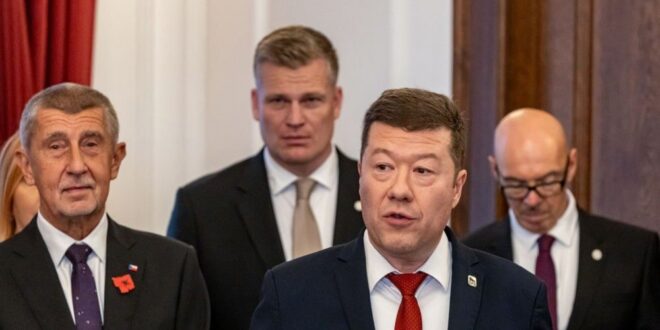
Even before prime ministerial hopeful Andrej Babis submitted his proposed ministers to the president for approval on November 26, the coalition that the populist billionaire had put together following the October general election was already triggering street protests and prompting worries within Czech civil society.
When the division of ministries between Babis’s populist ANO movement and its two coalition partners – the far-right Freedom and Direct Democracy (SPD) party of notorious ‘Czexit’ advocate Tomio Okamura and the staunchly anti-green Motorists for Themselves party – was first announced, it sparked one of the largest environmental protests in recent years, with over 5,000 rallying in front of the Prague Castle on October 19 against the potential nomination of a member of the climate-change-denying Motorists to head up the Environment Ministry.
Civil society’s fears grew after the drafting of the coalition’s program, published in full by Czech Radio on October 31, which sets out the priorities for the incoming government over the next parliament. Most of the document reflects ANO’s clear focus on domestic issues, with an emphasis on populist handouts and increasing wages in the public sector. But further down the list are the kinds of policies and rhetoric more associated with the far right: resistance to migration, revision of green policies, opposition to the EU’s Green Deal, and the targeting of non-governmental organisations (NGOs)
Among the plans is the introduction of a registry for civil organisations that receive public funding under the slogan an “end to political NGOs”; forcing NGOs to declare any “political activity funded from abroad”; and preventing the use “of public money for political activism”.
“In this way, the state is creating an enemy out of a sector which has no intention of entering confrontation,” Pavel Havlicek, senior analyst at the Prague-based Association for International Affairs (AMO) think tank, tells BIRN.
Havlicek explains that the targeting of NGOs is “something which runs throughout the document” the three parties agreed on, even though it lacks any basis in Czech legislation. Furthermore, the “categoric misinterpretation” of NGOs’ standing is taking place together with “overstating their role in connection to public resources”.
Radek Kubala of the Re-set environmental analytical platform and one of the co-organisers of the October demo at Prague Castle fears that the Babis-led coalition will adopt similarly aggressive rhetoric and attitudes towards NGOs as the populist governments of Hungary and Slovakia have done since coming to power. In Hungary and more recently in Slovakia, the authorities have targeted the NGO sector, particularly those involved in anti-corruption, by putting pressure on their operations through stifling bureaucratic measures and spurious investigations, such as against the Hungarian branch of Transparency International and the independent media outlet Atlatzso.
Kubala speculates that the emerging Czech ruling coalition could be setting the stage for “the possible labelling of NGOs as foreign agents – because I don’t know how else to understand the program document,” adding that NGOs could be targeted “by verbal as well as economic attacks”.
Lessons from Slovakia
Despite the rhetoric in the program document, there is some hope that the more moderate and less ideological ANO party will be able to tame its radical allies to some extent.
Havlicek believes that Babis will be inclined to avoid controversies that would openly put his government at odds with the EU and will try to avoid any closer scrutiny by the European Commission and the media in general by striking a more pragmatic tone.
However, the nomination of the Motorist MP Filip Turek as environment minister is reminiscent of the situation in Slovakia, where a nominee of the ultranationalist Slovak National Party (SNS), Tomas Taraba, was put in charge of the Environment Ministry. Since his appointment, Taraba has faced widespread criticism and protests for overseeing the firing of environmental experts, the increased hunting of bears and wolves, more illegal logging, and the shrinking of national park areas in the Tatra mountains.
Taraba was also one of the first foreign politicians whom Babis met shortly after being tasked by President Pavel on October 27 with forming the next Czech government. “We have the same view on the rejection of the tightening of emission norms for industry,” Babis told the media after their meeting, during which both politicians voiced their opposition to the EU’s ETS2 emissions trading system.
Kubala highlights how the looming takeover of the Czech environmental portfolio by the Motorists “reminds me of the first SNS nominee” to the same post in Slovakia, the trigger-happy nationalist Rudolf Huliak, whom the then-Slovak president Zuzana Caputova declined to appoint because he “did not recognise the scientific consensus on climate change.”
Czech President Pavel is still reportedly refusing to accept the nomination of Turek to the government on the basis of past, but now-deleted, social media posts that were filled with antisemitic, xenophobic and homophobic abuse. Turek has denied authorship of some of them and claimed their publication was politically motivated to keep him out of the next Czech government.
Like the ultranationalists in Slovakia, the Motorists face criticism that their real aim is to serve as a political vehicle for the powerful energy companies in the country, which in the Czech case include the coal oligarch Pavel Tykac, who is a key donor of the right-wing Vaclav Klaus Institute (IVK), where the Motorist leader, Petr Macinka, worked as a spokesman.
Kubala describes Macinka as “a man with connections to big business, who at the same time denies scientific facts about the climate crisis and vulgarly threatens ecologists.”
Slovak battlefield as a warning for Czechia
Babis has also already met with Slovak Interior Minister Matus Sutaj Estok to discuss reviving the Visegrad Group (V4) of Central European countries and adopting a common front against EU migration policies. Sutaj Estok, the conservative leader of Fico’s key coalition ally, the center-left Hlas-SD party, is known for his strong anti-immigration stance.
Havlicek also highlights how Babis’s comments on ending Czech aid to Ukraine out of the state budget were “reminiscent of the situation in Slovakia” soon after Fico’s return to power in the autumn of 2023. Fico’s government axed state military aid to Ukraine, though at the same time has allowed commercial military exports to Ukraine to thrive.
“Fico and Taraba & Co. have been successful at creating conflict… and pointing fingers” at perceived enemies like Brussels, Ukraine or the liberal opposition, explains Dana Marekova of the Climate Coalition Slovakia, who notes their radical rhetoric largely succeeds because of the “non-standard media” operating environment via which they can disseminate their messaging. Analysis has shown how Fico’s Smer party reached a more radical part of the electorate by spreading sensational and fear-mongering narratives using non-traditional outlets like Slobodny vysielac or the InfoWars-inspired InfoVojna.
Marekova adds that during her 25 years working in the civil society sector, she has not experienced such difficult conditions as those that exist today. “[It’s been] more than two years of attacks on NGOs in Slovakia [targeting] core activities” and the very essence of the NGO sector’s public involvement as it has evolved worldwide since the 1960s, she notes.
Fico’s ruling coalition also pushed through novel NGO legislation with the slimmest of parliamentary majorities earlier this year. Although the legislation was watered down after criticism from the European Commission and in light of the difficulties Hungary ran up against with its Russian-style foreign agent bill, it introduces new requirements to file a transparency report and disclose financial information. Additionally, the legislation requires NGOs to provide information to third parties, which paves way for potential arbitrary bullying of NGOs, local analysts fear.
Lukas Diko of the Bratislava-based Jan Kuciak Investigative Centre tells BIRN that the legislation will add “a bureaucratic burden” on the affected organisations, and that it is aimed primarily at anti-corruption NGOs like the Via Iuris civic platform or Zastavme Korupciu (Let’s Stop Corruption) foundation, which have been instrumental in documenting some of the government scandals
Diko and Katarina Batkova, a lawyer with the Bratislava office of Via Iuris, agree that with the legislation Fico is aiming at “organisations critical towards the government”, but in practice NGOs active in the social, health and education sectors, as well as organisations providing services to pensioners and youths such as the Scouts, could be affected the most. However, Diko warns coalition MPs have already drafted an amendment to the Criminal Code that would mean journalists and online influencers could be charged with a criminal offence over any alleged “sabotage of political campaigns”.
“So far, the criminalisation of concrete persons like we see in Serbia is not taking place,” Batkova says.
Struggles in Serbia and the Western Balkans
AMO’s Havlicek points out that besides education, which the radical SPD and Motorists have made clear they want to see expunged of so-called “inclusion programs” focused on minority and handicapped pupils, another affected area is likely to be Czech international aid and development.
“We can see in this the goal of certain aides such as [ex-member of the European Parliament for the ODS party] Jan Zahradil,” who is known for his nationalist-conservative views and for advocating open ties with China and reviving the V4 alliance of four Central European countries, says Havlicek.
Zahradil currently collaborates with the Motorists as a senior expert on foreign policy issues, saying in a recent interview with Czech Radio that he is “looking for a position” with “influence on the forming of future Czech foreign policy.”
If the Motorists end up in charge of the foreign affairs portfolio, they could be in a position to implement major cuts to programs such as in the Western Balkans, Ukraine and the Caucasus, local NGOs fear. “[The Western Balkan region] is very connected to this and, in some respects, is in an even worse situation than Ukraine” if cuts are indeed implemented, Havlicek notes.
Marko Milosavljevic, professor of media regulation at the University of Ljubljana in Slovenia and a former member of the Committee of Experts on Media Sustainability (MSI-RES) at the Council of Europe, tells BIRN that while local NGOs in the Western Balkans will feel the negative effects of cuts in Czech development operations, some politicians in the region will benefit from them in other ways.
“Particularly right-wing politicians are very keen on importing models from their big brothers,” Milosavljevic notes, adding that imitation of Trumpist policies and rhetoric, such as the gutting of USAID and the recent actions against antifa movements, have been pursued by nationalist-conservative politicians in several parts of CEE as well as in Western Europe.
Serbia is a case in point, Milosavljevic observes, which has seen NGOs being targeting after a year of persistent student-led mass protests in Serbia, sparked by the November 2024 Novi Sad railway station tragedy, that have exposed “huge cracks in the current regime” of Aleksandar Vucic.
Aleksandra Sreckovic of the Belgrade-based CRTA media monitoring NGO describes the past year as a period when “the situation for media professionals has significantly deteriorated…, marked by a record number of physical attacks, growing police violence, and an alarming normalisation of verbal aggression by public officials.”
Reporters Without Borders has registered at least 89 physical attacks on journalists in Serbia since November 2024, with approximately half of those committed by police officers. The SafeJournalist platform registered a total of 238 incidents against journalists in Serbia in 2025, including 136 cases linked to the authorities. There was only one conviction, while 33 incidents went unreported amid a general distrust in the country’s institutions. Furthermore, many NGOs, including CRTA, have been targeted in police raids.
“If the EU cannot constrain Vucic, then tensions could rise further,” Milosavljevic warns, claiming that the current situation regarding the media is even “worse” than during the years of autocrat Slobodan Milosevic, when several journalists were murdered.
The situation has been made worse by significant ownership changes that occurred on the Serbian media landscape, which independent analysts argue further strengthened the grip of Vucic’s Serbian Progressive Party on the media.
The sale of SBB, Serbia’s largest cable and internet provider, to the PPF Group and UAE government-controlled e& PPF Telecom Group, “and the parallel acquisition of key media distribution assets by state-owned Telekom Srbija, has resulted in a shift in market structure,” Sreckovic observes.
The United Group retained N1 and Nova S outlets, seen as some of the last vestiges of independent reporting on the student-led protests, but these “have been removed from their leading positions in cable lineups, and some providers such as Orion Telekom have removed them entirely from their platforms,” Sreckovic notes.
She also recalls the leaked audio recordings of a conversation between the CEO of Telekom Srbija, Vladimir Lucic, and the newly appointed CEO of United Group, Stan Miller, during which the two discussed Vucic’s demand to fire the director of United Media, Aleksandra Subotic.
“The level of uniformity”, says Milosavljevic, between the reporting of the state-aligned outlets with loyalist editors, including those at Pink, B-92 or Informer, is “very obvious”. Amid the absence of proper regulatory policy-enforcement, the state-aligned outlets have also been cited as using “vulgar language” and “obscenities” for some time, representing “one of the main reasons why this regime has survived for so long,” he adds.
Moreover, a pro-government organisation Center for Social Stability (CZDS) has produced at least 20 propaganda films targeting CSOs, students, professors and the media in a push to discredit the struggling civil society in Serbia.
Both Sreckovic and Milosavljevic also highlight the proliferation of pro-Russian disinformation amongst the state-aligned media in Serbia. Vucic also publicly endorsed Russia’s Foreign Intelligence Service (SVR) statement accusing the EU of “plotting a Maidan [revolution]” in Serbia, and independent media, such as FoNet, RAM Network or Vreme, of being “tools of EU subversion”.
Additionally, “Telekom Srbija established a number of outlets abroad,” including in Bosnia and Herzegovina, Croatia, and Slovenia. Given one is an EU candidate country and two are EU member states, Milosavljevic argues that the Serbian regime’s control of media operations inside the EU has now become “an EU problem”.
Hope amid the despair
Milosavljevic believes the European Commission is finally starting to pay more attention to the developments in the eastern parts of the EU and its surrounding neighbourhood, especially since politicians such as Hungary’s Orban, Slovakia’s Fico and the winner of the recent Czech election Babis began publicly toying with the idea of what Milosavljevic refers to as “an Eastern European union which is supposed to have a different set of values.”
While pundits and observers have raised the prospect of Babis’s incoming government strengthening the Bratislava-Budapest illiberal axis, others point out that without Poland it lacks the heavyweight potential capable of disrupting EU policies
Across the region, those in civil society agree that the significance of applying EU resources in this area has increased substantially in light of the attacks against the NGO sector unleashed by politicians following a nationalist-conservative playbook.
Despite the developments of the past two years under Fico’s government, Batkova also points out that NGOs in Slovakia “have come together more”, which she is unsure would have happened “under normal conditions.”
Moreover, Batkova, a lawyer by training, says she wouldn’t be surprised if the challenges filed against the Slovak NGO legislation with the country’s Constitutional Court result in a partial striking down of the bill.
Batkova also thinks that “compared to Hungary”, the Slovak government “faces more pressure” and “more willingness” from the public to push back against the legislative measures Fico and his officials are using to target the NGO sector.
In Serbia, where local NGOs face arguably the most hostile working environment, the student-led protests have breathed new life into the population and, despite the odds, managed to connect with other parts of society.
A 38-year-old Belgrade resident Ida Radovanovic tells BIRN that she could not sit idly by and watch the protests. “The student movement continues to remind us of ordinary human values,” she says, pointing out that “despite the hopelessness, people still come out to protest.”
“I am getting to know my country better, empathising,” Radovanovic says. “[There is] a shift from the victim mentality to what we can do… how can we maintain non-violent protests.”