 Eurasia Press & News
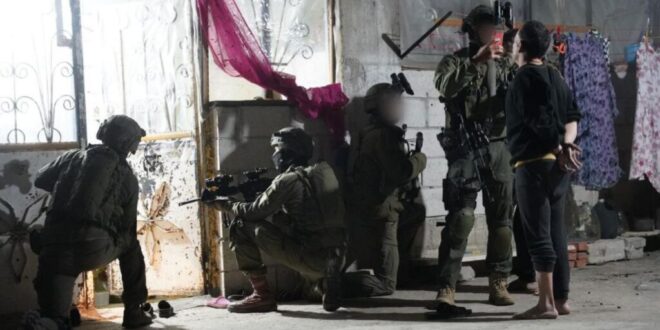
From the moment the Assad regime fell on 8 December 2024, Israeli intervention in Syria took an upward trajectory, in multiple forms, including air and ground strikes, house searches, checkpoints and arrests, land bulldozing, and the construction of gates and barriers.
Israel has also used certain methods to win over local residents, such as offering food aid.
Enab Baladi attempts in this report to provide a panoramic overview of the main features of the Israeli incursion, its impact on the population, and a reading of where the file might be heading in light of the facts on the ground.
Strikes and casualties
Enab Baladi documented 830 Israeli air raids, 15 artillery bombardments, a single airdrop operation, and 175 flights by Israeli aircraft, including warplanes, helicopters, and reconnaissance drones.
The Israeli attacks destroyed the most important military sites in Syria, including military airbases, depots and squadrons of aircraft, radars, military signal stations, weapons and ammunition depots, scientific research centers, air-defense systems, an air-defense facility, and warships.
Enab Baladi documented the killing of 76 people and the injury of 121 others as a result of Israeli operations in Syria.
Military bases
The area into which Israeli forces have pushed spans 346 square kilometers. Within it, Israel has established nine military bases, eight of them in Quneitra (in southern Syria near the occupied Golan Heights), including the Mount Hermon Observatory, the Teloul al-Homr area in the northern countryside, Qurs al-Nafl in Hadar (in northern Quneitra), the Jubata al-Khashab forest which contains a helicopter landing strip, al-Hamidiyah, al-Adnaniyah, Tal Ahmar al-Gharbi in Kudna, and the destroyed Quneitra city, in addition to a base at al-Jazira Dam in the Yarmouk Basin in western rural Daraa.
Intimidation mixed with inducement
Israeli forces set up an iron gate at the entrance to the village of al-Samdaniyah al-Gharbiya (in Quneitra), cutting the village off from its surroundings.
They also set up 260 temporary checkpoints and arrested a number of young men from the area. Some were held for several hours before being released, while the number of detainees who have not been released has reached 34.
Enab Baladi documented three incursions into Quneitra by Israeli settlers, who attempted to establish a settlement inside Syrian territory before the Israeli army forced them back into the occupied Golan.
Israel also used attempts to win over residents in the area by offering food assistance, which locals consistently rejected and burned.
Social harassment
Media activist Mohammad Fahd told Enab Baladi that the Israeli army prevents shepherds from reaching grazing lands through live fire incidents and arrests of herders, as well as seizing livestock for several days.
On the level of farmland, Fahd said Israeli forces bar residents from accessing their lands, and have bulldozed 7,000 dunums of vineyards, fig orchards, and olive groves.
Fahd added that the Israeli army has severed links between villages and increased the burden on residents, who are forced to take long detours that cost them more time and money to reach their workplaces.
According to Fahd, residents are calling on the Syrian government, the United Nations, the UN Security Council, and friendly states with global influence to pressure Israel to halt its incursion and return to the 1974 Disengagement Agreement.
Fahd, who hails from Quneitra, said that locals understand that the Syrian state is in a phase of reconstruction and institution-building, but that Israeli harassment has become a major burden on them. He noted that the government is trying to provide certain services in the area and directing some organizations to deliver assistance in order to encourage people to remain in their communities.
Clashes with Israeli forces
Most Israeli incursions in southern Syria passed without armed confrontation from residents, with the exception of two incidents. The first took place in the village of Koia (in the Yarmouk Basin in western rural Daraa) in March 2025, when several young men from the village clashed with Israeli forces that had pushed into the area.
After withdrawing from the village, the Israeli army shelled it with heavy artillery, killing seven people.
The second incident was in Beit Jinn (in the southwestern countryside of Damascus, near the occupied Syrian Golan Heights) in November 2025, where clashes erupted between the Israeli army and several young men from the village, wounding six Israeli soldiers. Israel then carried out shelling that killed 14 civilians and wounded 24 others.
Statements and positions
Israel has treated the disengagement agreement signed with the Syrian side in 1974 as void following the fall of the Assad regime, justifying its incursion with concerns over a security vacuum in southern Syria and fears that certain actors could use the area as a launchpad for operations against it.
The Syrian government, for its part, has condemned the Israeli incursion and described it as a violation of its sovereignty, calling for Israel to withdraw from the area and return to the disengagement agreement.
Meanwhile, most international positions have focused on condemning the Israeli intervention, describing it as a violation of Syrian sovereignty and a breach of international law, and warning that it is a step that destabilizes the region.
The “humanitarian corridor” blocks the deal
Despite some signs that hinted at an imminent security agreement between the two sides ahead of the UN General Assembly meeting last September, Israel’s demand to open a “humanitarian corridor” to Suwayda (in southern Syria) stalled the process, according to four sources familiar with the talks cited at the time by the Reuters news agency.
After that, reaching a solution became more distant. Syria’s transitional president, Ahmed al-Sharaa, said in an interview with the American newspaper The Washington Post on 11 November 2025 that any agreement with Israel would be conditioned on Israel withdrawing to the positions it held before the fall of the Assad regime on 8 December 2024.
Before that, on 16 November, the Israeli defense minister stated that the Israeli army would not withdraw from Mount Hermon, stressing that Israeli forces would remain in the “security zone” inside Syria.
On 17 November, the Israeli Public Broadcasting Corporation (KAN), citing unnamed sources, reported that Israel had rejected the Syrian president’s request to withdraw from all positions it captured after the fall of the Assad regime, and considered that the negotiations had reached an impasse.
Analytical reading of the file
Syrian researcher and journalist Firas Allawi said that what most struck him over the year of Israeli incursion in southern Syria was Israeli airstrikes on the capital Damascus and the targeting of vital Syrian facilities. He described that as an assault on Syrian sovereignty aimed at imposing Israeli conditions by force.
Political analyst Hussam Taleb, for his part, said that the incursion itself is what most stands out to him in this file. He believes that Israel could have seized the opportunity of the regime’s fall to achieve security and strategic objectives far more significant than controlling the buffer zone, which in his view has caused Israel to lose security rather than gain it.
Another point that caught Taleb’s attention was the American position rejecting the Israeli incursion, despite how weak and ineffective that position has been in constraining Israeli intervention.
In Taleb’s view, the United States wanted to reach an agreement, as that would serve strategic security interests not only for Syria but for the wider region more than what he described as “Israeli recklessness” in the incursions.
The Syrian political analyst believes that Israel’s goal is to partition Syria, stressing that such an outcome would be catastrophic for the entire region, not just for Syria, and that it will not be achieved in his view.
Taleb does not consider Israel’s security fears to be genuine, adding that the Israeli narratives about the presence of armed groups in southern Syria that threaten Israel’s security, such as certain militias known for their proximity to Iran, are no longer credible today.
Researcher and journalist Firas Allawi believes that Israel wants a long-term security agreement that would demilitarize the south and secure guarantees from the Syrian government that no hostile actors will enter southern Syria, or alternatively a peace agreement under which the Syrian government would commit to cooling the front with Israel both militarily and politically.
Allawi considers that Israel’s objectives are divided into two parts, one declared and one undeclared. The declared goal is a security agreement that clears the south of weapons, while the undeclared goal is a peace agreement on Israeli terms.
The Syrian researcher believes that the Syrian government has gone as far as it can in terms of political and diplomatic moves, in light of emerging from a war that has destroyed its military capabilities. He noted that while the government did not respond militarily to the incursions, it did not prevent popular responses.
For his part, political analyst Hussam Taleb argued that Israel has destroyed all of Syria’s military capabilities, something that, in his view, could not have happened without intelligence from the deposed president Bashar al-Assad about the locations of these weapons. He believes there was an understanding between the Assad regime and Israel on this matter.
Taleb believes that the Syrian government is not in a position to move toward a military confrontation given the weapons it has today, and that there was no room for a different outcome. He added that Israel has exploited the transitional phase the country is going through.
The analyst said that the Syrian government can exert pressure through diplomatic means via the United Nations and friendly states, in order to achieve progress on the file.
In Taleb’s view, the future of the file depends on two tracks, one Syrian and one international. The Syrian track lies in legal avenues and international courts, and in asking friendly states to work to halt the Israeli incursion. The other is reaching a security agreement.
Taleb thinks the path will ultimately lead to a security agreement thanks to American support, noting that Israel has started a second phase after failing to partition Syria, and is now seeking to secure certain gains before reaching an agreement. He believes the Syrian government will not compromise on its demand for a full Israeli withdrawal from the areas into which it has pushed since 8 December 2024.
From the perspective of researcher and journalist Firas Allawi, the future of the file is tied to Washington’s ability to manage the conflict and set rules of engagement between the two sides, and to the ability of each party to offer concessions to the other without undermining its standing in the eyes of its public.