 Eurasia Press & News
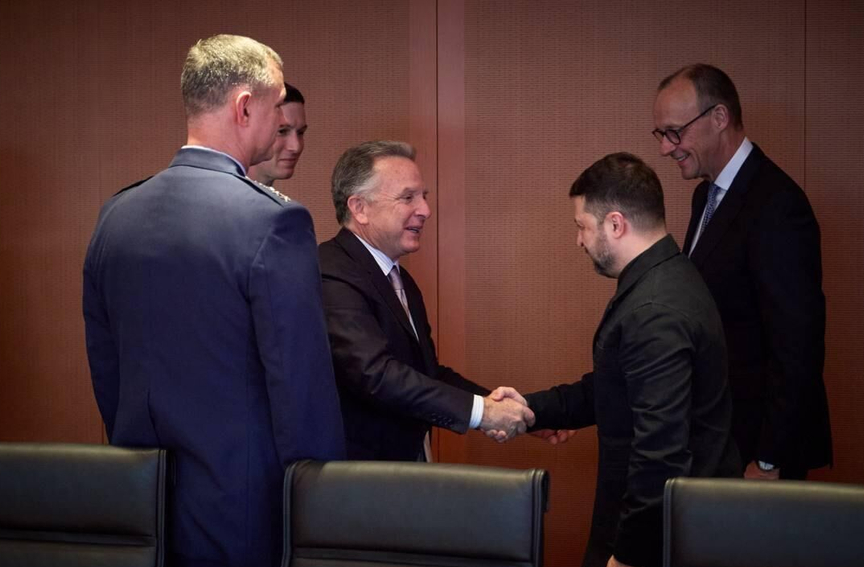
After negotiations between US, Ukrainian, and European representatives on a peace plan for the Russian-Ukrainian war concluded in Berlin, Vladimir Putin reiterated that his demands remain unchanged. Putin continues to insist that he wants all of Donbas, attempting to portray the situation as if he will eventually seize the territory (though, for some reason, Zelenskyy is currently recording videos in the supposedly captured cities). Voluntary withdrawal from Donbas is unacceptable for Ukraine, as it would put the entire left-bank part of the country at risk. The issue of future funding for the Ukrainian army and the country’s post-war reconstruction has also not been fully resolved, as the possibility of using frozen Russian assets remains uncertain (the working theory is that they should serve only as symbolic collateral for the 90 billion-dollar loan that EU leaders agreed to for Kyiv). Finally, the third, key question is what security guarantees from the West should look like, which would definitely prevent a resumption of aggression, but at the same time would not be presented by the Kremlin as a pretext for new escalation.
Evolution of peace plans
The first version of a 28-point peace plan for Ukraine, unofficially dubbed the “American proposal,” appeared in the media on November 20. As it later emerged , the document was a slightly edited set of provisions agreed upon by Kirill Dmitriev, head of the Russian Direct Investment Fund and authorized representative for negotiations with the United States, and Yuri Ushakov, President Vladimir Putin’s foreign policy aide, and passed on to Steve Witkoff, Donald Trump’s special envoy. The Witkoff-Dmitriev plan contained nearly all of the Kremlin’s maximalist demands, repeatedly stated and consistently rejected by the Ukrainian side.
The new version of the 20-point plan to end the war in Ukraine ( published in Ukrainian media) already differs somewhat from the previous document—it was this very document that was discussed in Berlin on December 14 and 15, 2025, during meetings between Trump’s son-in-law Jared Kushner and Witkoff with European politicians and President Volodymyr Zelenskyy. However, even this version can hardly be considered a major breakthrough—the main issues still seem unresolved. Here’s why.
Withdrawal of Ukrainian troops from the Donetsk region
The key issue in the current fighting is the line at which the parties are willing to stop. Russia’s position remains unchanged regarding its complete control over Donbas. Since the Luhansk region is already almost entirely occupied, the Ukrainian Armed Forces are considering a withdrawal from the Donetsk region without a fight.
The Insider has already provided a detailed overview of why the surrender of the remaining Donbas, along with a strip of “fortress cities” incorporated into a larger line of fortifications in the east of the country, poses a direct threat to the future defense of the entire left-bank part of Ukraine. The Dmitriev-Witkoff plan proposed making the abandoned territories a “demilitarized zone.” It also included a clause recognizing Crimea (and, presumably, Sevastopol, not specifically mentioned but an independent entity from both the Ukrainian and Russian perspectives), the Donetsk and Luhansk oblasts as “de facto” Russian territories, and freezing the line of contact in the Kherson and Zaporizhzhia oblasts (it is unclear whether this would be with or without recognition, and in what status).
Thus, the proposal remains to “trade” the remaining part of Donetsk Oblast under Ukrainian Armed Forces control in exchange for a halt to the Russian offensive in Zaporizhzhia Oblast and attempts to attack Kherson, as well as the withdrawal of Russian Armed Forces from regions not formally included in the Russian Constitution: Dnipropetrovsk, Kharkiv, Sumy, and, likely, Mykolaiv Oblasts. However, as a concession, the areas of Donetsk Oblast potentially abandoned by Ukrainian troops are proposed to be declared a “demilitarized zone,” where neither Russian nor Ukrainian Armed Forces will be stationed.
However, the Kremlin’s understanding of demilitarization is quite specific and is unlikely to be accepted by the Ukrainian side in this form. Yuri Ushakov’s comments already make it clear that the Kremlin plans to deploy units of the Russian National Guard and police there, which essentially amounts to handing over the territories to those same Russian security forces.
If the Russian National Guard is introduced into the units of the Donetsk region abandoned by the Ukrainian Armed Forces, “demilitarization” will not be possible.
Following Yevgeny Prigozhin’s mutiny, the Russian National Guard received the right to possess heavy weapons; some units are already receiving tanks, artillery, and mortars. Furthermore, numerous Chechen security forces, including those that participated in the initial stage of the “SVO,” are formally affiliated with the Russian National Guard . In other words, the presence of Russian National Guard troops in the “demilitarized zone” in Donbas will be largely no different from the situation that developed during the implementation of the Minsk agreements , when so-called “people’s militias” operated in separatist-held areas of the Donetsk and Luhansk regions.
According to a DeepState map , since the beginning of 2025, the Russian Armed Forces have captured approximately 2,500 square kilometers in the Donetsk region, but the Ukrainian Armed Forces still control over 22% of the total territory. Even with the current, very rapid pace of territorial advance, Russian forces are estimated to need approximately three more years to capture the entire region, unless the nature of the fighting changes radically and the Ukrainian army and state maintain their stability. Since time is the primary resource in the ongoing war of attrition , foregoing three years of attrition for the sake of a “demilitarized zone” without clear mechanisms for monitoring the deployment of enemy personnel and weapons there seems irrational.
At the current rate of advance, Russian troops will need three years to completely capture Donbas.
The provision recognizing Russia’s sovereignty over the territories of Ukraine effectively controlled by Russian troops raises particular questions. In its proposed form, it appears legally unenforceable and directly contradicts international law.
Limiting the number of Ukrainian Armed Forces
All known versions of the peace plans contain provisions limiting the size of the Ukrainian army. The Whitkoff-Dmitriev plan sets it at 600,000 troops. The 20-point plan sets it at 800,000 troops, which corresponds to the actual size of the Ukrainian Armed Forces (but not the Ukrainian Defense Forces, which also includes units of the National Guard, National Police, State Border Service, Main Intelligence Directorate, and Security Service of Ukraine).
Before the full-scale invasion, the Ukrainian army numbered just under 200,000. During the Istanbul talks in the spring of 2022, the Russian side demanded a limitation on the Ukrainian Armed Forces (UAF) to 85,000 personnel, the National Guard of Ukraine to 15,000 personnel, and the introduction of caps on the number of certain types of weapons: specifically, no more than 342 tanks, 1,029 armored combat vehicles, 519 artillery pieces, and 102 combat and support aircraft. It was also proposed to allow Ukraine to have weapons with a firing range of no more than 40 km.
Ukrainian representatives in Istanbul stated that the Ukrainian Armed Forces had a strength of 250,000 personnel and several times higher limits on weapon types: 800 tanks, 2,400 armored combat vehicles, 1,900 artillery pieces, and 160 aircraft. The maximum firing range of artillery and missile systems was proposed to be set at 250 km. The peace settlement options currently being discussed, as far as is known, do not even address the weapons inventory and effective range of the systems currently at the Ukrainian Armed Forces’ disposal.
The peace settlement options being discussed no longer include restrictions on certain types of weapons for the Ukrainian Armed Forces.
On the other hand, any restrictions on the quantitative and qualitative parameters of the Ukrainian army are meaningless without available resources for these purposes. Ukraine needs at least $60 billion in external financing for the period 2026–2027. European Commission President Ursula von der Leyen estimated Ukraine’s needs for the next two years at €135 billion. The cost of maintaining one Ukrainian serviceman (estimated for 2024) is 1.2 million hryvnias per year (almost $30,000 at the current exchange rate).
An army of 600,000 men would require $18 billion per year, while an army of 800,000 men would require $24 billion per year. These amounts do not include the costs of weapons, ammunition, logistics, and infrastructure. In peacetime, the cost of maintaining military personnel would naturally decrease (excluding various “combat” pay, compensation for injuries, etc.), but would still amount to tens of billions of dollars.
Until now, frozen Russian funds were considered the only likely source of funding for Ukraine’s large and well-equipped army. Memoranda of intent ( 1 , 2 , 3 ) for the supply of expensive weapons, such as 150 Swedish Gripen fighter jets, 100 French Rafale fighter jets, and American attack helicopters, were apparently based on these funds.
Apparently, it was planned (and Volodymyr Zelenskyy had already made a corresponding request to European countries) to at least partially pay Ukrainian military personnel from these funds. Moreover, frozen Russian assets were viewed as the main (if not the only) source of funding for other Ukrainian expenditure items, not just the defense budget.
The Whitkoff-Dmitriev plan, in turn, proposed channeling these funds toward Ukraine’s economic recovery (not the Ukrainian Armed Forces) and a joint US-Russian investment fund. As far as can be judged, the Berlin talks failed to reach a common position on this issue. European countries hesitated to touch assets, the confiscation of which would create a serious legal precedent and carry unpredictable risks. Furthermore, according to leaked documents, the US administration is fundamentally opposed to using frozen funds without the Kremlin’s consent.
Instead, Europe opted for a compromise. A decision was made to freeze these assets indefinitely, and Ukraine will be granted a €90 billion loan secured by these funds. However, this arrangement will almost certainly necessitate a return to the awkward question of the assets’ fate in the near future.
The only option for avoiding maintaining a large peacetime army in this case is to obtain reliable security guarantees. But these are even less clear.
Security guarantees for Ukraine
The original Whitkoff-Dmitriev plan spoke of vague “robust security guarantees.” Later, Axios, a publication close to Dmitriev, clarified that the proposal included additional guarantees “in the spirit” of NATO’s Article 5 (which provides for a collective response to aggression) for 10 years. NATO membership alone would have been the best security guarantee, but the 28-point plan explicitly stated that the decision to renounce NATO membership would be enshrined in the Ukrainian Constitution.
According to media leaks , the parties agreed in Berlin to a “platinum standard” of guarantees, similar to Article 5, which is proposed for a vote in the US Congress. However, details about the mechanisms and content of these agreements are still unknown. Another option for effective and convincing (and therefore completely unacceptable to the Kremlin) security guarantees is the deployment of troops from guarantor countries on Ukrainian territory. The 28-point document included a compromise provision on “fighter jets in Poland,” apparently referring to the “coalition of the willing” plan to control Ukrainian airspace without a physical presence on the ground.
A “platinum standard” of security guarantees was agreed upon for Ukraine in Berlin.
European negotiators confirmed plans to create a “multinational force” tasked with facilitating the modernization of the Ukrainian Armed Forces, controlling air and sea space, and monitoring the ceasefire. This is essentially a repetition of initiatives put forward back in the spring of 2025 (The Insider examined them in detail in a separate article ). Implementing them without US support will be difficult then, as it remains unclear what would compel Vladimir Putin to lift his objection to the participation of “NATO troops” in military-technical cooperation with Ukraine in any form (in Kremlin parlance, this is usually referred to as the “military development” of Ukrainian territory). Putin preceded a full-scale invasion with a demand for the “demilitarization” of Ukraine, and it is difficult to imagine that he would voluntarily agree to conclude this invasion with an official invitation for NATO armed forces to Ukraine.
Another important nuance concerns not Ukraine’s security, but global strategic stability. After Vladimir Putin and Donald Trump exchanged threats to begin preparations for nuclear weapons tests in early November, the 28-point plan included a provision to extend the Strategic Arms Reduction Treaty (START I), signed in 1991.
The current START-3 treaty expires in February 2026. So, unless this is a technical error (which is entirely possible, given that the document was drafted by amateurs), then returning to the START-1 treaty would mean an increase (not a decrease) in the number of nuclear warheads in the arsenals of Russia and the United States.
In any case, the regional conflict would have acquired a global dimension—nuclear arms control—under such a scenario. This issue has now been addressed in a separate document.
What’s the bottom line?
The parameters of a peace agreement under discussion in Ukraine must serve a single goal: ending the conflict and preventing its resumption in the near future. The key problem is this: the Kremlin’s demands for military restrictions on the Ukrainian Armed Forces are perceived in Ukraine itself and by its Western allies as maximalist, while Putin, as he explicitly confirmed during his “Direct Line,” views them as basic. Consequently, there is no room for convergence.
Following the talks in Berlin, American officials stated at a briefing that 90% of the contentious issues had been resolved, but this clearly did not affect the most important 10%: the fate of Donbas, the quantitative and qualitative parameters of the Ukrainian Armed Forces, and security guarantees from allies.
In any case, a necessary but in itself insufficient condition for any sustainable settlement includes reliable guarantees from Western allies – either financial (to maintain Ukraine’s independent defense potential) or military (to perform the deterrent function).
In the current outlook, the current situation promises a continuation of the most destructive military actions in Europe since World War II, which by mid-January 2026 will surpass the duration of the Great Patriotic War.