 Eurasia Press & News
Iraqi militias refuse to disarm following the top judge’s assertion that there is no justification for weapons outside state control.
Iran-aligned Iraqi armed factions have openly rejected demands to surrender their weapons to state control, directly challenging the authority of Iraq’s top judge and prime minister. This highlights divisions within the Shia political camp regarding state authority.
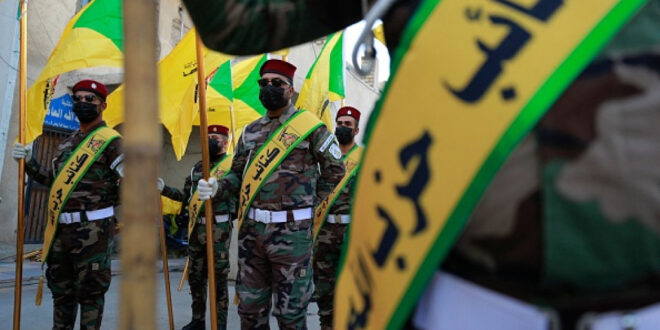
In a joint statement on Sunday, the Iraqi Resistance Coordination declared its factions’ weapons “sacred” and non-negotiable unless foreign forces withdraw and full sovereignty is achieved. This statement reaffirms their refusal to comply with government demands.
The statement followed remarks by Faiq Zidan, head of Iraq’s Supreme Judicial Council, who asserted that there is no legal or constitutional justification for the possession of arms outside official state institutions.
Zidan’s remarks came during a memorial ceremony on Monday marking the sixth anniversary of the killing of what Iraqi factions refer to as the “leaders of victory”—Iran’s Islamic Revolutionary Guard Corps Quds Force former commander Qassem Soleimani and former deputy head of the Popular Mobilisation Forces (PMF), Abu Mahdi al-Muhandis. Both were killed in a US air strike near Baghdad airport on 3 January 2020.
Zidan stated that Iraq stood “in loyalty and responsibility” to honour the sacrifices that were “not a passing event, but an enduring epic that shaped Iraq’s security and preserved its dignity”.
He stated that after military victories against ISIS, Iraq must focus on state-building, which requires respect for the law, unified decision-making, and restricting weapons to state institutions. He also added that limiting weapons to the state does not diminish past sacrifices, but ensures that those who fought in wartime uphold the law in peacetime.
Prime Minister Mohammed Shia al-Sudani also endorsed restricting weapons to state control, emphasising that this constitutes a sovereign Iraqi decision rather than a response to external pressure. He noted that the policy is central to the government program and aligns with guidance from Iraq’s top Shia religious authority, reflecting a unified state position.
The Iraqi Resistance Coordination, an umbrella organisation for Iran-aligned Iraqi armed factions, includes Kataib Hezbollah, Harakat al-Nujaba, Asaib Ahl al-Haq, Kataib Sayyid al-Shuhada, and Ansar Allah al-Awfiya. Kataib Karbala, Awliya al-Dam, and Qasim al-Jabbarin are affiliated with Kataib Hezbollah.
Many of these groups gained prominence following the January 2020 US air strike that killed Iran’s Quds Force commander Qassem Soleimani and PMF deputy head Abu Mahdi al-Muhandis. Since that event, they have conducted attacks on US and Israeli positions.
Observers note that the latest statement marks a reversal for groups such as Ansar Allah al-Awfiya, Asaib Ahl al-Haq, and Kataib Sayyid al-Shuhada, which previously supported limiting weapons to state control. Kataib Hezbollah and Harakat al-Nujaba continue to oppose this. The issue remains sensitive, particularly given Iraq’s ties with Washington. Linking disarmament to foreign troop withdrawal exposes divisions within the Shia camp.
Some analysts warn that this position undermines government authority and contributes to political gridlock. Iraqi political researcher Firas Elias wrote on X that the absence of a cohesive policy for restricting weapons has allowed factional rejection to persist, thereby increasing external pressure on Iraq.
In recent weeks, leaders such as Qais al-Khazali of Asaib Ahl al-Haq, Haidar al-Gharawi of Ansar Allah al-Awfiya, Shibl al-Zaidi of Kataib al-Imam Ali, and representatives from Kataib Sayyid al-Shuhada, all members of the Iraqi Resistance Coordination, have publicly supported restricting weapons to state control. This stance contrasts with the continued opposition from Kataib Hezbollah and Harakat al-Nujaba, who insist on maintaining the “path of resistance.”
US officials state that Washington continues to advocate for dismantling Iran-backed militias and has established conditions that bar armed factions from participating in the formation of a new Iraqi government, thereby increasing pressure on an already fragile political and security landscape.