 Eurasia Press & News
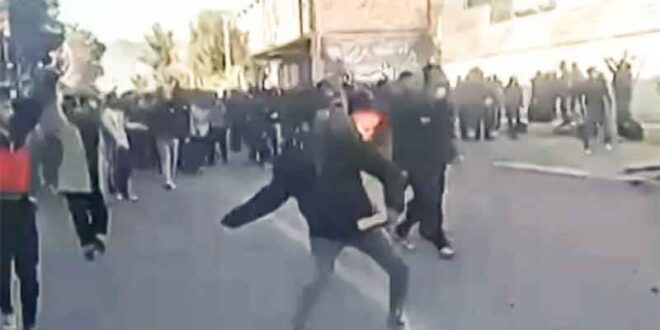
As of January 2026, Iran is confronting one of the gravest crises since the 1979 Islamic Revolution. A sharp collapse of the national currency, soaring inflation, declining oil revenues, and renewed U.S. sanctions have combined to trigger widespread unrest across dozens of cities and provinces. Protests have escalated rapidly, with clashes between demonstrators and security forces, closures of bazaars, and increasingly explicit calls for regime change.
Although President Masoud Pezeshkian, a self-described reformist elected in 2024, has promised economic reforms and dialogue, the protests show no sign of abating. The crisis has become a direct test of the Islamic Republic’s political and ideological foundations.
The JCPOA Era and the Return of “Maximum Pressure”
Between 2015 and 2018, Iran’s economy experienced relative stability following the Joint Comprehensive Plan of Action (JCPOA). Sanctions were eased, Iran was reconnected to the global financial system, and oil exports rose to approximately 2.5 million barrels per day. Major buyers, including India, resumed imports, and state revenues stabilized.
This equilibrium collapsed in May 2018 when the United States withdrew from the JCPOA under President Donald Trump and reimposed the “maximum pressure” sanctions regime. Iran’s oil exports fell sharply, and by 2019 India halted Iranian crude imports under U.S. pressure.
By 2025–2026, Iran managed to partially rebuild exports to around 1.5–1.8 million barrels per day, primarily selling to China through discounted prices, shadow tanker networks, and opaque financial channels. However, the global oil price decline in 2025—falling to around $60 per barrel—significantly reduced revenues, intensifying fiscal stress.
SWIFT Restrictions, Barter Trade, and the “Jahangiri Dollar”
U.S. sanctions effectively cut Iran off from the international banking system. Although Iran had briefly rejoined SWIFT after the JCPOA, post-2018 sanctions rendered conventional financial transactions nearly impossible. As a result, oil trade increasingly shifted to barter arrangements or yuan-based settlements, particularly with China.
To protect citizens from currency collapse, the government introduced a preferential exchange rate in April 2018—42,000 rials per dollar (4,200 tomans)—for essential imports such as food and medicine. This policy became known as the “Jahangiri dollar,” named after then Vice President Es’haq Jahangiri.
The system failed dramatically. Corruption flourished as politically connected actors accessed cheap dollars and resold them on the black market at much higher rates. Over time, the government phased out the preferential rate between 2019 and 2022, moving toward a more unified—though still fragmented—exchange rate system. By 2026, the rial had reached historic lows, accelerating inflation and public anger.
The Dominant Role of the IRGC
The Islamic Revolutionary Guard Corps (IRGC), originally established to protect the revolution, has evolved into a powerful parallel state. It controls extensive economic interests in construction, energy, telecommunications, and transportation, comparable to the business empire of Pakistan’s military. A substantial portion of Iran’s national budget flows directly or indirectly to the IRGC and its Basij militia.
Beyond domestic power, the IRGC manages Iran’s regional proxy network, including Hezbollah, the Houthis, and Hamas. Financial and military support to these groups—estimated historically at tens of millions of dollars annually—has drained resources at home, fueling public resentment as living standards deteriorate.
A History of Protest and the 2026 Uprising
Iran has witnessed repeated waves of unrest:
• 2009: The Green Movement following disputed elections
• 2017–2018: Nationwide economic protests
• 2019: Fuel-price demonstrations
• 2022: The “Woman, Life, Freedom” movement after Mahsa Amini’s death
Each was suppressed by the IRGC and Basij, often violently.
The current uprising, beginning in late 2025 and intensifying in January 2026, represents the largest mobilization since 2022. Initially driven by economic despair—currency collapse, inflation, unemployment—it rapidly turned political. Protest slogans now openly target the regime, with some demonstrators even calling for the return of monarchy, reflecting unprecedented ideological fragmentation.
Wilayat-e Faqih and Regime Resilience
At the core of the Islamic Republic lies the doctrine of Wilayat-e Faqih (Guardianship of the Islamic Jurist), which grants Supreme Leader Ayatollah Ali Khamenei ultimate authority over the state, military, judiciary, and media. Rooted in Shia theology as articulated by Ayatollah Ruhollah Khomeini, the doctrine asserts that in the absence of the Hidden Imam, a qualified jurist must govern to uphold divine law.
Ideologically, this framework sanctifies political authority, allowing opposition to be framed as opposition to Islam itself. Structurally, it centralizes power: the Supreme Leader appoints heads of the judiciary, armed forces, IRGC, state broadcasting, and the Guardian Council, which controls electoral eligibility and legislation.
This system enables swift repression during crises, sidelining elected institutions and reducing presidents to limited administrators. Culturally, clerical authority, religious foundations, and state propaganda reinforce loyalty, making the system resilient even amid economic collapse.
President Pezeshkian: Reform Amid Constraints
President Masoud Pezeshkian has attempted to defuse tensions by acknowledging the right to peaceful protest, promising investigations into security force abuses, and proposing subsidy reforms focused on direct cash assistance. However, he lacks control over the IRGC and security apparatus, and hardline institutions continue to block meaningful change. His role increasingly appears symbolic rather than transformative.
Can the Revolution Succeed?
The 2026 protests represent the most serious challenge to the Islamic Republic in decades. Economic collapse has united students, workers, bazaar merchants, and ethnic minorities. Reports of elite unease, calls for general strikes, and international scrutiny—including U.S. warnings against lethal repression—have increased pressure on the regime.
Yet the IRGC remains cohesive, and the Wilayat-e Faqih system has survived repeated crises. Whether this uprising leads to systemic change or ends in another cycle of repression remains uncertain. What is clear, however, is that Iran has entered a decisive and potentially historic moment, with its future hanging in the balance.