 Eurasia Press & News
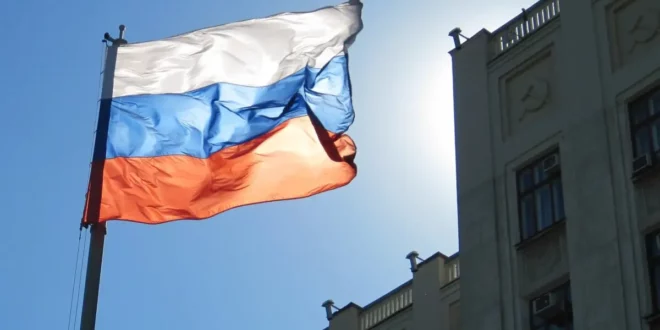
Russia’s influence in the South Caucasus has decreased in recent years. Well beyond Russia’s invasion of Ukraine and long-term trends, two factors in particular help understanding why things have changed
Russia’s invasion of Ukraine, Azerbaijan’s war with Armenia over Nagorno-Karabakh, and the authoritarian turn in Georgia have all contributed to reshape Russia’s role in the South Caucasus in recent years. Without discussing in detail the many facets of these momentous events, this article points at two broader dynamics that help explain Russia’s changed role in the region.
The South Caucasus: beyond conflict-centred foreign policies
The foreign policy of countries in the South Caucasus has long been conflict-centred. This gave disproportionate leverage and power to Russia. Now, this has changed: conflict is not any more the main foreign policy priority for either of the countries of the region. To the extent that conflict still matters, Russia is not any more a predominant part of the answer: it is not a credible security guarantor for Armenia, it does not represent a convincing deterrent for Azerbaijan, and it is effectively not depicted as a threat by the current government in Tbilisi.
In official statements, Georgia’s government still highlights that Russia is occupying part of the country, but Moscow is only indirectly framed as a menace: according to Georgia’s current leadership the real security threat comes from proximity with the West, which is supposedly pushing for Georgia to become a new battlefield in its conflict against Russia. There is some debate that Tbilisi’s sustained endorsement of Kremlin talking points is proof of Moscow’s renewed influence in the region, but arguably Georgia’s “active compliance” with the narratives of its northern neighbour is best understood by looking at domestic political dynamics and should not be taken as proof of Russia’s leverage. Indeed, conflict in Georgia has shifted from being a foreign policy issue to becoming primarily a domestic tool weaponised by the government against opposition forces to enact its authoritarian turn.
These developments have of course occurred in the shadows of Russia’s invasion of Ukraine, but they stem from the region itself, not from Moscow.
What’s different about Russia’s imperialism under late Putinism
Important changes in Moscow have also contributed to Russia’s diminished role in the Caucasus. This is best understood by asking what it was, really, that enabled Russia’s enduring hegemony in the region. The most straightforward answer is that Russia just cared more about the region than key competitors: it was not more powerful, it just cared more. Throughout the early post-Soviet decades, this was assumed to be a fact both locally and internationally, and indeed, this is what gave Russia a central role in post-Soviet conflicts in the region in spite of its relative weakness. In a different context, the same logic applies also to Russia’s invasion of Ukraine: Moscow assumed it would win in Ukraine not because it thought it was stronger than the West, but because it felt sure it cared about Ukraine so much more than other relevant powers.
The South Caucasus has long held a special role in Russia’s imperial imagination. But considering the peculiar shape Russia’s imperialism has taken under late Putinism, does the South Caucasus still matter as much as it did? Arguably, two features of Russia’s imperialist ideas under late Putinism distinguish it from its preceding varieties.
Firstly, a more explicit focus on the Slavic core of the empire, the so-called “Russian world”, has become more evident. This is a striking change from both tsarist and late-Soviet understandings of empire: the Caucasus used to be an important part of Russia’s imperial imagination; now, much less so.
Secondly, an increased focus on broader geopolitical competition with the West has gained prominence. Russia’s grandeur and greatness is affirmed through its capacity to stand up to the West. Indeed, Russia’s imperial idea thrives and reinforces itself through active competition with the West. As a consequence, places where this competition plays out more openly become a priority. This is most apparent in Ukraine, of course, but even Russia’s military intervention in Syria can partly be explained through this lens.
Georgia has long been at the centre of this dynamic, as both domestic actors and many in the U.S. foreign policy community turned it into a geopolitical “cause in the Caucasus”. However, as Georgia’s government turned its back to the West and the U.S. interest towards the region waned, Tbilisi ceased being a place where geopolitical competition could be played out directly. While Russia’s imperialism increasingly thrives on geopolitical competition, Georgia stopped being place where it could be reaffirmed. A similar logic applied also to war in Nagorno-Karabakh, which did not emerge as a moment of geopolitical competition with the West; geopolitical competition with Turkey, which could have played out in that occasion, is not central to Russia’s imperialism under late Putinism. Eventually, although begrudgingly, Moscow effectively accepted to be sidelined in Nagorno-Karabakh.
In brief, in the present context the South Caucasus is less important for Russia’s imperial idea than it used to be. It is not only a matter of bandwidth and capacity, with Russia already busy in Ukraine effectively incapable of exercising a credible hegemonic role in the region. Rather, the two above-mentioned peculiarities of present-day imperialism in Russia (the increased focus on the Slavic core and on geopolitical competition with the West) are determinant to explain both why the Kremlin launched its invasion of Ukraine and ultimately why it cares less about the South Caucasus.
Change, in context
There is a general consensus that Russia’s influence in the South Caucasus has decreased in recent years. Well beyond Russia’s invasion of Ukraine, this is the result of long-term dynamics, global trends, and major recent developments in the region. The two changes outlined in this article – the fact that the foreign policy of countries in the South Caucasus is not any more conflict-centred, and that the South Caucasus is not central to Russia’s imperial imagination under late Putinism – provide useful additional context for understanding ongoing shifts.