 Eurasia Press & News
Developments in al-Hasakah governorate (northeastern Syria) are accelerating on the ground and politically, as the agreement signed between the Syrian government and the Syrian Democratic Forces (SDF) on 30 January begins to take shape in parallel with French and international diplomacy that is reshaping the influence map in the area.
Security arrangements and political understandings
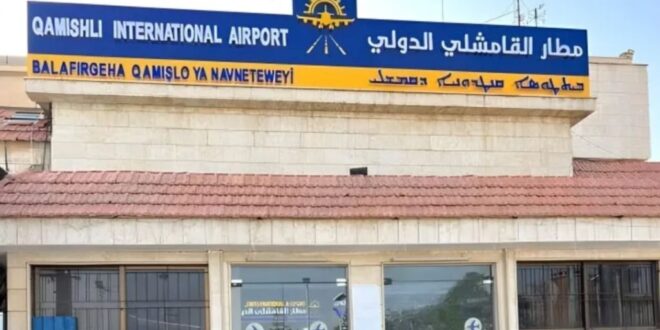
Sources within the SDF said preparations are underway to hand over Qamishli Airport (in Qamishli city, northeastern Syria) to the Syrian government’s Internal Security forces, a step described as “fundamental” within the latest understandings between the two sides.
This shift comes as units of Syria’s military police have begun deploying in the town of al-Hol (eastern al-Hasakah countryside, northeastern Syria) as part of what was described as “strengthening security and stability,” giving Damascus a security foothold in areas that had for years been administered exclusively by the Autonomous Administration.
On the administrative track, the official tasked with running al-Shaddadi area (southern al-Hasakah countryside, northeastern Syria) met with local dignitaries and community representatives from the town of Markada (southern al-Hasakah countryside, northeastern Syria), along with representatives of local councils, to discuss reactivating state institutions and improving services, a move that points to a gradual integration of service administrations.
French support and talks in Erbil
Diplomatically, the French position has emerged as a key backer of these understandings. Speaking from Damascus, the French foreign minister said the agreement between the Syrian government and the SDF could “enhance the fundamental rights of the Kurds,” stressing that fighting the Islamic State remains a top priority for Paris, and that the deal serves those efforts.
The minister is scheduled to travel to Erbil (Iraqi Kurdistan Region) to hold a high level meeting with SDF leaders, including Mazloum Abdi, Ilham Ahmed, and Rohilat Afrin, to discuss the details of the agreement and guarantees for its continuity, alongside French promises to provide support that would ensure Syrian state institutions continue operating in the new phase.
Violations and field escalation
Alongside these political moves, local activists documented a series of violations in the governorate. A young man, Adel Fawaz al-Hussein, was killed by fire from an SDF sniper in al-Nashwa neighborhood in al-Hasakah city while he was working selling fuel.
The SDF’s arrest campaign has also continued in areas it controls, concentrating over the past 24 hours in al-Qahtaniyah town (in the Qamishli countryside, northeastern Syria) and in al-Aziziyah and al-Nashwa neighborhoods in al-Hasakah city, with no precise statistics available on the number of detainees, amid growing concern among residents.
In the Qamishli countryside, residents of the villages of Umm al-Fursan, Hamu, al-Qusayr, al-Rashwaniyah, Kherbet Ammu, and al-Shaibaniyat complained that their schools have been turned into military barracks.
Residents told Enab Baladi that SDF fighters are stationed inside the schools and have burned classroom desks for heating, damaging educational facilities.
The forces also raided al-Zahiriyeh and Kurdim schools in al-Jawadiyah countryside (northeastern Syria) after breaking their locks to use them as positions, threatening the loss of the school year for hundreds of students.
Living conditions and the economy
On the services front, residents of villages east of al-Hasakah called for reopening the roads leading into the city, saying the closures have caused a sharp deterioration in living conditions and prevented them from reaching their workplaces inside the city.
In a limited economic indicator, the al-Haram and al-Fouad money transfer companies announced the resumption of their work in al-Hasakah city as of today, Thursday, including financial services and the “Sham Cash” service, which may help ease the cash shortage in the area.