 Eurasia Press & News
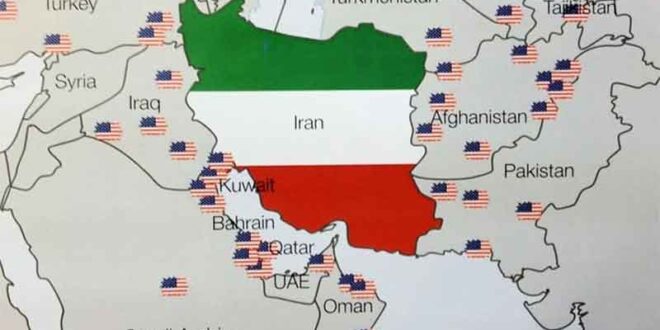
The Middle East, a region of profound historical depth and strategic significance, remains a geopolitical tinderbox characterized by intricate alliances, entrenched rivalries, and unresolved conflicts. While active hostilities are often contained within certain thresholds, a complex web of latent parameters exists beneath the surface. These factors possess the inherent potential to override existing controls, triggering a rapid and uncontrollable regional escalation with severe humanitarian, economic, and strategic consequences. This analysis seeks to identify these parameters from a neutral, analytical standpoint, focusing on the mechanisms that could transform a contained conflict into a widespread conflagration.
- The Miscalculation and Tit-for-Tat Spiral
A primary vector for uncontrollable escalation lies in the realm of military and political miscalculation. In an environment of high tension, dense fog of war, and pervasive mutual distrust, a single incident—be it an accidental strike on a strategic asset, a misinterpreted naval maneuver, or a cyberattack with unforeseen physical effects—can be perceived not as an error, but as a deliberate act of aggression. The mandated response, driven by domestic pressure to demonstrate resolve and deter future actions, may be disproportionate. This triggers a tit-for-tat spiral where each action necessitates a more forceful reaction, rapidly eroding established red lines and communication channels. The presence of advanced, fast-acting weapon systems (e.g., drones, missile defenses) compresses decision-making time, increasing the risk of automated or hurried responses that outpace diplomatic containment efforts.
- The Cognitive Dimension: Psychological Pressure and Decision-Making Failure
An often under-analyzed but critical parameter is the psychological degradation of decision-making in both political and military leadership under prolonged crisis conditions. War imposes extreme, chronic stress on leaders, which can systematically impair cognitive functions essential for rational escalation control. Key manifestations include:
Cognitive Fatigue & Tunnel Vision: Continuous high-stakes decision-making depletes mental resources, leading to poorer judgment. Leaders may develop “tunnel vision,” fixating on a single goal or threat while becoming blind to the broader strategic picture, alternative pathways, or long-term consequences.
Emotional Substitution for Rational Analysis: Triggering events (e.g., significant casualties, attacks on symbolic targets) can provoke overwhelming emotions—anger, humiliation, a desire for vengeance—that supersede cold strategic calculus. Decisions become reactive and symbolic rather than calculated and strategic.
Groupthink & Institutional Isolation: In isolated decision-making bubbles, surrounded by advisors who confirm existing biases (yes-men), leaders can lose touch with operational realities. The fear of losing face or power can lead to “escalation of commitment” to a failing strategy, doubling down on losses rather than seeking de-escalation.
This psychological variable interacts dangerously with other parameters: a cognitively exhausted leader is more prone to miscalculation; one driven by emotion fuels tit-for-tat spirals; and a leader feeling existentially threatened becomes more likely to consider unconventional thresholds.- The Proxy Nexus and Entangled Commitments
The region’s conflicts are often prosecuted through layered networks of state and non-state proxies. This strategy, while offering a degree of plausible deniability, creates a critical vulnerability: loss of control over proxy actors. A proxy group, pursuing its own local agenda or survival, may conduct an operation that intentionally or inadvertently draws its patron state into a direct confrontation with the patron’s adversary. The patron state, having invested credibility and resources in the proxy, may find itself compelled to intervene directly to avoid a catastrophic loss of face or strategic position, even if such intervention was not originally intended. This entanglement turns localized proxy wars into potential flashpoints for state-on-state conflict.
- The Unconventional and Asymmetric Threshold
The potential for escalation into unconventional warfare represents a paramount risk. Should a conflict threaten the core survival of a regime or a critical strategic asset (e.g., nuclear program, national survival), the losing party may perceive conventional defeat as an existential threat. This could incentivize the consideration or threatened use of asymmetric tools: chemical weapons, indiscriminate missile barrages targeting urban centers, or strategic cyberattacks on regional energy, financial, or water infrastructure. The employment of such weapons, even on a limited scale, would shatter long-standing taboos, compelling severe retaliatory measures from international actors and neighboring states, thereby exponentially expanding the conflict’s scope and severity.
- The Economic Weaponization Flashpoint
The global economy’s reliance on Middle Eastern energy corridors and maritime chokepoints (e.g., Strait of Hormuz, Bab el-Mandeb) is a latent escalation parameter. A conflict that significantly disrupts oil and gas flows—whether through direct attacks on infrastructure, naval blockades, or mining of shipping lanes—would instantly globalize the crisis. The resultant spike in global energy prices and threat to supply chains would trigger severe economic shocks, forcing external powers to intervene militarily to secure sea lanes, potentially against the interests of one or more regional actors. This transforms a regional dispute into an immediate, material concern for major economies, dramatically increasing the likelihood of international military involvement.
- Internal Destabilization and Fractured Sovereignty
Conflicts exert immense internal pressure on the involved states. Escalation can lead to massive refugee flows across borders, straining the resources and social cohesion of neighboring countries and potentially importing instability. Furthermore, sustained warfare can weaken state institutions, creating power vacuums that are filled by transnational terrorist or insurgent groups. The sudden emergence or empowerment of such a group, capable of launching attacks across multiple borders, could force a coalition of regional and international actors to intervene in a complex, multi-front campaign, further blurring battle lines and objectives.
Conclusion: The Interconnected Tinder
The path to an uncontrollable regional war in the Middle East is not a single event, but a chain reaction catalyzed by interconnected latent parameters. The interplay between miscalculation, the psychological fragility of decision-making under stress, proxy dynamics, the temptation of asymmetric warfare, economic weaponization, and internal collapse creates a system where a failure in one domain can cascade into others. Neutral analysis suggests that the region’s existing conflicts are managed not through resolution, but through a precarious balance of deterrence and controlled pressure. The parameters outlined above, including the often-overlooked cognitive dimension, represent the potential fault lines in this balance. Their activation depends on the inherent instability of complex systems under stress, where a single spark, amplified by these hidden catalysts—including human judgment compromised by fatigue and fear—can defy the control of its initial instigators. The primary imperative for all actors, therefore, is the meticulous management of these latent risks, with a specific emphasis on building institutional decision-making safeguards that can withstand profound psychological pressure. In a densely interconnected conflict ecosystem, rational control is often the first casualty of war itself.