 Eurasia Press & News
Serious concerns are emerging over the ability of the Syrian government to maintain security in the northeast of the country following its recent offensive against the Kurdish-led, U.S.-allied Syrian Democratic Forces (SDF).
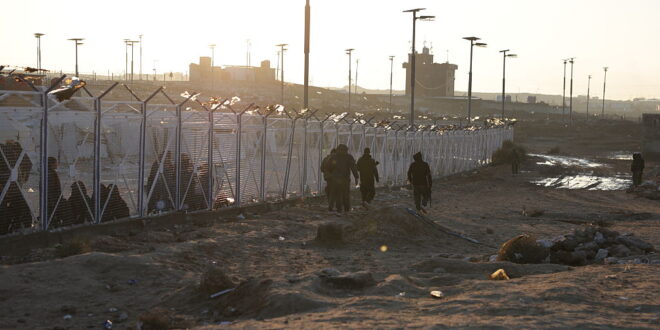
A Syrian government spokesman admitted on February 17 that since the end of January, thousands of detainees had absconded from the al-Hol detention camp previously run by the SDF. “Families escaped while we were present because the camp is large and the smuggling routes are very varied,” said Fadi al-Qassem.
The camp’s population has now plummeted from approximately 23,400 residents to fewer than 1,500. Five unnamed sources claimed that “the first large, organized smuggling operation out of the camp was led by a foreign commander in the Syrian army.” The same sources added that the Syrian government’s foreign fighters “opened the camp’s northern fence, and the process of removing foreign women began. The smuggling operation was coordinated with a convoy of vehicles.” The exodus continued until February 9, when the section housing approximately 6,300 women and children of various nationalities was completely emptied.
Al-Hol has only served as fertile ground for further indoctrination of its detainees, who were already radicalized. Their escape heightens the risk of ISIS regeneration and exposes the Syrian army’s limited authority on the ground.
An Incubator of Radicalization
At al-Hol, the wives of ISIS terrorists established a de facto ISIS-style administrative structure within their section of the camp, known as the “Muhajirat” or “foreigners” sector. Eyewitnesses noted that they created their “own morality police,” enforcing strict surveillance over other residents. According to the al-Hurra media outlet, “Al-Hol is less a refugee camp than a breeding group. Children are raised on ISIS slogans.”
No meaningful effort was ever undertaken to deradicalize these families. Instead, the permissive environment allowed extremist networks to deepen their influence, further cementing the hold of ISIS’s Islamist ideology.
The escape of the ISIS families from al-Hol risks fueling the emergence of a new generation of ISIS sympathizers, particularly amid Syria’s ongoing instability and weak security oversight. Additionally, if these families manage to cross borders and return to their countries of origin in North Africa, Europe, North America, and other regions, they could export radicalization beyond Syria.
Syria’s Foreign Jihadist Problem
From the outset of al-Sharaa’s rule, following the overthrow of former dictator Bashar al-Assad, the United States has urged Damascus not to integrate jihadist elements into the reconstituted Syrian army.
Yet the government moved ahead with incorporating several foreign-led factions, arguing that such formal integration would allow it to monitor and control them. Most notably, the Uyghur-led Turkistan Islamic Party, which has maintained ties to al-Qaeda, was folded into the Syrian army as the 84th Division.
Since then, members of some of these groups have been implicated in sectarian violence against ethnic and religious minorities. Their reported part in facilitating the escape from al-Hol is the clearest evidence yet that the integration strategy has failed. Rather than neutralizing these factions, incorporation appears to have legitimized actors who remain sympathetic to ISIS-linked elements inside the camps.
As ISIS Regroups, Washington Should Reassess Any Troop Withdrawals From Syria
So far, there has been total silence from the United States and the international coalition assembled against ISIS regarding the escape from al-Hol. The collapse of the camp suggests that Syria’s security apparatus is not consolidated or reliable.
This should prompt a reassessment of U.S. policy. Drawing down America’s military footprint at a moment when ISIS is actively seeking opportunities to reconstitute could unravel the achievements of Kurdish and international forces, including the U.S., during their lengthy fight against the group.
A limited U.S. presence has served as both a deterrent and stabilizing force and should continue to do so. Washington should also reassess its confidence in the Syrian security forces as a counterterrorism partner, given their inability to prevent the large-scale escape from al-Hol.