 Eurasia Press & News
Saudi Arabia and the United Arab Emirates Have Been Friends and Allies for Decades, but They Have Picked Different Sides in the Fighting in Yemen
Two gasoline Goliaths of the Persian Gulf are facing off, and neither of them is Iran — in fact, both are allies of the United States.
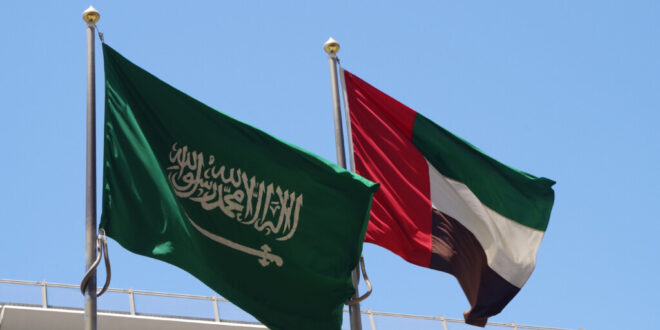
Saudi Arabia and the United Arab Emirates (UAE) have been friends and allies for decades, but they have picked different sides in the fighting in Yemen. That’s bad for the Yemenis, who didn’t need more factional violence, and it’s bad for U.S. interests, too. Washington cannot afford to wait on the sidelines, especially if President Donald Trump’s signature peace agreement of his first term, the Abraham Accords, is in danger.
Most headlines coming out of Yemen are about the Houthis, who are responsible for attacking ships at the entry to the Red Sea, and for lobbing missiles at Israel. They also hold the north of the country. They have long been a target for the Saudis — and the Emiratis, too.
But now Riyadh has turned its weapons on the allies of an ally, bombing a dock at Yemen’s Mukalla port in December. The Emiratis were using it to supply arms to a group that wants to divide Yemen into two countries — the Southern Transitional Council. It was all about reasserting Saudi primacy.
This rift is about more than Yemen. It has an impact on U.S. ally Israel, and on Trump’s plans for a broader peace in the Middle East. The UAE aligned early and openly with Israel through the Trump’s Abraham Accords. It understood that normalizing relations was not symbolic but strategic, locking in U.S. backing, intelligence cooperation, and regional deterrence. Saudi Arabia chose abstention, then ambiguity, and now delay. Despite Trump’s treatment of the Saudis as key allies, their negative messaging over the Abraham Accords undermines it.
There is an honest difference of views between the Saudis and Emiratis on how to deal with conflict in the region that comprises the Arabian Peninsula, the Red Sea and the Horn of Africa. The Emiratis have a higher tolerance for risk and are comfortable dealing with insurgent groups, believing effective local alliances can deliver better results than ineffective central authorities. They have no tolerance for the Muslim Brotherhood, branches of which were recently designated as terrorists by the United States.
The Saudis take the opposite view, judging that it is always safer to deal with the central authorities of internationally recognized states, even if these are governed by complicated coalitions and even if they include Brotherhood sympathizers.
Some analysts interpret this as evidence of a Saudi strategic realignment away from the United States and toward a new Sunni axis involving Turkey and Qatar. That analysis overreaches. Saudi Arabia is not abandoning the United States. But in its backlash against the UAE, it is probing the boundaries of American tolerance. That probing is happening because Washington has been insufficiently clear on its strategic imperatives.
Trump has demonstrated that the United States can achieve foreign policy outcomes using strength, clarity, and setting strict conditions. This second term has been different, a prime example being Saudi Arabia’s Crown Prince Mohammed bin Salman’s White House access without any tangible returns for the United States. That is a strategic error.
Saudi Arabia still depends on the United States, militarily, economically, and diplomatically. Its western ports remain vulnerable to Houthi interdiction. Its eastern lifeline runs through the Strait of Hormuz at the tip of the Persian Gulf. Its air defenses, intelligence and surveillance systems, and naval security remain dependent on the United States. Riyadh is impervious to American leverage. Washington has simply chosen not to use it. That must change.
The Trump administration should make three things clear to Riyadh.
First, Saudi Arabia should not denigrate the United Arab Emirates. The UAE is not a marginal partner. It is the most operationally competent Arab ally the United States has and is consistently aligned with U.S. and Israeli interests. Any Saudi action that weakens Emirati influence weakens the broader U.S.-led regional architecture. This must be made clear to the Saudis.
Second, Saudi Arabia must tone down its posturing against Israel, implicitly or explicitly, while it enjoys the benefits of U.S. security guarantees. Normalization is not charity. It is the price of admission to the American-backed regional order. Riyadh does not get to hedge indefinitely and it does not acquire F-35 planes unconditionally.
Third, a Saudi approach in Yemen that fractures the anti-Houthi camp must be challenged. When the Houthis sabotaged global commerce in the Red Sea that was also an act of aggression against Saudi ports, and yet Riyadh did nothing. The Houthis are unfinished business for Washington. Saudi actions that complicate Emirati counter-Houthi operations directly endanger U.S. economic and security interests.
The United States is not an observer in Gulf politics. It is the central enabling power. Trump understands leverage better than most presidents. He should use it.
That means conditioning arms transfers, intelligence cooperation, and diplomatic cover on concrete Saudi behavior: de-escalation with the UAE, alignment on Yemen, and movement toward normalization with Israel.
If Riyadh wants the privileges of partnership, it must accept the constraints that come with it. The United States, and the president personally, should make that reality unmistakable now, before Saudi testing really does become Saudi realignment.