 Eurasia Press & News
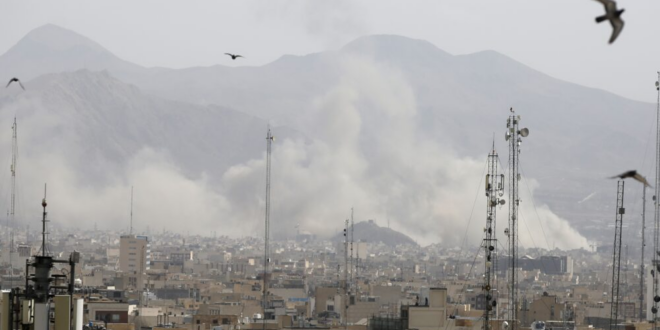
On February 28, the US and Israel launched coordinated military strikes on Iran. In a video message, President Donald Trump said the campaign aimed to “eliminate threats from the Iranian regime” and would target Iran’s nuclear program, ballistic missile capabilities, naval forces, and proxies. Speaking to the Iranian people, he directly called for regime change, stating, “When we are finished, take over your government. … Now is the time to seize control of your destiny.” Israel is reporting Supreme Leader Ali Khamenei has been killed in the strikes.
Iran has responded to the attacks by launching ballistic missiles at Israel and targeting regional states that are home to US military bases, including the United Arab Emirates, Qatar, Bahrain, Kuwait, and Jordan — and some of Tehran’s proxies have warned that they too may eventually join the fight — raising the threat of a broader regional conflict.
MEI defense experts weigh in on the military and regional consequences:
President Donald Trump’s February 28 statement centered on the obliteration of the Iranian nuclear program, ballistic missile capabilities, and navy as the primary objectives of the campaign. His message to the Iranian population at the end of his remarks, however, makes clear there is another, broader goal — regime change. In this context, one cannot help but to harken back to Iraq in March 2003. One key difference though is that the United States is attacking Iran with a massive strike force as opposed to an invasion force. Such lack of significant ground forces may help avoid US casualties, but airpower alone has a poor track record of toppling governments or even extracting significant concessions from adversaries. Even if, in an optimal scenario, US and Israeli strikes are able to achieve regime decapitation, overthrowing the regime from the air will prove exceptionally challenging.
This approach also inherently assumes that any replacement to the current regime would be a net positive. A more likely scenario if the regime were to collapse is a power vacuum that leads to a period of widespread destabilization. This would invite not only the emergence of competing power centers from within but an array of actors from across the region and even around the world with interests in the eventual outcome. Thus, we are on a very slippery slope, and events could easily careen out of US control or even influence. Prior to the 2003 invasion of Iraq, the State Department led an in-depth inter-agency planning process for post-Saddam governance called the “Future of Iraq” project. This was infamously ignored by the Pentagon in favor of more optimistic assessments of how the population would receive the US-led coalition. In the current case, no such planning effort occurred. Thus, whatever comes next will be determined without a US plan or forces and diplomats on the ground to implement.
Rather than try to build a broad coalition this time, the current campaign features the US and Israel “going it alone.” Unlike the lead-up to the Iraq invasion, there has been no appeal to the United Nations Security Council, no Congressional endorsement, and there is no “coalition of the willing” with over 40 nations. Moreover, key US partners in the Gulf and wider Arab world have for months voiced apprehensions about the prospects of follow-on strikes against Iran. Now, many of these partners have been the target of Iran’s rapid response. Given that most of these play host to US military assets in some fashion, they presumably must have been kept informed. Nevertheless, should the Iranian response be more fierce or drawn out than anticipated, the standing of the US in some or all of these places could be significantly tarnished.
Regardless of stated intent, this is indisputably a war of choice. While the Iranian regime’s brutal crackdown on nationwide protests in January appears to have been the catalyst for Trump’s decision to amass US forces in the region, there was no imminent threat to core US interests that this attack is thwarting. In his statement, Trump referred repeatedly to preventing Iran from obtaining a nuclear weapon and the destruction of its ballistic missile program, both allegedly “imminent threats” justifying the war. While these are indeed hazards, there have been no recent developments suggesting that the American population or US vital interests were in immediate danger had Saturday’s strikes not occurred. Indeed, the Iranian regime was still on its back foot in recovering from the damage caused by last June’s 12-day war.
Finally, other strategic concerns confronting the region, not least of which being the cease-fire in Gaza or the continued push to disarm Lebanese Hizballah, will inevitably receive less attention in the wake of the strikes. Especially at risk are the multinational efforts underway to implement key governance and security measures of President Trump’s 20-point plan from last fall. Focus on the consequences of the latest war with Iran will, for a time, inevitably push other such regional concerns to the backburner.