 Eurasia Press & News
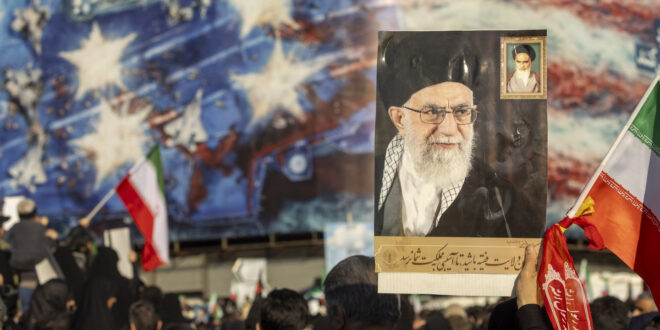
Iran’s regime was built to outlast any single leader, but Khamenei’s killing will trigger factional competition that could redefine the country’s future
The announcement came on Saturday evening and spread with the speed of panic: Ali Khamenei, 86, Iran’s Supreme Leader for over three decades, had been killed in joint Israeli-American strikes on Tehran.
Within hours, fuel lines stretched across the capital, families fled toward the peripheries of the city, and internet blackouts cut Iranians off from reliable information at the precise moment when they needed it most.
Whether or not the full details of those first hours can be verified, what is clear is that Iran’s political architecture, built around the singular authority of the Supreme Leader, is now confronting the scenario it was never designed to comfortably survive: the sudden, violent removal of the figure at its apex.
Khamenei’s path to ultimate authority began well before his appointment to the role. By the time he ascended to the supreme leadership in 1989, he had already served as the Islamic Republic’s president, a position that gave him both political experience and institutional standing within the revolutionary system.
When Ayatollah Ruhollah Khomeini, the cleric who had toppled the Shah a decade earlier and founded the Islamic Republic in 1979, died that same year, Iran’s Assembly of Experts, an 88-member body of senior Shia clerics empowered to select and oversee the supreme leader, chose Khamenei as his successor.
A council filling a void it cannot fill
The constitutional mechanism activated in the aftermath of Khamenei’s assassination, a provisional leadership council comprising President Masoud Pezeshkian, judiciary chief Gholamhossein Mohseni-Eje’i, and cleric Ali Reza Arafi, follows the letter of the Islamic Republic’s governing framework. Its formation was swift and by design.
A spokesman for the Expediency Council described Arafi’s inclusion as the product of an internal vote aimed at “balancing power centres during the transition and preserving the unity of the system and the stability of state institutions”.
But Iranian political analysts are careful to draw a sharp distinction between the council’s legal legitimacy and its actual governing capacity.
As political researcher Mohammad Razigi Musavi tells The New Arab, the council represents “a temporary but decisive solution” for maintaining internal stability, capable of keeping the state running at an administrative level, but constitutionally and practically incapable of making the long-range strategic decisions that define Iranian statecraft.
The council, he adds, “will not be able to impose strategic policies or major changes,” a constraint that places compounding pressure on political and military factions to maintain internal equilibrium without fracturing.
Tehran University academic Ali Ahmadian is equally direct. “The interim council seeks to preserve the stability of state institutions, but it is limited in its capacity to manage foreign policy or make long-term strategic decisions, especially given regional tensions and American and Israeli pressure,” he tells TNA.
Every major faction inside the system knows it and is acting accordingly. That awareness is precisely what makes this moment so volatile.
Different factions are already calculating
The real contest unfolding beneath the surface of institutional continuity is one of positioning. Hardline conservatives, pragmatic moderates, and the IRGC are each assessing how this transition can be shaped to their advantage before a new Supreme Leader is confirmed by the Assembly of Experts.
The transitional period will likely see attempts by various forces to “impose their will or reorganise internal alliances,” all aimed at ensuring that whoever emerges as Supreme Leader reflects their interests, analyst Hossein Rouyouran tells TNA.
The Assembly of Experts, which holds the formal power to appoint a new leader, will itself become an arena for this competition. Every delay in that appointment extends the uncertainty, and uncertainty in Iranian political culture is a resource that competing factions know how to exploit.
Ahmadian points to the most probable outcome: a figure drawn from within the religious establishment, “acceptable to all parties and representing continuity of the system,” but who may lack either the political weight or the legitimacy that Khamenei’s 35 years in the role conferred.
Critically, he notes, such a figure is unlikely to be reformist or moderate – the internal logic of the transition militates against it. The gap between institutional authority and personal authority has rarely mattered more.
Rouyouran adds a further layer of concern. The transitional period is “extremely sensitive and may witness attempts by some forces to impose their will,” making every move in this phase subject to intense scrutiny from all internal and external parties.
The system has always managed its internal tensions through the Supreme Leader’s arbitrating function. Without that function, the tensions become visible and dangerous.
What could happen in the region?
Iran’s regional architecture, built painstakingly through Hezbollah in Lebanon, the Houthis in Yemen, and various armed factions in Syria and Iraq, is premised on a continuous flow of strategic direction and material support from Tehran.
Any disruption to that command structure, even a temporary one, creates openings that Iran’s adversaries are already positioned to exploit.
Musavi warns that Israel is likely to read transitional weakness as a window for accelerating strikes on Iranian military infrastructure, particularly in Syria and Lebanon, while the United States may press the provisional council on issues, the nuclear file, and regional proxies, where Khamenei’s personal authority had historically served as both a ceiling and a floor for what was negotiable.
“Any temporary weakness in the system,” he cautions, “will give Israel the opportunity to exploit the situation and perhaps carry out pre-emptive military operations against Iranian infrastructure”.
The downstream effects for Iraq, Lebanon, and Yemen could be significant.
Ahmadian warns that the political vacuum’s consequences “will not be limited to Iran’s interior, but will extend to Iraq, Lebanon, Syria, and Yemen, where armed factions depend on Iranian support”.
Any delay in strategic decision-making, he argues, could trigger a wave of military escalation and a sudden reshuffling of regional alignments, particularly as Israel’s role in Syrian and Lebanese conflicts continues to deepen.
Factions that rely on Iranian support are watching Tehran closely, recalibrating their own postures based on signals that have become, for the moment, harder to read.
Iran’s regime enters survival mode
The new Supreme Leader, whenever chosen, will inherit a position of formal supremacy over a system that has just demonstrated its structural fragility.
He will face a domestic economy already under strain, aggravated now by the instability premium of a leadership vacuum, with fuel shortages, rising food prices, and mass displacement from the capital adding social pressure to an already stressed system.
These challenges sit alongside military commitments across four countries, an unresolved nuclear standoff, and adversaries who have just demonstrated both the will and the capability to strike at the heart of the Iranian state.
According to Rouyouran, the incoming leader “must prove his worth in managing a transitional phase full of economic, political, and military threats,” while simultaneously preserving Iran’s influence in its traditional spheres – Iraq, Lebanon, Syria, Yemen – and navigating escalating international pressure.
The appointment is not simply a matter of religious succession; it is a question of whether any individual can consolidate enough authority, quickly enough, to prevent the system from fracturing under the weight of its accumulated pressures.
The Islamic Republic has navigated succession before, though never under these circumstances. In 1989, Khamenei was elevated to the role in a period of relative stability following Khomeini’s death, with the revolutionary state’s institutions still intact and its regional environment comparatively manageable. There is no equivalent stabilising context today.
What Iran’s system faces now is not merely a leadership transition; it is a stress test of whether the republic’s institutions can hold together when the singular authority animating them is gone, even as adversaries continue to plot their downfall.