 Eurasia Press & News
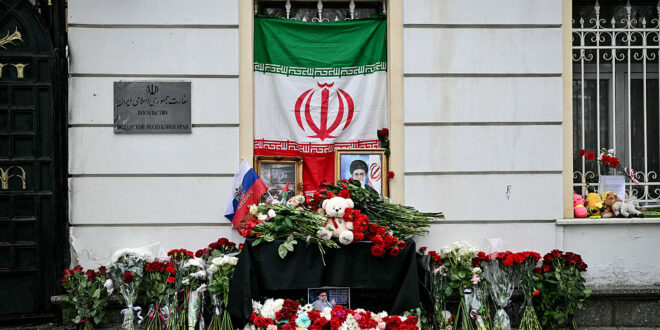
Amid its all-consuming war in Ukraine, Russia has repeatedly found itself struggling to shape other global events — from the Caucasus to the Middle East to Latin America. Moscow is now again watching from the sidelines as the United States and Israel seek to topple the regime in Iran, potentially dealing a further blow to Russian interests. In the short term, though, the Middle East conflict carries greater risk for Ukraine, since it could divert U.S. attention and military resources.
Russian’s Underwhelming Response
Russia’s reaction to the current Middle East conflict echoes its lackluster response to the 12-Day War between Israel and Iran in June 2025. Moscow clearly lacks the will and wherewithal for military intervention on Tehran’s behalf. While Russia and Iran have expanded their security cooperation in recent years, they have eschewed a mutual-defense pact. Neither will risk its skin for the other.
Like last year, the Kremlin has trodden carefully to avoid jeopardizing its relationship with the White House amid the ongoing Ukraine peace talks. While the Russian Foreign Ministry has condemned the U.S. and Israeli operations repeatedly, President Vladimir Putin has kept conspicuously quiet — save for a message expressing condolences following the elimination of Iran’s Supreme Leader Ayatollah Ali Khamenei, which no doubt was unsettling to Moscow. Putin labeled his fellow autocrat’s killing a “cynical” murder, though he refrained from mentioning the United States directly. On March 2, Putin called for de-escalation in telephone conversations with Gulf leaders, angling to position Russia as a mediator.
Ukraine Expresses Solidarity With Iranian People
Kyiv quickly issued statements of support for the Iranian people, relishing the fact that the regime in Tehran is now receiving its just desserts after aiding Russian aggression against Ukraine. “Although Ukrainians never threatened Iran, the Iranian regime chose to become Putin’s accomplice,” declared President Volodymyr Zelenskyy, pointing to Tehran’s supply of the Shahed drones that Russia has used to bombard Ukrainian energy infrastructure. Iran is now employing those same drones to lash out against U.S. bases and allies across the Middle East.
On March 1, after announcing that he will allow the U.S. military to use British bases for the war in Iran, UK Prime Minister Keir Starmer said London “will also bring experts from Ukraine, along with our own experts, to help Gulf partners shoot down Iranian drones attacking them.” However, Zelenskyy later contradicted Starmer. Kyiv has not “received any direct requests from Britain, from any of our partners, or from Middle East representatives either,” Zelenskyy clarified, though he expressed willingness to help partners learn from Ukraine’s extensive experience in combating Shaheds. In subsequent comments to Bloomberg, Zelenskyy offered to send Ukraine’s “best operators of drone interceptors to Middle East countries” if those states can convince Moscow to “implement a month-long ceasefire.”
Implications for Russia and Ukraine
Unfortunately, the Iran war will not meaningfully constrict Russian long-range strike capabilities. Moscow no longer relies on Tehran to supply Shahed drones, as Russia now produces modified versions of those drones in larger quantities than it ever received from Iran.
Conversely, the spike in oil prices triggered by the conflict could benefit Russia’s economy and budget, though the impact would be minimal if the increase is short-lived, as it was during last year’s Middle East crisis. As Zelenskyy has noted, the Iran war could also reduce the availability of key U.S. munitions, including for the Patriot air defense systems on which Ukraine relies to combat Russian ballistic missiles. The good news there is that Ukraine has already made it through the worst of the winter.
The Middle East crisis may disrupt scheduling for the next round of trilateral peace talks between Ukraine, Russia, and the United States. With the Kremlin continuing to play hardball, the White House cannot afford to lose focus. Even as Iran takes center stage, the Trump administration must be prepared to intensify pressure on Russia if Putin continues to reject peace.