 Eurasia Press & News
President Trump and Israeli Prime Minister Benjamin Netanyahu have justified their joint air campaign against Iran’s leadership and strategic sites as an attempt to end what the two leaders describe as a gathering Iranian threat to the United States and to the region.
The target set, and Trump’s call for the Iranian people to take control of their government, signal that the U.S. and Israel intend their operation to oust Iran’s regime and reorder the Middle East power structure more broadly.
The operation has killed Iran’s Supreme Leader Ali Khamenei, but Trump has not defined clear criteria or a strategy to achieve it — short of regime collapse — which would cause him to end the campaign.
Iran is enforcing its threat to retaliate against the territory of U.S. allies in the region, corroborating widespread predictions that the U.S. and Israeli attack would fuel a regional conflagration.
For the second time in eight months, U.S. President Trump and Israeli Prime Minister Netanyahu have interrupted active diplomacy with Iran to undertake military action against Iran to cripple it strategically. As was the case in June 2025, both leaders claimed they were acting militarily to neutralize a gathering threat from Iran’s nuclear and missile programs — concerns they assert Iranian leaders refused to adequately address in negotiations in a timely manner. However, the target set and statements by Trump and Netanyahu suggest the underlying intent of the action might be to replace Iran’s 47-year old regime with a pro-Western government — or one that is significantly easier to work with — that would diminish Iran’s efforts to project its ideology and influence in the region, presumably helping to pacify it. There is also the possibility that hardliners refuse to relinquish power, and the country descends into a bloody civil war.
The U.S. and Israeli military campaign follows Iran’s killing of more than 7,000 protesters during a major uprising in January, during which Trump publicly called on protesters to seize control of their government and vowed to help protect them. The operation has killed Iran’s Supreme Leader, Ayatollah Ali Khamenei. Reciting the decades-long litany of attacks against U.S. interests by Iran and its regional coalition partners, particularly Lebanese Hezbollah, Trump’s video statement over the weekend made clear that he sees “Operation Epic Fury” as a major step to address the longstanding challenges from Iran. Blunting the geostrategic threat from Tehran is a goal that has frustrated and largely eluded previous presidents. Trump’s rationale for the strikes moves far beyond the stated U.S. demands in the recent rounds of U.S. talks in Oman and Geneva that Iran abide by strict limits on Iran’s nuclear and missile programs and end its support for regional armed factions.
The launch of U.S. Operation Epic Fury and Israel’s “Operation Lion’s Roar” indicates Netanyahu has influenced Trump on Iran policy to a far greater degree than has been publicly reported, and that Netanyahu might potentially be able to veto an early end to the operation. Yesterday, President Trump said the campaign would likely last approximately four weeks. The attack has exposed a degree of operational Israeli and U.S. military planning that was not evident from published reports, but it also set into motion an escalatory spiral that has seen Iran launch attacks against targets in Bahrain, Jordan, Kuwait, Iraq, Israel, Oman, Qatar, Saudi Arabia, and the United Arab Emirates.
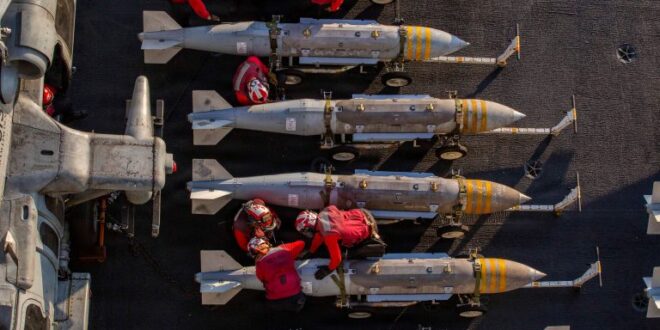
From an American standpoint, Operation Epic Fury represents one of, if not the most expansive, of the options that news reports suggested were under consideration, spanning a broad array of leadership and strategic targets. Israel has thus far focused its strikes on Iranian political and security leaders and institutions. The US, using its massive inventory of aircraft, missiles, and armed drones, has largely concentrated on hardened targets such as missile storage sites as well as Iran’s IRGC and regular navy vessels and short-range missile batteries along the Persian Gulf coast. In the early stages of the campaign, the U.S. military appears to be attempting to cripple Iran’s missile and drone retaliatory capacity and its ability to “internationalize” the conflict by closing the Strait of Hormuz or otherwise interfering with global commerce.
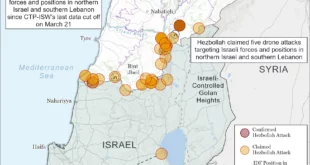
As of Sunday night, Iran had launched several hundred missiles and drones on the Gulf states. It has launched dozens of ballistic missiles against Israel, killing at least nine, demonstrating that Israel’s advanced and overlapping missile defense system can be penetrated. Iran’s militia allies in Iraq reportedly conducted a strike on Iraqi Kurdish targets in Erbil, an initial indication that Iran’s Axis of Resistance coalition will join Tehran’s retaliation, further expanding the conflict. Lebanese Hezbollah joined the fray, launching rockets into northern Israel, with the Israelis returning fire with an attack on Hezbollah targets in Beirut.
The three U.S. military personnel who were killed and five seriously injured by an Iranian missile barrage on Sunday are likely to fuel Congressional and domestic criticism that Trump launched the operation without congressional authorization or a clear exit strategy. UK authorities said Iran had also launched a missile at British military assets in Cyprus — affirming critics’ predictions that U.S. military action against Iran would spark regional, and potentially worldwide, conflagration. Hours before, British Prime Minister Keir Starmer had announced that London would allow Washington to use British bases for defensive strikes against Iran. A U.S. consulate in Karachi, Pakistan, was attacked, and there have been anti-American protests in Baghdad as well. There are growing concerns that, as the conflict continues, it will lead to terrorist attacks in the West. A shooting in Austin, TX, over the weekend is being treated as terrorism, possibly inspired by the conflict in the Middle East.
Iran’s remaining leaders likely hope that hitting targets in the Gulf will prompt their leaders — all of whom had cautioned Trump to pursue diplomacy and avoid attacking Iran — to increase pressure on Trump to de-escalate or end the campaign against Iran. However, early indications are that the Iranian attacks have pushed Gulf leaders to join the U.S.-Israeli effort against Tehran, amid reports that the six Gulf states are to meet to discuss a joint response. Iran has harmed its own efforts to strategically separate the U.S. from its Gulf allies by attacking civilian targets, either by design or by accident. Iranian drones and missiles have struck, among other civilian targets, a high-end hotel in Dubai, airports in Dubai and Kuwait, and a high-rise apartment building in Bahrain.
The immediate question global leaders and experts are asking is what set of circumstances would lead Trump and Netanyahu to end their campaign. At an emergency meeting of the UN Security Council, and in separate conversations, Western and Arab leaders sought to define the conditions under which the fighting might de-escalate. Trump’s early Saturday morning video statement announcing Operation Epic Fury made clear his hopes that the campaign will cause the replacement of Iran’s regime by a democratic, pro-Western construct. His statement called on the Iranian people to rise up and “…take over your government. It will be yours to take [after the operation concludes].” Selected videos circulating on social media showed some Iranians publicly celebrating Khamenei’s death. Other videos, publicized by Iranian media, also showed Iranians publicly mourning Khamenei’s passing. In a diverse country of 90 million people, it would be hard to find consensus among public sentiment. But even after Iranian military, intelligence, and security forces are weakened by airstrikes, a civilian uprising remains a risky endeavor and one likely to fail, given the monopoly on the use of force exerted by the IRGC and other elements of the regime’s internal security apparatus.
However, Trump sought to intimidate any attempts from regime security forces to suppress renewed protests, saying: “To the members of the Islamic Revolutionary Guard, the armed forces and all of the police, I say tonight that you must lay down your weapons and have complete immunity or, in the alternative, face certain death.” However, there are no indications that the IRGC or other forces have broken with the regime. Trump has thus far ruled out deploying U.S. ground forces into Iran to combat regime forces — a deployment most experts assess would be necessary to ensure the regime collapses, but which could also lead to a prolonged insurgency.
In the absence of a regime change, it is unclear how Trump will define “success” that would enable him to terminate the operation. Some argue that an agreement by surviving regime leaders to capitulate to all of Trump’s demands at the negotiating table might satisfy him that the objectives of Operation Epic Fury have been met. Some experts refer to this outcome as the “Venezuela solution” — referring to U.S. operations that captured leader Nicolas Maduro but left the existing political structure in place. On Face the Nation, Senator Tom Cotton suggested that the Trump administration might be looking for an “Iranian Delcy Rodriguez,” in reference to the caretaker government in Venezuela on the heels of Maduro being ousted. Others maintain that elevating a pragmatic successor or a succession council could enable Trump to claim victory and withdraw. Another perspective holds that Trump’s stated reluctance to become embroiled in ambitious and extended conflicts — coupled with an expanding U.S. casualty count and stretched resources will cause him to terminate the campaign soon, even if many of his initial objectives are not met.
There are no indications to date that any of the likely replacements for Khamenei would deviate sharply from his ideology and policies, potentially dampening the prospects for an enduring end to U.S.-Iran hostilities. Iran’s post-Khamenei power structure is unclear. President Masoud Pezeshkian has not been harmed in the strikes to date, but he is an elected reformist leader whose influence has always been sharply limited by the hardliners that dominate the regime. In the recent months of tensions with Washington, Pezeshkian’s authority was further eclipsed by Khamenei’s designation of a hardline aide, Ali Larijani, the head of Iran’s Supreme National Security Council, to assume day-to-day management of Iran in the event of his death.
Further complicating the leadership structure, the three-person interim leadership council comprises the sitting president (Pezeshkian), the head of the judiciary, Gholamhossein Mohseni-Ejei, and a member of the 12-member Guardians Council, which vets legislation for compliance with Islamic law. Ayatollah Alireza Araf, representative of the Guardian Council, and Ejei are avowed hardliners. They will likely clash with the more moderate Pezeshkian. The unknowns about Iran’s post-Khamenei power structure will no doubt cloud U.S. decision-making on whether and when to end the fighting.