 Eurasia Press & News
The Institute for the Study of War (ISW) and the Critical Threats Project (CTP) at the American Enterprise Institute are publishing two updates daily to provide analysis on the war with Iran. The morning update will focus on US and Israeli strikes on Iran and Iran and the Axis of Resistance’s response to the strikes. The evening update will be more comprehensive, covering events over the past 24-hour period and refining items discussed in the morning update.
Key Takeaways
The combined US-Israeli force has designed its campaign to destroy Iran’s ballistic missile capabilities before the force depletes its interceptor stockpiles. The destruction of missile launchers mitigates the risk that either the United States or Israel will run out of interceptors by limiting Iran’s ability to launch missiles in the first place.  The decrease in Iranian missile attacks against Israel and the UAE strongly suggests that the effort to destroy ballistic missile launchers has had considerable success.
The IDF struck key decision-making institutions on March 3, including the Assembly of Experts building in Tehran, as part of an effort to disrupt senior decision-making. The Assembly of Experts is an 88-member clerical body that is responsible for appointing and supervising the Supreme Leader, according to the Iranian constitution. Strikes that disrupt or prevent the Assembly of Experts from fulfilling its constitutional duty to select the next Supreme Leader would undermine the legitimacy of the regime. The regime is based on the principle of Velayat-e Faqih, in which a jurist, the Supreme Leader, controls Iran.
Iranian leaders have devolved powers to lower-level officials in response to the combined force’s strikes targeting senior officials and central decision-making institutions, likely to ensure continued state functions despite disruptions to central Iranian leadership.
The IDF continued to strike sites associated with Iran’s nuclear program, including facilities linked to weaponization research conducted by Iranian nuclear scientists.
Iran continued to conduct drone and ballistic missile attacks targeting US forces and sites in Gulf countries, which has prompted two US embassies to close.
The United States and Israel continued to strike Iranian-backed Iraqi militias on March 2 and 3 to degrade their ability to conduct retaliatory attacks against US forces and Israel.
Toplines
The combined force has designed its campaign to destroy Iran’s ballistic missile capabilities before the force depletes its interceptor stockpiles. Both Trump and Israeli Prime Minister Benjamin Netanyahu have emphasized that they seek to degrade Iran’s ballistic missile program.[1] Both leaders hope to protect their respective interests by preventing Iran from rebuilding its ballistic missile program, to be sure, but the strikes against ballistic missile launchers also have the immediate effect of preventing further Iranian missile launches that require interceptors to stop. The destruction of these launchers mitigates the risk that either the United States or Israel will run out of interceptors by limiting Iran’s ability to launch missiles in the first place.
The decrease in Iranian missile attacks against Israel strongly suggests that the effort to destroy ballistic missile launchers has had considerable success. The Israel Defense Forces (IDF) assessed on March 3 that the combined force has destroyed around 300 launchers since the war began.[2] Israel’s public broadcaster and other open sources reported that missile attacks on Israel have decreased sharply, which—combined with the IDF assessment that it has destroyed 300 Iranian launchers—strongly suggests that the effort to destroy launchers has been successful.[3] The number of missiles targeting the United Arab Emirates (UAE) has similarly fallen sharply, which suggests that Iran is also experiencing challenges with launching its short-range ballistic missiles.[4] The UAE, like Israel, has faced hundreds of missile attacks.
Iran continued to conduct drone and ballistic missile attacks targeting US forces and sites in Gulf countries, which has prompted two US embassies to close. At least one Iranian drone struck the US Consulate in Dubai, the UAE, on March 3.[5] The drone attack started a fire at the consulate, which Emirati emergency services extinguished, but did not cause casualties.[6] The drone attack on the US Consulate in Dubai follows two Iranian drone strikes on the US Embassy in Riyadh, Saudi Arabia, on March 2.[7] Two unspecified sources told the Washington Post that one of the Iranian drones reportedly struck the CIA’s station at the embassy during the Riyadh attack. The State Department closed the US Embassy in Riyadh on March 3 following the attacks.[8] Two US officials separately told the New York Times that an Iranian drone struck the US Embassy in Kuwait on March 2.[9] The US Embassy in Kuwait did not confirm the strike but said that it would close until further notice, citing “regional tensions.”[10] Two diplomatic sources told AFP that several Iranian drone strikes damaged the US Embassy in Kuwait, while a second Kuwait-based diplomat said that the building had been struck directly.[11] Iran previously struck Camp Arifjan in Kuwait on March 1, killing six US servicemembers.[12] Iran has repeatedly targeted and struck US forces and sites in Gulf countries since the conflict began on February 28.[13]
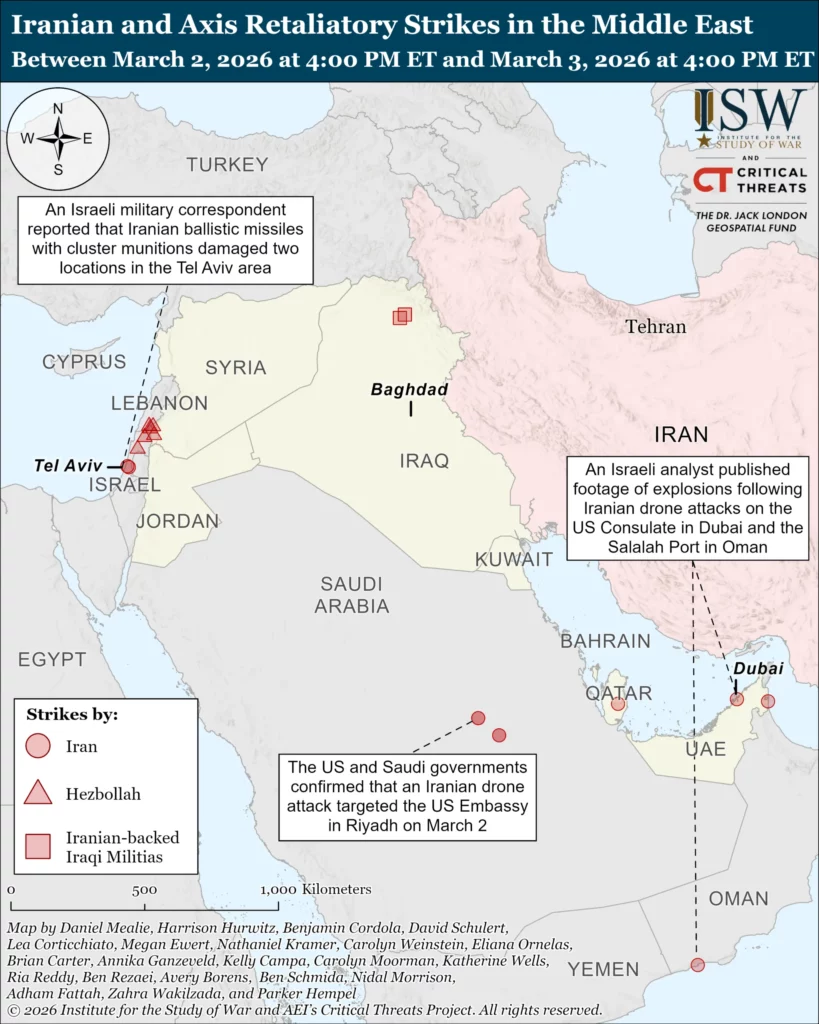
Iran continued to launch ballistic missile barrages at Israel at a relatively low rate on March 3. Iran launched at least six missile barrages at Israel on March 3.[14] Iran launched the same number of barrages on March 2, compared to at least 20 missile barrages on February 28.[15] An Iranian ballistic missile cluster munition warhead landed near Tel Aviv, Israel, injuring at least 12 people.[16] Iran previously fired ballistic missiles with cluster munition warheads during the 12-day war.[17] NBC News reported that Iranian ballistic missiles have killed at least 11 people and injured over 1,000 others to varying degrees in Israel since February 28.[18]
The consistently low level of Iranian ballistic missile barrages and impacts in Israel likely reflects the continued degradation of Iran’s ballistic missile capabilities by the combined force. The IDF said that it has destroyed 300 Iranian missile launchers since the conflict began, which is consistent with an Israeli media report of a 70 percent drop in Iranian missile fire toward Israel.[19] A nuclear analyst separately observed on March 3 that Iran’s expansion of the war to the Gulf has increased the number of air defense systems Iran must attrit while simultaneously continuing to lose missile launchers due to combined force strikes.[20] The IAF separately announced that it has successfully intercepted over 100 Iranian drones launched at Israel since the conflict began.[21]
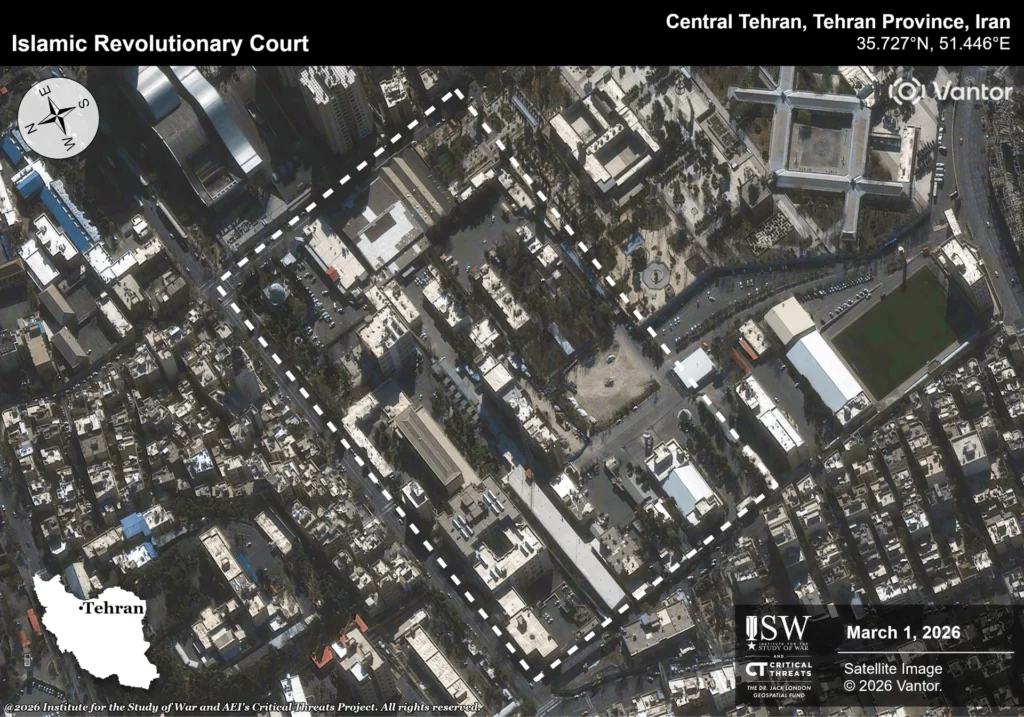
The IDF struck key decision-making institutions on March 3 as part of an effort to disrupt senior decision-making. The IDF struck the Supreme National Security Council (SNSC), the Presidential Office, and the Assembly of Experts building in Tehran on March 3.[22] Israeli media reported that around 100 fighter jets dropped over 250 bombs on Iran’s “leadership complex,” which contains the above sites.[23] The SNSC is Iran’s highest national security and foreign policy decision-making body.[24] The attack on the SNSC follows earlier US-Israeli strikes that killed senior officials who were members of the council, including former Islamic Revolutionary Guards Corps (IRGC) Commander Major General Mohammad Pakpour and former Armed Forces General Staff (AFGS) Chief Major General Abdol Rahim Mousavi.[25] The Assembly of Experts is an 88-member clerical body that is responsible for appointing and supervising the Supreme Leader, according to the Iranian constitution.[26] Strikes that disrupt or prevent the Assembly of Experts from fulfilling its constitutional duty to select the next Supreme Leader would undermine the legitimacy of the regime because the regime is based on the principle of Velayat-e Faqih, in which a jurist, the Supreme Leader, controls Iran.
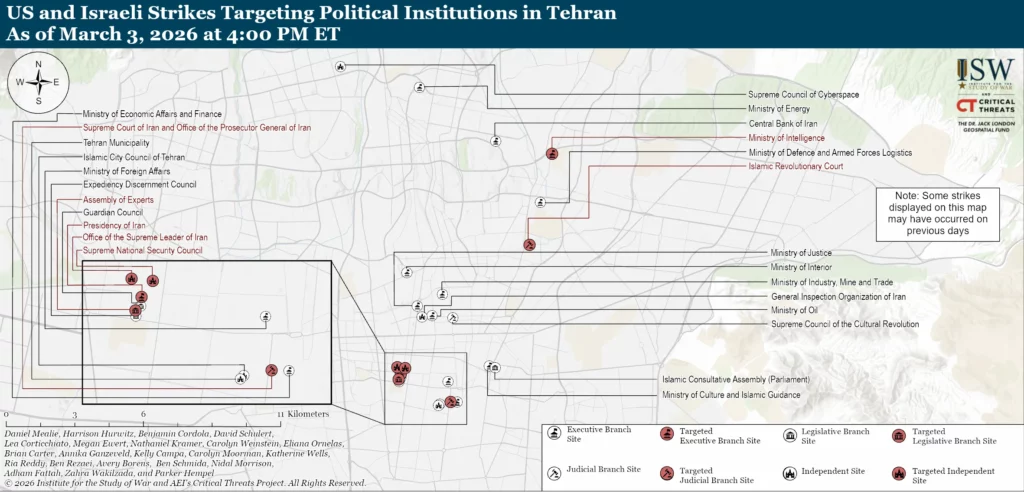
Iranian leaders have devolved powers to lower-level officials in response to the combined force’s strikes targeting senior officials and central decision-making institutions. President Masoud Pezeshkian stated on March 3 that the central government has delegated authorities to provincial governors so that they can make faster decisions based on local conditions.[27] These authorities likely include administrative and economic decision-making powers and broader executive authority to ensure continued state functions despite disruptions to central Iranian leadership.[28]
US and Israeli Air Campaign
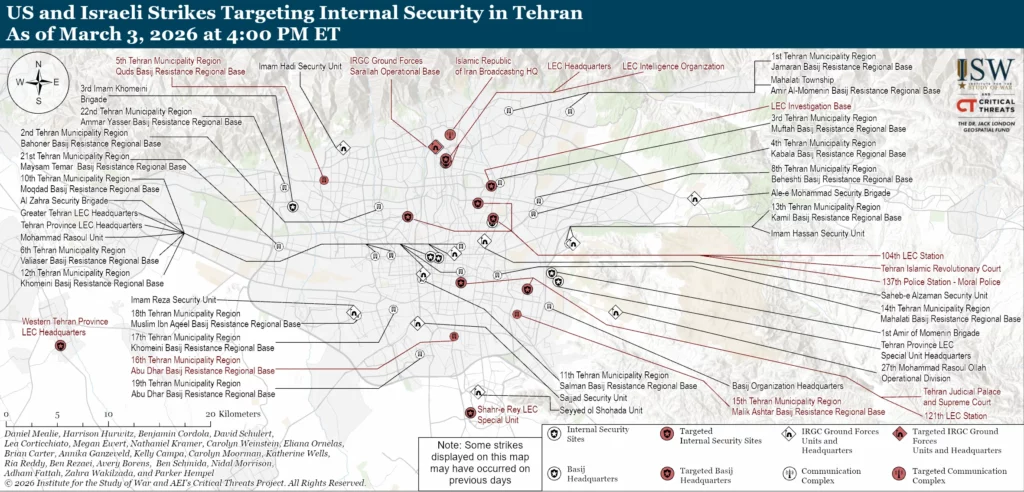
The United States has struck over 1,700 Iranian targets since February 28.[29] US Central Command (CENTCOM) confirmed on March 3 that US B-52 strategic bombers are operating in Iran.[30]
The Israeli Air Force (IAF) announced that it has conducted 1,600 sorties into Iranian territory since the start of the war on February 28.[31] An IDF spokesperson said that the IDF has dropped over 4,000 munitions on Iranian targets since February 28.[32] The spokesperson noted that the IDF dropped the same number of munitions on Iran during the entirety of the 12-day war.[33]
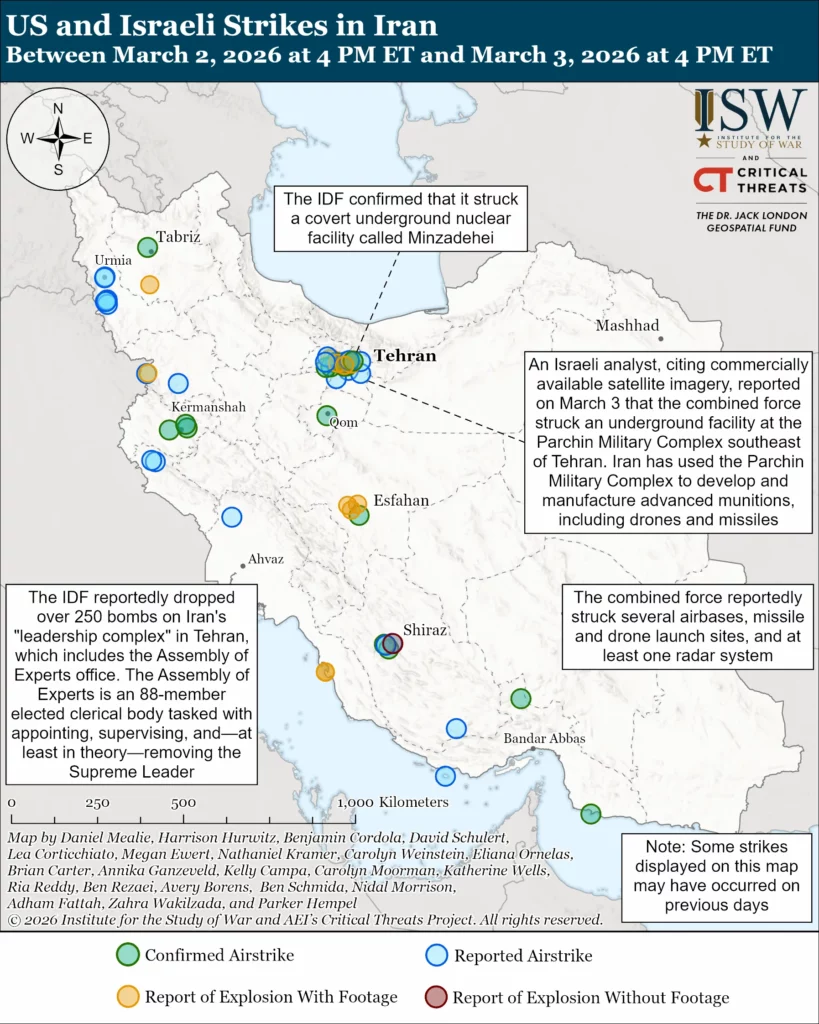
The IDF continued to strike sites associated with Iran’s nuclear program, including facilities linked to weaponization research conducted by Iranian nuclear scientists. The IDF reported on March 3 that it struck the covert “Minzadehei” compound in Tehran Province, where Iranian nuclear scientists sought to develop “a key component for nuclear weapons.”[34] The strike comes after the combined force struck the Natanz Nuclear Facility in Esfahan Province on March 2.[35] The International Atomic Energy Agency (IAEA) confirmed on March 3 that recent satellite imagery shows damage to entrance buildings at Natanz’s underground Fuel Enrichment Plant.[36] The IAEA stated that the strikes caused no radiological consequences.[37] Israel previously struck Natanz during the Israel-Iran War, destroying the Pilot Fuel Enrichment Plant (PFEP) and damaging electrical substations and support buildings that supplied power to the site.[38] The PFEP housed more than 1,700 centrifuges. The United States also targeted Natanz during the June war.[39]
The combined force has continued to degrade Iranian air defense capabilities in order to maintain air superiority over parts of Iran. The combined US-Israeli force established air superiority over Tehran on March 2.[40] The combined force struck Iranian radars on March 3 that were likely components of Iran’s integrated air defense system. Satellite imagery of Imam Khomeini International Airport, south of Tehran, showed a destroyed radar dome near the airport’s airfield.[41] Anti-regime media also reported a strike on a radar on Kish Island in the Persian Gulf on March 3.[42] Local footage from the aftermath of the strike showed damage to a steel radar tower.[43] The combined force previously reportedly struck a radar on Kish Island on February 28.[44]
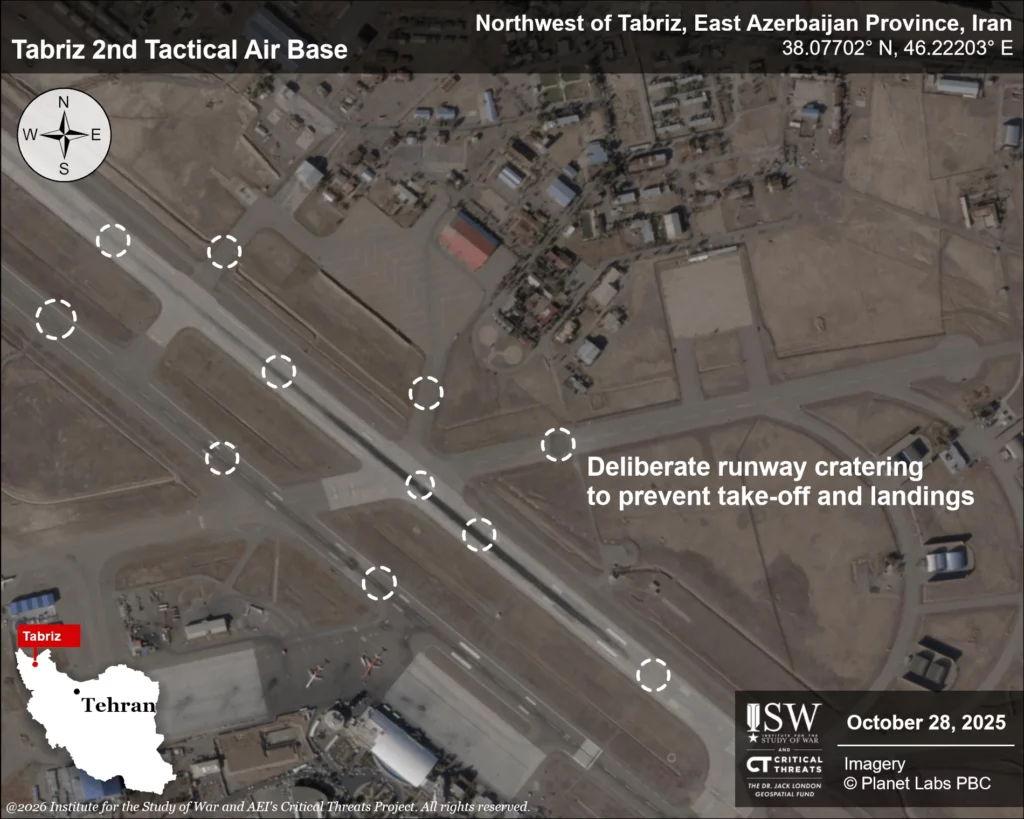
The combined force also conducted attacks on Artesh airbases and IRGC facilities that house aircraft that could potentially threaten US or Israeli aircraft in western Iran and near Tehran. Commercially available satellite imagery captured on March 3 shows eleven craters on the runway of the 2nd Artesh Air Force Tactical Airbase in Tabriz, East Azerbaijan Province. This damage has likely rendered the airbase inoperable. The IDF Air Force destroyed one Iranian F-4 and two F-5 fighter jets attempting to take off from the base on March 1.[45] IAF strikes previously damaged the base’s runway at the beginning of the 12-day war.[46] The combined force also struck a logistics facility near the 6th Artesh Ground Forces Aviation Base in Tabriz, according to satellite imagery from March 3.[47] Commercially available satellite imagery from March 2 shows two craters and a damaged building in the southern part of the 7th Artesh Air Force Tactical Airbase in Shiraz, Fars Province. The 7th Artesh Air Force Tactical Airbase is co-located with the Shiraz International Airport and hosts a fighter squadron that includes 12 Russian SU-22 fighter jets and a helicopter squadron.[48] Iranian anti-regime media also reported that the combined force struck an IRGC-affiliated helicopter manufacturing facility in Karaj, Alborz Province, on March 3.[49] The IDF issued an evacuation warning on March 3 for Payam Airport and its immediate surroundings in Karaj.[50] The IDF reportedly struck Payam Airport during the June 2025 war.[51]
An Israeli analyst, citing commercially available satellite imagery, reported on March 3 that the combined force struck an underground facility at the Parchin Military Complex southeast of Tehran.[52] Iran has used the Parchin Military Complex to develop and manufacture advanced munitions, including drones and missiles.[53] The Parchin complex also played a key role in Iran’s pre-2003 nuclear weapons program.[54] The regime historically used the site for high explosive testing for nuclear weapons development.[55] The IDF struck the Parchin Military Complex in June 2025.[56] The Parchin Military Complex is also home to the Taleghan 2 facility, which Iran used to test explosives that are needed to detonate a nuclear device before it suspended its nuclear weapons program in 2003.[57] The IDF struck the Taleghan 2 facility in October 2024.[58] Iran recently encased a newly built facility at Taleghan 2 with a “sarcophagus” to harden it against airstrikes, according to the Institute for Science and International Security.[59] CTP-ISW has not observed any reports of strikes on Taleghan 2 at the time of this writing.
The US-Israeli combined force continues to degrade Iran’s ballistic missile program. The combined force struck an underground missile facility in Haji Abad, Hormozgan Province, on February 28.[60] The James Martin Center for Non-Proliferation Studies shared satellite imagery from March 2 that shows two craters and destroyed vehicles at the site.[61] Iran constructed the Haji Abad Base between 2016 and 2020.[62] The site contains at least seven visible “hardened” missile launch positions.[63] Iran recently positioned missile launchers along its southern coast in preparation for a conflict with the United States and Israel.[64] The combined force also struck a missile base north of Kermanshah.[65] An Israeli analyst noted that all of the base’s aboveground structures were “destroyed.”[66] The IDF also said that it struck the Imam Sajjad Missile Base southwest of Tehran.[67]
The IDF also struck several facilities in Tehran on March 3 that manufacture or develop components for ballistic missiles. The IDF struck an IRGC-affiliated manufacturing site that develops components for surface-to-surface and surface-to-air missiles in western Tehran.[68] The IDF struck a chemical plant that produces missile components west of Tehran in Garmdareh, Alborz Province.[69] The IDF said that the site produced raw materials for solid-fuel surface-to-surface missiles.[70] The IDF also struck an IRGC-affiliated facility in Shahr-e Jadid-e Parand, southwest of Tehran, that the IDF stated processes ammonium perchlorate raw materials for solid-fuel missiles.[71] The facility is located about four kilometers south of a missile launch site in Malard.
The IDF issued an evacuation order for the Esteghlal Industrial Zone in western Tehran on March 3.[72] The evacuation zone includes the University of Applied Science and a Farda Motors facility.[73] It is unclear what the IDF intends to target in this area, although the IDF previously struck a Farda Motors factory in Borujerd, Lorestan Province, during the June 2025 Israel-Iran War.[74]
Internal Security
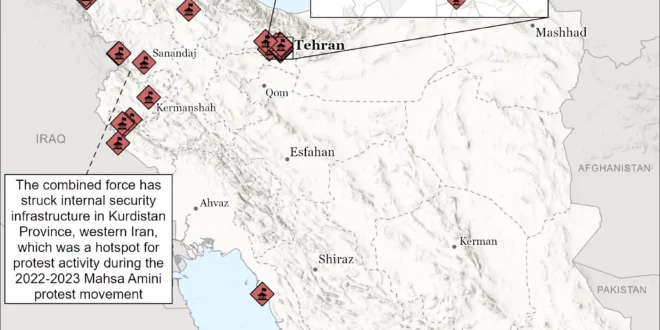
The combined force targeted internal security and military institutions in northwestern Iran. Anti-regime media claimed on March 3 that the combined force struck the “Shohada base” in Urmia, West Azerbaijan Province.[75] It is unclear whether the anti-regime outlet was referring to the IRGC Ground Forces Hamzeh Seyyed ol Shohada Operational Base or the IRGC Ground Forces Shohada Unit, which are both based in Urmia.[76] An Israeli journalist reported that the combined force also targeted an unspecified border guard site in Urmia on March 3.[77] IRGC-affiliated media previously claimed on March 1 that the combined force had targeted the West Azerbaijan Provincial Border Guard.[78] An OSINT account claimed on March 3 that the combined force struck an unspecified IRGC base in Marivan, Kurdistan Province.[79] This report comes after the combined force reportedly destroyed the Marivan Law Enforcement Command Headquarters.[80] A Norway-based human rights organization reported on March 3 that the combined force struck several IRGC sites in Oshnavieh, West Azerbaijan Province, including an IRGC headquarters, outpost, and intelligence building.[81]
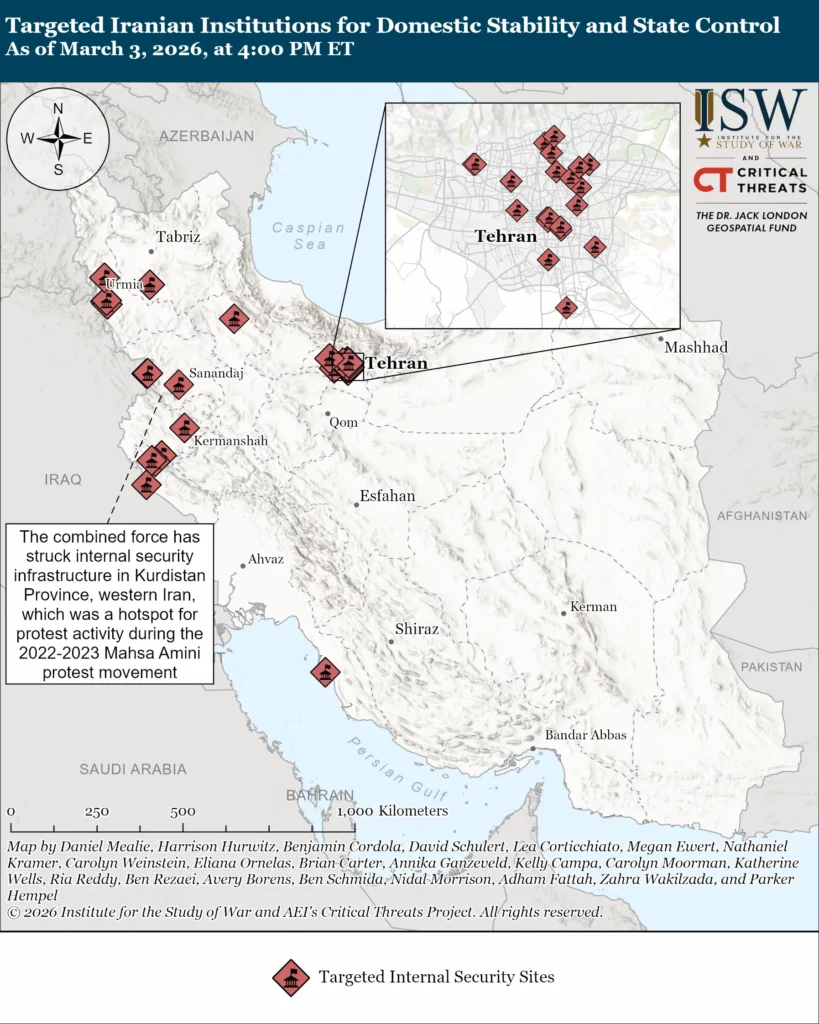
The Iranian regime is continuing to securitize the country and prevent information about the war from leaving Iran. An OSINT account posted a video of Iranian security forces setting up a checkpoint on a major highway in Tehran.[82] The regime has also continued its nationwide internet blackout.[83] Iranian opposition media, citing a journalist rights group, reported on March 3 that the regime has sent intimidating messages to Iranian journalists to prevent them from spreading information about the war.[84]
Iranian Retaliation
Iran has launched a greater number of drones at Arab Gulf states than at Israel, likely due to the proximity of the Gulf states to Iran. Iranian drones take hours to reach Israel, which makes them easier for Israel to detect and defend against. Reuters published a roll-up of several Gulf defense ministries’ statistics on drones and missiles that Iran has fired at them since February 28.[85]
The Emirati Defense Ministry said that it has:
Detected 186 Iranian ballistic missiles, intercepted 172 ballistic missiles, while 13 fell in the sea, and one landed in the UAE.[86] The Defense Ministry also said that it has detected and intercepted 8 Iranian cruise missiles.[87]
Detected 812 Iranian drones, intercepted 755 drones, while 57 drones have struck UAE territory.[88]
The Qatari Defense Ministry said that it has:
Detected 101 ballistic missiles and intercepted 98 ballistic missiles, which suggests that 3 missiles landed in Qatar.[89] The Defense Ministry also said that it has detected and intercepted 3 Iranian cruise missiles.[90]
Detected 39 drones and intercepted 24 drones, which suggests that 15 drones struck Qatar.[91]
The Bahraini Defense Ministry said that it has:
Intercepted 73 Iranian missiles and 91 drones, but did not provide the number of impacts in Bahrain.[92] CTP-ISW has observed multiple Iranian drones striking US military positions and civilian infrastructure in Bahrain since the conflict began.[93] The Kuwaiti Defense Ministry said that it has:
Detected and intercepted 178 Iranian ballistic missiles.[94]
Detected and intercepted 384 Iranian drones.[95] The Kuwaiti Defense Ministry did not provide the number of Iranian missile or drone impacts in its territory, but CTP-ISW has observed multiple Iranian strikes in Kuwait since the conflict began.[96]
These figures reflect that Iran has launched a greater number of drones at Arab Gulf states than at Israel, likely due to their proximity to Iran. The combined force has struck several drone launch sites in Iran within the Iranian Shahed-136’s 2,000-kilometer range, which is far enough to reach Arab Gulf states but insufficient to reach Israel.[97]
Axis of Resistance Response
The United States and Israel continued to strike Iranian-backed Iraqi militias on March 2 and 3 to degrade their ability to conduct retaliatory attacks against US forces and Israel. The United States and Israel struck Kataib Hezbollah’s Jurf al Sakhr stronghold north of Baghdad on March 3, reportedly targeting Kataib Hezbollah weapons depots.[98] The combined force has repeatedly struck Jurf al Sakhr since the start of its strike campaign on February 28.[99] The combined force also conducted two waves of strikes targeting the headquarters of the Iranian-backed Popular Mobilization Forces (PMF) 30th Brigade in the Ninewa Plains.[100] The PMF 30th Brigade is primarily composed of Shabak fighters and is aligned with the Badr Organization.[101] The United States and Israel recently struck the PMF 30th Brigade headquarters on March 1.[102]
Multiple unspecified Iranian-backed Iraqi militias reportedly told Iraqi federal government officials and Shia Coordination Framework members that the militias will continue to conduct attacks targeting US forces despite the Shia Coordination Framework and the Iraqi federal government’s efforts to prevent escalation.[103] The Islamic Resistance of Iraq, which is a coalition of Iranian-backed Iraqi militias, has claimed over 16 “operations” against “enemy” forces, in reference to the United States, per day since February 28.[104] The group claimed on March 3 that it conducted 27 “operations” involving “dozens” of drones and missiles targeting “enemy” bases in Iraq and the region.[105] Iranian-backed Iraqi militias have conducted multiple drone attacks targeting US bases in federal Iraq and Iraqi Kurdistan in recent days.[106] CTP-ISW has not observed any successful militia missile attacks or interceptions of militia missile attacks at the time of this writing.
The Houthis condemned Israel’s operations in Lebanon on March 3 but have not yet conducted any retaliatory attacks against the United States or Israel.[107] The Houthis’ continued inaction is notable given that the Houthis were the only Axis of Resistance member that participated in the June 2025 Israel-Iran War.[108] The Houthis could decide at any time to attack US interests or Israel in response to the combined strike campaign, however.
Lebanon
Hezbollah has conducted six attacks targeting IDF positions and forces in northern Israel and southern Lebanon since CTP-ISW’s last data cutoff at 8:00 AM ET on March 3.[109] Hezbollah conducted a total of nine attacks against Israeli forces on March 3.[110] Hezbollah conducted three attacks targeting four Israeli Merkava tanks in Kfar Kila, Marjaayoun District, and Kfarchouba, Hasbaya District, on March 3.[111] Hezbollah claimed that it launched an anti-tank guided missile at an Israeli Merkava tank in Metula, northern Israel.[112] Hezbollah has attacked military and civilian targets in Metula from nearby hills with more rockets and anti-tank guided missiles than any other town in northern Israel during the October 7 War.[113] Hezbollah claimed that it launched two rocket salvos targeting the IDF Rawiya base and the IDF southern Kelaa barracks in the Israeli-controlled Golan Heights.[114] Hezbollah launched a “squadron” of drones targeting the IDF Meron Air Operations and Control Base in Mount Meron, northern Israel, on March 3.[115] Mount Meron is a prominent IDF air defense and communications site that was a frequent Hezbollah target during the October 7 War.[116] The IDF said on March 3 that it detected several launches from Lebanon, most of which the IDF intercepted.[117] One projectile fell in an open area of Israel.[118] Hezbollah Political Council Deputy Head Mahmoud Qamati told the Associated Press on March 3 that Israel “wanted an open war…so let it be an open war.”[119]
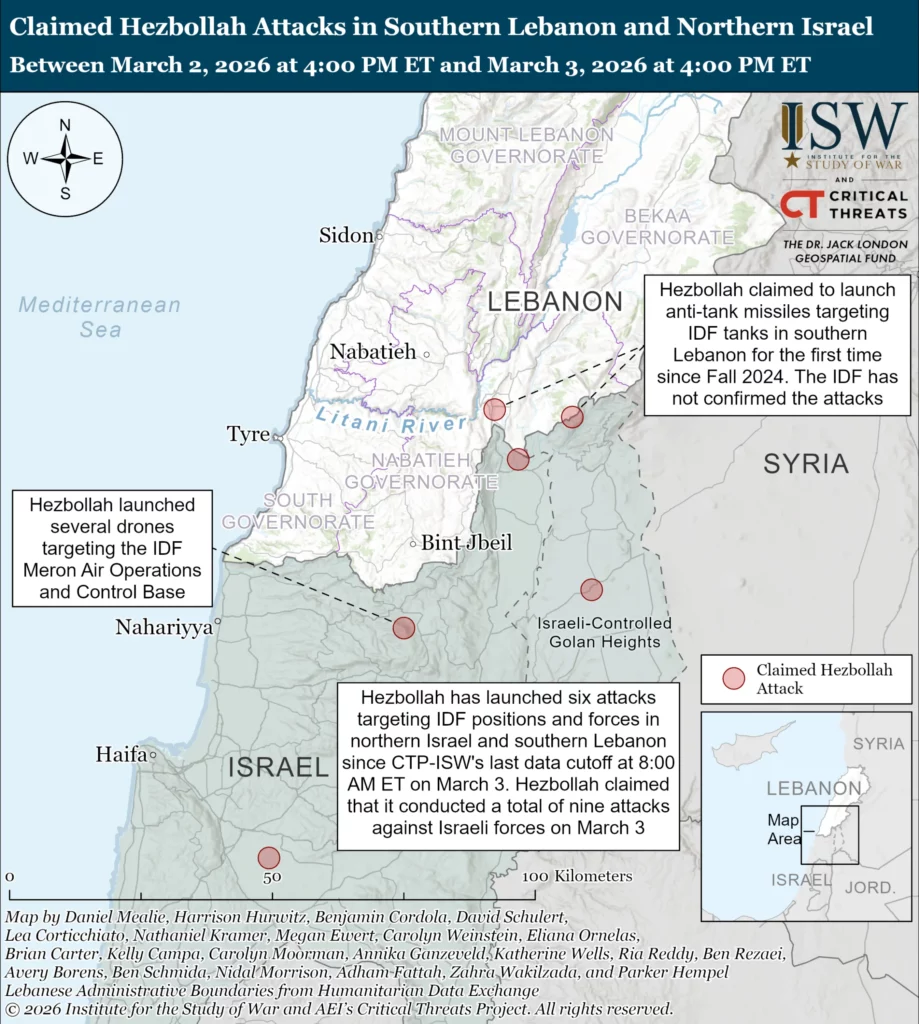
Israel’s goal to prevent direct fire attacks on northern Israeli towns mirrors one of Israel’s objectives for its ground operation in southern Lebanon in Fall 2024. Israeli Defense Minister Israel Katz and Israeli Prime Minister Benjamin Netanyahu said that the IDF will seize territory in southern Lebanon to prevent Hezbollah’s direct fire attacks on northern Israeli towns.[120] The IDF announced that the 91st Division aims to create an “additional layer of security” for northern Israeli residents. Israeli media reported that IDF troops are deployed “across the entire Israel-Lebanon border,” presumably referring to positions in northern Israel.[121] The IDF has positioned forces at five permanent positions in southern Lebanon since February 2025.[122] It is unclear precisely where 91st Division fighters are operating in Lebanon at this time.
The IDF’s advances into southern Lebanon in Fall 2024 dramatically diminished the threat of Hezbollah direct fire attacks into northern Israeli towns and IDF positions. Direct fire is when a combatant fires a ranged weapon directly at a target within the combatant’s unobstructed line-of-sight. The forested Lebanese border hills that overlook the northern Israeli border allowed Hezbollah fighters to target towns and IDF bases in northern Israel with anti-tank guns and guided missiles.[123] Hezbollah’s anti-tank guided missiles can fire up to eight kilometers, but most of these attacks required Hezbollah fighters to maintain a direct view of Israeli targets. The IDF’s capture of key hills that overlook northern Israel deny Hezbollah a direct view of Israeli targets. Hezbollah launched its first direct fire attacks since Fall 2024 on March 3 (noted above).
Unspecified Israeli officials suggested that the IDF could conduct a larger ground campaign in Lebanon. Two unspecified Israeli officials told the New York Times on March 3 that the IDF has been planning an operation against Hezbollah for months that “could be much more ambitious and involve a deep ground incursion into Lebanon.”[124] The officials noted that the “small buildup of forces in Lebanon could evolve into a bigger and more ambitious invasion.”[125] Israeli media similarly noted that the IDF’s current “forward defense maneuver[s]” aim to deter Hezbollah from conducting an invasion into northern Israel. Israeli media added that the IDF is “not yet invading on a large-scale,” which implies that the IDF could launch a larger ground campaign in the future.[126] Israeli media reported that additional divisions are expected to deploy into southern Lebanon in the coming days.[127]
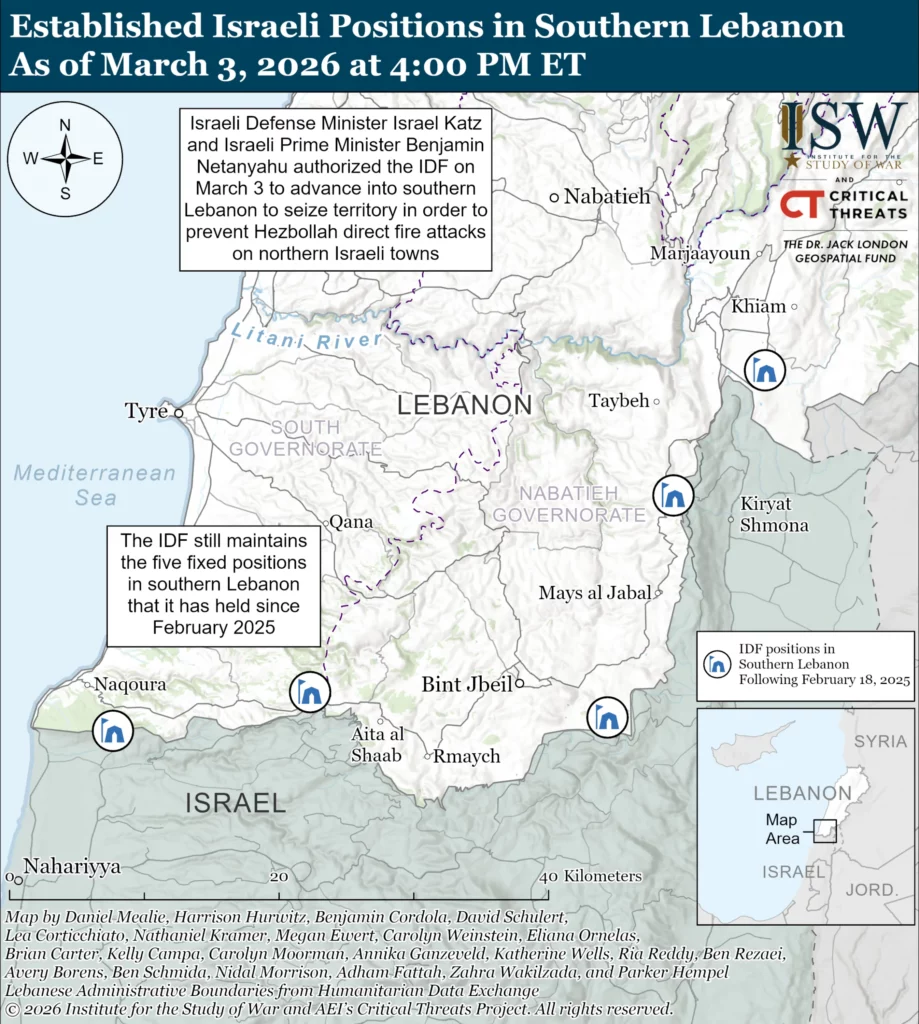
The Lebanese Armed Forces (LAF) has withdrawn from some of its positions in southern Lebanon amid the IDF’s “forward defense maneuver[s].” The Lebanese army reportedly withdrew from more than 50 border positions, including newly established positions near the border.[128] A Lebanese military source told Lebanese media that the LAF redeployed soldiers deployed at border positions back to their bases because of “the danger to their safety.”[129] The LAF had established approximately 200 positions in southern Lebanon as of December 2025.[130]
The IDF has continued to conduct airstrikes targeting Hezbollah military sites and institutions in Lebanon to degrade Hezbollah’s ability to conduct retaliatory attacks against Israel. The IDF struck approximately 60 Hezbollah targets across southern Lebanon on March 3.[131] The targets included weapons depots, launchers, command centers, and other military sites.[132] The IDF also struck the rocket launcher that Hezbollah fighters used to launch rocket salvos at the Israeli-controlled Golan Heights (noted above).[133] The IDF also confirmed that it killed the IRGC Quds Force’s Lebanon Corps Commander Daoud Ali Zada.[134] Zada was the most senior Iranian commander in charge of Iranian activity in Lebanon, according to the IDF. Zada was involved in Hezbollah’s reconstitution and helped manage its operations against Israel. Zada previously served as the Quds Force’s Strategic Weapons Corps commander and helped strengthen Hezbollah’s weapons capabilities. The IDF reported that Zada was a “factor that incited and pushed” Hezbollah to join the war.
The Lebanese government has taken unprecedented action against Hezbollah for its involvement in the war, which will likely have long-term implications for Hezbollah. The Lebanese Cabinet declared on March 2 that all Hezbollah military and security activity is illegal, demanded that Hezbollah hand over all of its weapons to the state, and called for Hezbollah to be relegated to only a political organization.[135] Many Lebanese governments have been unable or unwilling to challenge the principle of Hezbollah’s armament, in part because Hezbollah, supported by Iran and Bashar al Assad’s Syria, previously dominated Lebanese decision-making.[136] Hezbollah has long viewed its status as a military organization as the group’s core and has previously referred to its weapons as its “soul.”[137] Hezbollah has historically used its military capabilities and threats of military action to sway Lebanese government decision-making.[138] The loss of these capabilities would reduce Hezbollah’s influence in Lebanon, given that Hezbollah is already in a politically vulnerable position that has limited the group’s ability to advance its objectives in Lebanon. Lebanese Prime Minister Nawaf Salam reduced the proportion of cabinet seats that Hezbollah holds and removed the group’s ability to veto cabinet decisions when he formed his cabinet in February 2025.[139] Hezbollah’s de facto veto power had often prevented the cabinet from passing legislation to constrain Hezbollah between 2008 and 2019.[140] Hezbollah has struggled to keep some of its long-standing political allies due to its confrontational approach and its defeat at the hands of the IDF.[141] The Free Patriotic Movement (FPM), a Lebanese political party, ended its two-decade alliance with Hezbollah in October 2024 after Israel began its campaign against Hezbollah.[142] Hezbollah’s political weakness prior to the current war suggests that Hezbollah would likely struggle to achieve any of its objectives after the war if the group was solely a political organization.
Other Activity
US President Donald Trump ordered the US International Development Finance Corporation to provide political risk insurance and financial guarantees to “all shipping lines” on March 3.[143] Trump added that the United States may consider escorting tankers through the Strait of Hormuz. Iran has conducted four attacks on commercial vessels around the Strait of Hormuz between the start of the war on February 28 and 4:00 PM ET on March 2.[144] Traffic through the Strait of Hormuz has dropped by around 80 percent as of March 1.[145]