 Eurasia Press & News
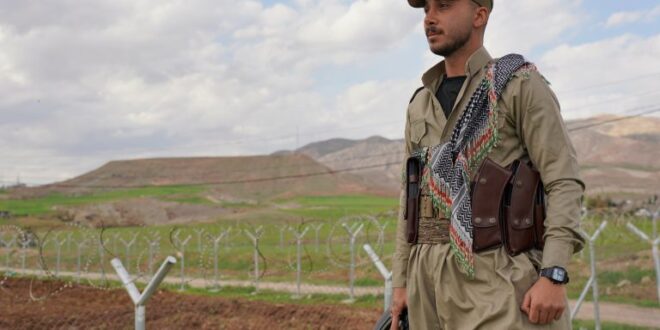
The Trump administration is exploring options to arm Kurdish forces operating near the Iran–Iraq border with the aim of increasing pressure on the Iranian regime.
The heavy concentration of Israeli strikes along Iran’s western border with Iraq suggests a deliberate strategy aimed at degrading Tehran’s defensive infrastructure in that region.
Iran is responding with strikes across the Kurdistan Region of Iraq.
Iranian proxies in Iraq could become more active if attacks against Iran are launched from the Kurdistan Region of Iraq.
The Trump administration has reportedly been engaged in active discussions with Iranian opposition groups and Kurdish leaders in Iraq regarding the possibility of providing them with military support. According to multiple individuals familiar with the plan, the U.S. Central Intelligence Agency (CIA) is exploring options to arm Kurdish forces operating near the Iran–Iraq border with the aim of increasing pressure on the Iranian regime and potentially triggering a broader popular uprising inside Iran.
Iranian Kurdish armed groups maintain thousands of fighters operating along the Iran–Iraq border, primarily within the Kurdistan Region of Iraq. Since the outbreak of the conflict, several of these groups have issued public statements suggesting that action may be imminent and calling on Iranian military personnel to defect. In response, Iran’s Islamic Revolutionary Guard Corps (IRGC) has intensified its operations against Kurdish positions. On Tuesday, the IRGC announced that it had carried out strikes targeting Kurdish militant groups using dozens of drones.
Support from the CIA to Iranian Kurdish groups reportedly began several months before the outbreak of the war, according to a senior official from the Kurdistan Regional Government. Prior to the conflict, five Iranian Kurdish opposition groups announced the formation of a unified coalition against the Tehran regime during a joint press conference held on February 22 — approximately one week before the launch of the joint U.S.–Israeli military operation against Iran. The event brought together leaders from the Democratic Party of Iranian Kurdistan (PDKI), the Kurdistan Free Life Party (PJAK), the Kurdistan Freedom Party (PAK), the Khabat Organization of Iranian Kurdistan, and a faction of the Komala Party of Iranian Kurdistan.
The intensity of Israeli strikes in Iran’s Kurdistan and Kermanshah provinces — both located along the Iran–Iraq border — is notable and appears strategically calibrated within the broader U.S.–Israeli military campaign. The concentration of attacks in these border regions may reflect an effort to weaken Iranian security infrastructure and create conditions that could allow Kurdish opposition groups operating from the Kurdistan Region of Iraq to move closer to, or potentially cross into, Iranian territory.
In parallel, Iran has launched drone and missile strikes targeting mountainous areas in Iraqi Kurdistan, where it believes militant elements are based, likely to preempt cross-border activity and contain emerging threats along its western frontier. Tehran has targeted multiple locations it claims are linked to Israeli “strategic centers” as well as bases and facilities associated with Iranian Kurdish opposition groups, including the KDPI/PDKI, Komala, and PAK. A drone strike on Wednesday targeted an arms depot at the headquarters of an Iranian Kurdish opposition group in the town of Dekala in Iraq’s Kurdistan Region, wounding two fighters, according to security sources. Sources told Reuters that two drones also targeted a U.S. military base and a hotel in Erbil.
At the same time, the Kurdish region has experienced escalating attacks by Iran-aligned Iraqi militias. Erbil, the capital of the Kurdistan Region, has endured several consecutive days of drone and rocket barrages launched from areas of federal Iraq territories south of the autonomous region. Many of these attacks have targeted the U.S. military presence at Erbil International Airport, where most incoming munitions have been intercepted by air defense systems.
These developments forced the Kurdistan Regional Government (KRG) to issue a statement distancing the autonomous region from any military activity directed against Iran, emphasizing that Iraqi Kurdistan must not be used as a launching ground for attacks on neighboring states. KRG officials also indicated that they have communicated directly with Iranian Kurdish opposition groups operating in the region, urging them not to carry out cross-border operations into Iran from KRG territory.
The KRG now finds itself under significant pressure. Pro-Iranian factions in Iraq have warned the regional authorities against allowing, supporting, or tolerating actions by Iranian Kurdish armed groups that could draw the Kurdistan Region into the conflict. At the same time, several Iranian Kurdish opposition organizations have claimed that their operations inside Iran have increased, particularly following Iranian strikes on their positions in northern Iraq. As a result, the KRG is attempting to balance internal security concerns, pressure from Iranian-aligned actors, and the activities of Kurdish Iranian opposition groups operating along its borders.
In responding to what it perceives as emerging threats along its western frontier, Tehran is likely to rely primarily on indirect instruments of pressure rather than deploying large numbers of ground forces. In recent days, Iran has already launched drone and missile strikes targeting locations in the Kurdistan Region of Iraq, including areas around Erbil, as well as sites believed to host Iranian Kurdish separatist groups operating near the border. Some of these attacks have also been directed toward facilities associated with U.S. personnel and interests in the region.
Alongside these direct strikes, Iran may increasingly rely on proxy actors, particularly groups such as Kataib Hezbollah and other loyal elements in the Iraqi Popular Mobilization Forces (PMF), to exert political and security pressure on the Kurdistan Region of Iraq. Kataib Hezbollah issued a warning to Kurdish authorities in Iraq, urging Kurdish leaders to act “rationally” and avoid becoming involved in what it described as a “military adventure targeting the Islamic Republic.”
For now, most Iranian-aligned militias in Iraq have remained relatively quiet, avoiding large-scale escalation. However, their role could become more prominent if Tehran concludes that attacks against Iran are being launched from the Kurdistan Region of Iraq. In such a scenario, Iranian-aligned militias could be mobilized to exert both political and military pressure on Kurdish authorities or to target locations associated with Iranian Kurdish opposition groups.
This dual approach — combining proxy pressure with targeted missile and drone strikes carried out by the IRGC — allows Tehran to restore deterrence and disrupt opposition activity while minimizing the need to deploy large numbers of Iranian ground forces along its western frontier. Such a strategy reduces Iran’s exposure in a theater where its forces would be vulnerable to U.S. or Israeli airpower. In the past, Iran’s regional playbook has featured hybrid-style approaches, which could form an important centerpiece of Tehran’s strategy if it concludes that its western border is developing into an active front and leading to major security vulnerabilities.
Border issues in Iran also have significant regional implications. In the past, Ankara has attempted to convince the Iraqi government to deploy Popular Mobilization Forces (PMF) units to fight anti-Turkish Kurdish militants operating in northern Iraq, particularly groups linked to the Kurdistan Workers’ Party (PKK). Still, Baghdad has been hesitant to deploy the PMF in this manner due to the risk of escalating tensions in the Kurdistan Region, which would complicate Iraq’s internal security dynamics. The emergence of Kurdish armed groups seeking to take advantage of the ongoing conflict could therefore drag Türkiye more squarely into the fight. An expansion of Kurdish militant activity or more blatant rhetoric around the Kurds’ territorial ambitions — especially if linked to regional instability — could precipitate a more hands-on approach from Erdogan.
Iraq is being drawn in more closely into the conflict, with the Kurdistan Region emerging as a potential new front in an already expanding regional war. Tensions have resulted in attacks against U.S.-linked facilities. Al Jazeera Arabic reported that a drone targeted a logistical support facility used by the U.S. Embassy near Baghdad International Airport. The incident followed a separate attempted drone attack in the same area a day earlier, which Iraqi security forces claim had been thwarted.
The Iraqi government has been working to head off this kind of escalation, making it clear that Iraqi territory should not be used as a battleground. The situation remains fragile, and a bevy of actors involved in the war maintain proxy forces on the ground that may be more willing to engage, even as official authorities attempt to restrain them. Earlier today, President Trump said he had not yet approved a plan to arm Kurdish militants, suggesting that reports to the contrary were premature.
If this dynamic intensifies, Iraq could quickly become another arena in the wider confrontation. Such a development would risk deepening instability across the region, potentially drawing in additional actors and pushing the conflict closer to Türkiye’s borders, where Ankara remains highly sensitive to any expansion of Kurdish militant activity.