 Eurasia Press & News
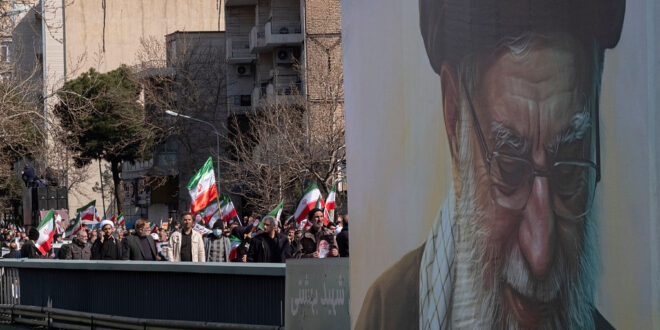
The Islamic Republic is at an inflection point. Less than a week ago, the Islamic Republic lost its Supreme Leader, Ayatollah Ali Khamenei, in a daytime Israeli air strike that stunned the world.
And yet Khamenei’s regime fights on, firing ballistic missiles and drones at U.S. bases and diplomatic facilities, Israeli cities, Arab civilian infrastructure, and even at Turkey. The question is not whether Iran has changed. It undoubtedly has. The question is how much further it will change, in which direction, and what America will do about it.
Since Khamenei’s death, speculation has swirled about one of his sons, Mojtaba Khamenei, as a potential successor. Some media outlets have already crowned him, and others are waiting to see if he emerges in public. On Thursday, President Donald Trump described Khamenei’s son as “a lightweight” in an interview with Axios. Trump said he has “to be involved” in choosing Iran’s next leader.
For the moment, Iran is run by an interim leadership council, an ad hoc body tasked by the Iranian constitution to perform the function of Iran’s Supreme Leader until another draconian-sounding religious institution, the Assembly of Experts, can select the next leader. While legal, this is all theater. The Islamic Republic was never a system of laws but a political project run by hardened ideological men. Meetings and statements are all designed to project the illusion of continuity while under duress.
Real power in Tehran now belongs to two institutions: Ali Larijani’s Supreme National Security Council and the Islamic Revolutionary Guard Corps (IRGC). These are the men and the machinery keeping this zombie system upright. Whoever sits atop the Islamic Republic, this national security deep state will be pulling the strings.
Where real power lies matters enormously for how the Trump administration deals with what comes next. There are at least four likely fates awaiting Iran. Two feature the regime surviving, and two don’t.
Scenario One: Hardening
If the Trump administration sticks to its stated four- to five-week timeline and pursues a narrow military mission centered on defanging Tehran of its long-range strike capabilities, gutting the nuclear program, and destroying its ability to harass shipping, the regime is likely to weather the storm. Sure, it will be battered, bruised, smaller, and weaker, but it will still claim victory—as all terrorist enterprises do—if it is left standing. Under such a scenario, what survives will not produce a chastened, concession-ready Iran. It will be a hardened pariah state with a bunker mentality.
A sense of humiliation rather than humility will permeate, and Tehran’s deep state will emerge paranoid, vengeful, and intent on rebuilding. In a world where the regime’s proxy terror network is neutered and has lost any conventional or hybrid military capabilities, interest in nuclear weapons does not diminish. It intensifies. A cornered autocracy will have every incentive to avoid eyes on anything left of its atomic enterprise or fissile material stocks and sprint toward the bomb through whatever covert pathway remains available.
It is also likely to double down at home through arrests, torture, and mass suppression, much like Saddam Hussein’s Iraq did after defeat in 1991. The nightmare scenario for U.S. policymakers and dissident Iranians is not a defeated Iran. It is a surviving Islamic Republic that will look inward à la North Korea: isolated, militarized, and biding its time until Trump leaves office. If that’s the outcome and the Trump administration takes a victory lap, Washington will have achieved its military aims but not any political ones.
Scenario Two: Evolution
If the regime survives and Washington meaningfully implements a containment policy that places “maximum pressure” on the regime and offers “maximum support” to the Iranian people, one instinct of the deep state controlled by Larijani and the IRGC will be to feign an opening by hinting at the potential for a postwar evolution in Tehran.
The regime may even opt for a friendlier face at the top to create the appearance of change without any real alteration underneath. Bring out a technocrat. Float a former reformist. Maybe even release some political prisoners as proof of goodwill. Perhaps even let one stand for “election.” The goal here is simple: Buy enough international sympathy to loosen sanctions, outlast the Trump administration, and preserve the core of the system.
Think of it as the Myanmar model. The generals pushed Aung San Suu Kyi to the front, offered the world a human face, and feigned a controlled opening, all while keeping the guns pointed inward. The Islamic Republic’s deep state is sophisticated enough to attempt the same in Iran. And Washington, eager for a deal it can call a win, might be tempted to take the bait.
Scenario Three: Revolution
Out of all the potential paths post-Khamenei Iran may take, this one faces the greatest number of obstacles, but is the only one that offers durable relief for the Iranian people and for U.S. national security.
Popular revolution will require the U.S. military campaign to expand beyond defanging. It means targeting the apparatus of repression to include the Basij, the police, and the IRGC units across major urban centers. A sustained air campaign that shreds command and control and is paired with covert operations and an information campaign could, over time, force defections and desertions from Iran’s security forces, who will be seen as having nothing left to fight for.
This could create the opening for mass protest from an increasingly angry and disenfranchised Iranian population to rise, overwhelm a crippled security force, and drive the system to break rather than bend. Foreign opposition that can draw crowds, like exiled Iranian crown prince Reza Pahlavi, will have to be used by Washington and Jerusalem to draw the regime into a pincer of foreign military pressure and domestic street pressure.
To be clear, this option is not bloodless. Nor is it easy. But it is the only option that doesn’t require America or Israel to return and mow the grass every few years, and in so doing, risk losing segments of the Iranian population following each round of fighting.
Scenario Four: Devolution
The Middle East has a way of producing outcomes worse than anyone modeled. If neither the Iranian regime nor the opposition can consolidate power and a military campaign produces no political strategy to follow it, the result could be state collapse in a nation of 92 million. A failed Iran is not a free Iran. It is a vacuum that arms extremism and abets regional rivals. The administration should be clear-eyed that this is a possibility, particularly if it chooses to spurn the advice of many Iran watchers and arm an ethnic insurgency. That could easily metastasize into a long, multifront civil war or, even worse, balkanization.
Before the military strikes and protests, Iran in 2025 was on track to become a failed state. This was not the result of U.S. policy. Rather, Ali Khamenei had chosen to let his people suffer economically, environmentally, and politically rather than loosen his grip. His son would govern like him. The deep state that propped up Khamenei would prop up whoever comes next.
Sooner or later, America will get a military win. That is almost certain. What we cannot be sure of is whether President Trump will bank that military victory and create a political strategy designed to turn America’s biggest adversary in the Middle East into something else: a country, finally, that belongs to its people.