 Eurasia Press & News
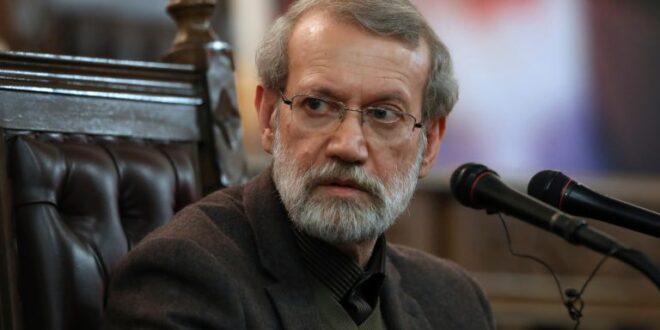
- Last night, Israeli officials announced that Ali Larijani — head of Iran’s Supreme National Security Council — and Gholamreza Soleimani — head of Iran’s Basij militia — were killed in separate overnight strikes.
- With strikes targeting the Basij and its leaders, the regime faces the prospect of the Persian New Year functioning as a potential catalyst for renewed popular unrest, which could be taken advantage of by Israel or the U.S.
- While the U.S. likely favors a stable Iran led by pragmatists who will work with the West, Israel may be more interested in a fragmented Iran should regime change prove unattainable.
- The assassination of Larijani will almost certainly complicate efforts to secure a U.S.-preferred diplomatic off-ramp.
Last night, Israeli Defense Minister Israel Katz announced that Ali Larijani — head of Iran’s Supreme National Security Council — and Gholamreza Soleimani — head of Iran’s Basij militia — were killed in separate overnight strikes, with Iran confirming the next night. Israeli Prime Minister Benjamin Netanyahu described Larijani as “the boss of the Revolutionary Guards, which is the gang of gangsters that actually runs Iran,” and linked the strikes as a part of his larger effort to weaken the Iranian regime and encourage a popular uprising. This has been the stated goal of both Israel and the U.S. since the outset of the war, and the two partners had likely hoped that rapid-fire assassinations targeting senior political, military, and security figures would help them achieve this outcome.
U.S. President Donald Trump framed the initial Operation Epic Fury as an opportunity for the Iranian people to reclaim their state. Netanyahu echoed this sentiment but specifically called on Iranian ethnic groups, stating: “Persians, Kurds, Azeris, Balochs, Abkhazians, and all other citizens of this wonderful nation — this is your opportunity to establish a new and free Iran.” To some, this could be interpreted as a divergence in strategy. While there were initial rumors that the U.S. had tried to mobilize Kurdish forces on the Iraq border, most believe that in place of sweeping regime change — which now looks far less likely (including in an assessment by the U.S. intelligence community) —the U.S. favors a unified and stable Iran led by pragmatists who will work or negotiate with the West. The U.S. is likely concerned that a divided Iran — one where ethnic tensions are stoked and brought to the surface — could have wide-ranging and long-term consequences for regional and global stability, not unlike what unfolded in Syria’s civil war and ultimately gave rise to the Islamic State (IS).
Israel, on the other hand, may be more interested in a weaker, more divided Iran should regime change prove unattainable. A fragmented Iran would have dramatically reduced capacity to fund its proxy network — the so-called “Axis of Resistance” — and would lack the military cohesion to pose an existential threat to Israeli security. A strong Iran that cooperates with the West could emerge as a powerful regional player capable of challenging Israeli interests and actions in the region. Additionally, Israel, unlike the U.S., would bear little direct responsibility for some of the worst consequences of a fragmented state: refugee crises, proxy wars, governance vacuums, or providing economic stability to other regional partners, such as the surrounding Gulf states.
The assassination of Larijani will certainly make it more difficult to reach a U.S.-preferred outcome. Though a part of the regime’s elite, having descended from a Grand Ayatollah, he was widely regarded as a pragmatist within the Iranian system, often acting as a bridge between the hardline elements of the Islamic Revolutionary Guard Corps (IRGC) and the more technocratic and political moderates within the state. In both 2021 and 2024, the Guardian Council — Iran’s powerful unelected vetting body — disqualified Larijani from running for President, likely to sideline him and clear the way for more conservative figures in the Regime. Yet after the 12-Day War in June, he reappeared as the secretary of the Supreme National Security Council, suggesting his rising credibility in the Iranian system as a more conciliatory player. Importantly to the U.S. — despite the $10 million bounty it placed on information leading to him and other “key players” within the regime — Larijani was reportedly opposed to the selection of Mojtaba Khamenei, the deceased Ali Khamenei’s hardline successor and son. In effect, Larijani’s assassination weakens the camp — however constrained it may be — most capable of de-escalation or structured negotiation with the West.
Last night’s strikes also targeted Gholam Reza Soleimani, commander of the Basij, and reportedly killed 300 Basij field commanders. In fact, since the onset of Operation Roaring Lion, Israeli targets have included Basij bases, IRGC headquarters, police stations, and special police units, while U.S. strikes have often focused on nuclear facilities, missile infrastructure, air defense systems, and naval assets. Israel’s intent may, in this case, be to weaken local security structures to create conditions for unrest.
These strikes came a day before Chaharshanbe Suri, celebrated on the eve of the last Wednesday before Nowruz (Persian New Year), when large numbers traditionally gather in public spaces. On Tuesday, the Regime sent mass text messages from the Tehran Judiciary explicitly prohibiting the lighting of fires and the use of firecrackers. The regime simultaneously called on its supporters to fill the streets and squares — with police commander Ahmadreza Radan declaring Tuesday night a “decisive night for us all” and urging loyalists to preemptively occupy public spaces to prevent celebrants from gathering. Authorities also attempted to redirect the festival inward, encouraging celebrations inside mosques rather than on the streets.
Since the regime came into power, Chaharshanbe Suri has been a recurring flashpoint, as it is viewed by government officials as a “pagan relic.” In recent years, the festival has become explicitly political, with demonstrators using the cover of public gatherings to chant anti-regime slogans and burn images of regime figures. Last year, clashes during the celebration left at least 19 dead. This year, with the country under active bombardment, protests ongoing since January, and the internal security apparatus visibly degraded by Israeli strikes, the regime faces the prospect of Chaharshanbe Suri functioning as a catalyst for renewed unrest, one that is ripe to be taken advantage of by Israel or the U.S.
Nevertheless, the IRGC remains a wholly separate institution and appears to have further consolidated power since the war began. Mojtaba Khamenei’s ascension to the supreme leadership is likely to reinforce that consolidation, given his closer ideological alignment with the IRGC’s hardline elements relative to Larijani. As a result, although Larijani had gained influence within Iran prior to his assassination, his removal will likely enable the regime to tighten its control further and suppress what little internal opposition remains, potentially further escalating the conflict.