 Eurasia Press & News
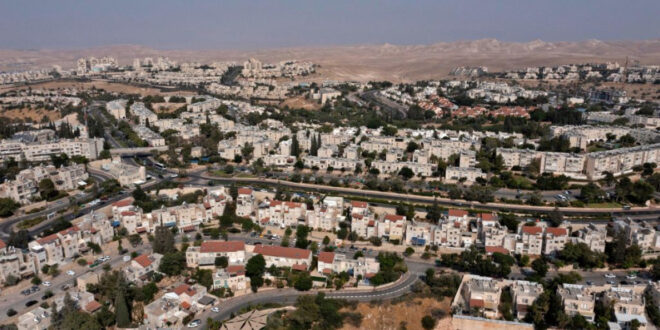
Israel’s cabinet on Sunday approved a process to restart land registration in the occupied West Bank for the first time since 1967, allowing the state to claim land from Palestinians unable to prove ownership.
A week earlier, on 8 February, the cabinet had ratified new measures extending the Israeli state’s administrative, legal, and enforcement authority across large areas of the West Bank that are currently under Palestinian Authority (PA) administration.
Together, these cabinet decisions cement Israeli control over the occupied Palestinian territory (oPt) by expanding settlement authority and transferring planning and enforcement powers away from Palestinian municipalities to Israeli bodies.
The changes would ease land acquisition for Jewish settlers in the West Bank by lifting long-standing restrictions on buying Palestinian-owned land and declassifying local land records, allowing them to seize or purchase property beyond Area C – 60% of the West Bank – into Areas A and B, under partial or full PA civilian control under the Oslo Accords.
Under the new arrangements, planning, building permits, and construction in the Old City of Hebron and in some areas near Bethlehem will also be authorised through Israeli military and settler-linked bodies. The legal changes will also make it easier for Israel to demolish homes in areas under PA jurisdiction.
This transfer of authority will also tighten Israeli control over sensitive cultural and religious sites such as Hebron’s Ibrahimi Mosque, also known as the Tomb of the Patriarchs, and Rachel’s Tomb in Bethlehem. Israeli bodies would also assume oversight and enforcement over environmental and archaeological regulation in PA-administered areas.
Israeli officials, including Finance Minister Bezalel Smotrich and Defence Minister Israel Katz, have openly stated that the latest steps aim to annex the West Bank and “continue to kill the idea of a Palestinian state”. Energy minister Eli Cohen described them as “de facto sovereignty” over occupied Palestinian lands.
Prime Minister Benjamin Netanyahu, who faces elections later this year, has long rejected the establishment of any Palestinian state, framing it as a security threat.
“Israel is openly rejecting a two-state solution, offering instead either genocide, like in Gaza, or an apartheid regime to cement its colonial settlement enterprise,” Palestinian political analyst Xavier Abu Eid told The New Arab, highlighting a consensus among Israeli political parties on a single-state plan from the river to the sea, reflected by their overt public opposition to an internationally endorsed two-state solution.
Analysts say the new Israeli measures are a deliberate rupture with the Oslo Accords, which divided the West Bank between areas under Israeli control and areas where the PA exercises limited autonomy, consolidating de facto annexation while burying the prospects of Palestinian statehood.
Accelerating the annexation of the West Bank
In previous statements, US President Donald Trump has publicly ruled out Israeli annexation of the West Bank, though his administration has not acted to curb accelerated settlement building that Palestinians say undermines their prospects for a state. The US-brokered ceasefire in Gaza also recognised Palestinian aspirations for statehood.
Over 700,000 Israeli settlers live in the West Bank and East Jerusalem – territories captured in 1967 and claimed by Palestinians, along with Gaza, for a future state – where settlement construction, considered illegal under international law, has been repeatedly condemned by the UN.
A senior representative of the Palestine Institute for Public Diplomacy (PIPD), who asked to remain anonymous, told TNA that every Israeli government has always intended to annex the West Bank.
Whereas earlier governments advanced this goal gradually under the pretence of preserving the possibility of a two-state solution, the current leadership has shifted to a “full, open, de facto and legal annexation,” they said.
“Israel has now removed the remaining legal hurdles to its colonial practices,” the Palestinian advocacy leader added, referring to the expedited land seizure and forced expulsion of Palestinian communities.
The war in Gaza has created an opening for and hastened an already ongoing process of land grabs and displacement in the West Bank.
“It’s very much about stealing more and more Palestinian land and squeezing Palestinians into smaller and smaller areas to pressure them into leaving,” British-Palestinian analyst and writer Kamel Hawwash told TNA.
He also raised concerns about the 1950 Absentee Property Law, which allows Israel to seize property from Palestinians who fled or were expelled after 29 November 1947 – when the UN recommended the partition of Palestine – thereby blocking their return or recovery of property lost in the 1948 Nakba.
“This is full-fledged annexation. The reality is already here; no one can claim they didn’t know what was happening,” Abu Eid said.
In July 2024, the International Court of Justice (ICJ) declared that Israel’s occupation, annexation, settlement expansion, land confiscation, and exploitation of Palestinian resources were illegal.
“Israel is taking bold steps meant to strengthen its position and take more Palestinian land, because it is confident enough that there will be no consequences for their crimes,” Abu Eid added.
Erasing Palestinian identity and rights
UN human rights chief Volker Turk warned that Israel’s actions would fast-track the dispossession of Palestinians and their forcible transfer, fuel more settlement construction, and further strip Palestinians of resources and rights.
Countries worldwide have condemned Israel’s moves to impose its unlawful sovereignty, and UN officials have urged their reversal, yet no meaningful international corrective actions or sanctions have followed for abuses against Palestinians.
The decisions also further erode the PA’s limited powers. While observing that the regulations directly impact the Palestinian leadership’s already “very little authority”, the senior PIPD official questioned what it can do under Israeli control.
“The Palestinian Authority has no sovereignty over most of the West Bank. It is incapable of confronting the military occupation or its colonial ruler,” they asserted, while criticising the governing body for its complicity in maintaining the status quo. “It is subservient to them.”
Abu Eid pointed out that without the prospect of an end to the occupation and the withdrawal of Israeli forces, the PA cannot exist or sustain itself in the face of Israel’s entrenched position and the lack of international action.
The political commentator lambasted individual states and the global community for being unwilling to adopt even minimal punitive measures, insisting that Israel must pay a price for decades of ongoing violations.
“If the international community does not understand that normalising what is happening in Palestine means the end of even the prospect of a rules-based multilateral order, then it has completely missed the point,” he said.
The recent Israeli directives are a culmination of two years of a devastating war on Gaza, labelled a genocide by the UN, and a sweeping military campaign in the West Bank, which has displaced tens of thousands and destroyed several refugee camps. In January alone, 700 Palestinians were displaced.
“Israel has a clear trajectory. Its Zionist colonial expansion is ongoing and now accelerating,” the PIPD member warned, urging the international community to act decisively instead of being detached from reality.
Hawwash described the approved tightening of control over the West Bank as an “attack on Palestinians as a whole,” arguing that Israel seeks to erase Palestinians’ designation both as refugees and as a people.
“It’s about ending Palestinian identity. They don’t just oppose a Palestinian state; they don’t want anyone on the land who identifies as Palestinian.”