 Eurasia Press & News
“Put it away,” this was the response Hiba* received from a court employee, when she submitted her handwritten request for the Public Prosecution to investigate the death of her husband and two sons, and put the criminals on trial. On March 7, pro-government Sunni militants in military uniforms had stormed their house in Banyas, and asked them at gunpoint whether they were Alawites, the sect to which toppled Syrian dictator Bashar al-Assad belongs, before taking them to the rooftop and executing them. Her sons were under twenty and still in education.
As the massacre occurred in the holy Islamic month of Ramadan, Hiba expressed outrage, writing that her sons “were fasting when they killed them”. She added that the armed men had taken away the family’s mobile phones and IDs, while ordering them to hand over “gold and cash”, to which they responded that, as mere public-sector employees, they didn’t have any of that.
Hiba is now left alone with her daughter in their ‘empty’ house, “it’s too big for me,” she said; the room of her two slain sons is left untouched, she doesn’t dare to move anything, the university papers scattered where they were before their deaths, just like relics.
The Public Prosecution issued a request for the police to draft a report on the murders, but the document was much more succinct than what Hiba had expected, with a generic reference to firearm wounds as the cause of death and no mention whatsoever of crime scene details.
When Hiba visited the police station, accompanied by witnesses, she wanted to explain what happened, for it to be reflected in the police report. “This is not our job!” shut her up one of the policemen. Hiba was told to sign and thumbprint a report that had been copy-pasted from the death certificate and carried no mention of the perpetrators.
In normal circumstances, police investigations and coroners’ reports would lay the foundations for investigating a crime. In Syria, however, some argue that the current chaotic transitional phase allows for an exception to the norm, given that post-Assad institutions are still in their embryonic stages.
In March 2025, around 1,700 people lost their lives on the Syrian coast in the aftermath of a pro-Assad insurgency, which resulted in casualties among Sunni pro-government forces and in mass-scale reprisals against Alawite civilians. Under the Assads, Alawite dissidents, whose families were among the victims of last year’s massacre, had always been persecuted for not being loyal to the regime.
One year later, understanding how justice is being delivered to victims’ families is crucial in the broader framework of transitional justice; it is also timely because the alleged perpetrators of the March massacres are currently standing trial and Syria is frequently torn apart by outbursts of sectarian violence. In July 2025, in the south-western province of Suweida, Druze clashed with Bedouins and pro-government forces, resulting in more than 600 deaths. In December 2025, Alawites took to the streets of the coastal region, demanding federalism and an end to the targeting of their community in unprecedented large protests.
Over the past year, The New Arab (TNA) interviewed dozens of families who lost their loved ones in the sectarian violence, while gathering and reviewing the medical, judicial and administrative documents required to register their deaths. We also asked victims’ relatives about their engagement with the state-led investigative committee which had been established in the wake of the massacres. Open-source evidence of instigators and alleged perpetrators of sectarian violence being allowed to operate freely online was also examined. Lastly, following the beginning of widely publicised open trials in November, we asked legal experts to assess the judicial transparency of the Ahmed al-Sharaa government.
What emerges is a picture of patchwork preliminary investigations, further complicated by the lack of trust in the independence of the state-led investigative commission and of the judiciary, and by the perception that sectarian militiamen and instigators are able to escape accountability.
Hurried police reports
In the city of Banyas, one of the most targeted by the perpetrators of the March killing spree, police reports were considered a requirement only when IDs could not be retrieved on the victims’ bodies – sometimes because the documents had been taken away by the attackers.
Similarly to Hiba, the victims’ relatives would inform a doctor about the causes of the death, for these to be very succinctly mentioned in the death certificate, drawing exclusively on the relatives’ accounts as the bodies had not been examined in any hospital – it was difficult for survivors to obtain permits that would allow them to bury victims in their own villages, hence many had to hastily bury them in mass graves.
The Public Prosecution, at the request of the families, would then instruct the police to draw on the death certificate to write their report, which was required in order to officially register the death.
When ID documents were instead retained, police reports – and therefore police investigations – were deemed unnecessary. Residents of Alawite-majority neighbourhoods in Banyas also lamented how the newly-established police would reportedly often refrain from investigating murders and thefts.
Given how Syria’s post-Assad security apparatus had to be disbanded and re-established from scratch, some argue that police forces could have done little, even if they had been fully trained and operational.
The General Security “lacks experience […]. The Public Prosecution relies on police as the authority that enforces the law. Therefore, the Public Prosecution was unable to take action and carry out the necessary procedural measures,” a Syrian lawyer with more than 20 years of experience told TNA. He preferred to remain anonymous in light of the precarious security situation.
In the context of “the violent events occurred on the coast for [those] three days [i.e. March 7 to 9], it would have been impossible for the law enforcement authority to operate, even if it had been present”, he added.
But another legal expert told TNA that the institutions’ unpreparedness is being used as an excuse to escape responsibility for the superficial depth of investigations.
“You don’t have the police on the coast? Fair enough. You have them in Idlib or Damascus? You have investigators who can travel to the coast and document the killing of people through official police reports – I am not saying in one week – in one month? In this way, they are evading responsibility and covering up the facts by making up excuses,” said Roula al-Baghdadi, another Syrian lawyer and the executive director of Dawlaty, an NGO working on transitional justice.
The role of General Security forces as a law enforcement agency is further complicated by the fact that both journalistic and UN-led investigations found some of their members to have been implicated in the killing of Alawite civilians. TNA also gathered accounts that suggest that security forces, at the very least, facilitated looting and massacres.
TNA sought comment from Syria’s Ministry of Interior without receiving any response in time for publication.
Coroners brought in from Idlib
Unlike in the case of police investigations, where the state appeared to abdicate part of its functions, qualified medical staff from other regions was instead mobilised to respond to the emergency on the coast.
For most of the relatives of the victims, obtaining a medical report was a mere bureaucratic procedure required to register one’s death, namely to obtain the so-called “death notice” (bayan al-wafah). In the wake of homes being turned into slaughterhouses, the streets were awash with terror and swirling rumours: initially, fear kept many from registering the deaths of civilians, as they worried that at civil registry offices they would be coerced into confessing ties to pro-Assad insurgents or that these, rather than pro-government forces, had killed their relatives.
While we were visiting one family in Banyas though, a coroner report caught our attention as it had been issued by the Idlib-based Forensic Medicine Directorate. Despite its very succinct format, the cause of death indicated in the document (i.e. blood loss as a result of two gunshots) was apparently accurate, but the need to turn to a coroner from Idlib, rather than to one based in the coastal region, seemed suspicious; the north-western province is in fact the main stronghold of the current government.
The Syrian lawyer described the document as “extremely brief and very simple, failing to satisfy the facts required for the coroner report”.
The case of Fawda, another resident of Banyas, further confirms how these coroner reports were apparently more akin to a mere formality than thorough examinations. Her father was shot dead and his body was later set on fire, yet the death certificate listed burns, rather than gunshots, as the indirect cause of death before his heart stopped. When Fawda asked medical staff to correct the certificate, she was told this was impossible because it had been based on a report compiled by the Idlib coroners.
TNA spoke with a doctor from Banyas who confirmed the arrival of a medical committee from Idlib on March 9, which was tasked with preparing reports for all the corpses that had been brought to the local hospital; the families were then showed pictures to identify their slain relatives, so that the contents of the forensic reports could be transcribed in the death certificates. The doctor’s assessment of the reports was that “most of them were accurate” in describing “the direct and indirect causes of death”; yet, he believed that the committee had come from Idlib “to distort facts but was unable to do so”.
The New Arab contacted Syria’s Ministry of Health, seeking comment on this story, but we haven’t received any response in time for publication.
The investigative commission
On March 9, the Syrian Presidency promptly established a fact-finding commission to investigate the coast events. “It was intended that the work [of the commission] would substitute for that of the police and the Public Prosecution, which had been unable to carry out their procedures in the context of the bloodshed […],” the Syrian lawyer explained to TNA.
However, this was not the official mandate of the commission. While recognising that the security conditions it operated in were challenging, with the state still in the process of establishing institutional control over Syria, Judge Jomaa al-Dbis al-Anzi, the head of the now-dissolved fact-finding body, told TNA that “the commission’s work does not preclude the duties of specialised authorities, be they the police, the judicial police, or the prosecution offices […].” He also recognised that the issuance of coroner and police reports had been “rare”, with those available having been reviewed by the commission.
Judge al-Anzi emphasised that “the conclusion of the commission’s work does not mean the complete closure of the case. The committee’s work is not specialised criminal work that deals with each case individually.”
The New Arab interviewed dozens of coast residents, who were all affected by the violence, whether as relatives of victims, eyewitnesses or targets of theft. When reviewing their accounts, we always sought to corroborate them with visual and documentary evidence, as well as with the personal details contained in the lists of victims that had been compiled by local activists. On this basis, we consider the interviewees to be civilians and have no reason to suspect that they were engaged in any armed confrontation with pro-government forces.
At least 16 of the 22 we interviewed, were not heard by the commission, with the main reasons for them not engaging with the fact-finding body being fear and a lack of trust in its independence from the Syrian government.
Legal experts have highlighted how witnesses had no access to psychological support when they were heard by the commission.
The Assad regime ruled Syria with an iron fist through a network of informants and by instigating distrust among communities. This made it difficult to build trust overnight, despite some efforts by the commission itself to reassure Alawite witnesses through civil intermediaries and by holding meetings in ‘neutral’ neighbourhoods with mixed sectarian demographics.
Suleiman*, a prominent Banyas-based political dissident under the Assad regime, who lost two relatives in the massacres, told TNA that he had encouraged people to provide testimonies, while personally refusing to meet the commission because, in his view, its members were “throwing dust in people’s eyes; as the [Al-Mutanabbi] verse says, ‘You are both the adversary and the judge in the dispute’”.
Samar*, another resident of Banyas who witnessed the killing of her brother, told TNA that she was aware of the commission being in town, but she refused to meet them as “[they] should have come to our house to witness the destruction and see the bullet holes with their own eyes, they should have come to the grave [where we buried our relatives]”. After its arrival in Banyas, the commission remained stationed in a local cultural centre, despite residents having fled to their villages, and being terrified and reluctant to return to the coastal city.
Commenting on the eyewitnesses who did not engage with the fact-finding body, Judge al-Anzi said the commission had explained “its mission and independence”, while ensuring meetings were held in safe locations in the victims’ villages. He also explained that massacre sites had been visited “more than once” and that, in some instances, survivors had been escorted “from and to the commission’s headquarters”. Having collected accounts from almost 1,000 survivors, Judge al-Anzi said he “understands the fears [of those who refused to participate] in that period”.
While the Reuters investigation identified 40 sites where killing had taken place, the fact-finding body visited only 33. But field visits were not enough to fully reassure survivors. “There were four cars with weapons pointed at the houses while the commission was in [the village of] Birabishbo,” said Rima*, a university student who had found her slain father in a pool of blood at home, “the investigative committee was responsible for bringing the General Security to our village.”
But Judge al-Anzi told TNA that the deployment of armed forces was proportional to the precarious security conditions. “The commission was accompanied by a small escort (4 to 5 members) armed with light weapons, despite the security challenges and the real risks to which it was exposed,” he clarified.
Rima eventually found the courage to share her testimony with the commission. When TNA interviewed her in Latakia, she couldn’t stop herself from breaking into tears, as recalling the killing of her father was still excruciating; but then she calmly reviewed the graphic footage we showed her in an effort to identify perpetrators, saying that little could shock her anymore after seeing her father lying dead before her eyes.
On July 22, the commission announced its findings in a press conference: it put the death toll at 238 among Sunni government forces and 1,426 among Alawites, recognising that most of the latter were civilians and that, even without ruling out that some could have been remnants (fuloul) of the Assad regime, the majority had been killed after the end of the clashes between pro-Assad insurgents and pro-government forces (i.e. between March 7 and 10).
Reports about a significantly lower number of civilian deaths having been caused by pro-Assad insurgents remain disputed.
The commission highlighted the different, more or less opportunistic, motivations that animated the perpetrators of crimes against Alawite civilians, to draw the conclusion that violations were “not organised” from Damascus but rather the outcome of the unruly behaviour of certain inexperienced units – among them volunteers.
This resulted in widespread looting of Alawite houses and businesses, for which the commission itself had recommended reparations that were never put into practice by the Syrian government.
The fact-finding body indicated the lack of a consolidated state, three months after the collapse of the Assad regime, as a mitigating factor that ought to be taken into account when evaluating the response of the new rulers to the bloodshed.
The commission praised Syrian authorities for their cooperation and for issuing directives centred on the protection of civilians at the time of the events; government forces were found to have been predominantly “disciplined” and compliant with these orders.
This stands in contradiction with our own findings, and those of multiple international organisations, with regards to the implication of security and military forces in the massacres. Although in some cases government forces intervened to protect civilians, a Reuters investigation was able to determine that high-ranking Ministry of Defence officials were reportedly supportive of violations being committed against Alawite civilians. Both the EU and the UK sanctioned Turkey-backed commanders and factions that had been merged into the Syrian army after the downfall of the Assad regime, and were found to be responsible for the killing of civilians on the coast.
The investigative commission denied receiving any report about the kidnapping of Alawite women, despite these crimes being documented by human rights organisations and the UN. It added that some of these alleged abductions had occurred in areas outside of the commission’s mandate or before the March massacres. While visiting Syria’s coast, TNA also gathered multiple accounts of gender and sect-based kidnappings; one parent told us he would regularly pick up his daughter from university in broad daylight.
Lawyer Roula al-Baghdadi expressed her dissatisfaction with how the commission had investigated Gender-Based Violence (GBV), knowing that rape, forced marriages, harassment and kidnappings had been documented during the massacres.
“We didn’t see experts specialised in sexual violence. We have no information about what they did to investigate sexual violence, which most of the times accompanies this type of crimes,” al-Baghdadi told TNA. In its press conference, the commission explained that it had been supported by legal practitioners from the Alawite community but this was not done in the context of GBV investigations.
In November 2025, Syria’s Ministry of Interior concluded that most reports of kidnapping of Alawite women were false, after conducting a probe into 42 cases, of which only one was confirmed to be an abduction.
Al-Baghdadi commented on this probe saying that “the Ministry of Interior has no power to instruct these investigations, which would be within the powers of the judicial authority. Although the Ministry of Interior is not accused as an organised structure, its members are accused of having been involved in abductions or in facilitating them.”
The full findings of the investigative commission were made available to Syrian President Ahmad al-Sharaa ahead of the press conference, which has led human rights organisations to request the transparent publication of the probe in its integrity.
The fact-finding body clarified that the lists of suspects had been initially handed over to the Public Prosecution even before the Presidency. However, due to the legacy of decades of authoritarian rule, the Syrian judiciary has never been independent from the executive. According to the interim Constitution introduced in March 2025, the Presidency is still able to appoint members of the Supreme Constitutional Court, the highest judicial authority in the country.
Televised trials
In a highly publicised initiative aimed at showing that the Syrian government was serious about accountability, open trials for the coastal massacres started in Aleppo on November 18; both alleged insurgents and members of government forces implicated in reprisals went to court. A second session was held on December 18, featuring only pro-Assad defendants.
Some observers hailed this as a praiseworthy step, while highlighting how the Syrian judicial system still requires substantial reforms to become independent. Others were more critical of the unpreparedness of the existing body of laws.
“The Syrian law doesn’t recognise war crimes, crimes against humanity and genocide crimes, hence the legal framework is insufficient [to hold the trials],” said al-Baghdadi, the Syrian lawyer. Defendants are instead being prosecuted under the Military Penal Code, the General Penal Code and the Code of Criminal Procedure, in an unusual combination of civil and military court proceedings.
“Let us not forget that a lawsuit was filed in France, with compelling evidence that we are in front of a genocide,” commented al-Baghdadi. But the investigative commission, whose assessment informed the current trials, refused to frame the events as a one-sided massacre. “We do not adopt the term ‘massacres’ as it may suggest that one side committed criminal acts against the other,” Judge al-Anzi told TNA.
Al-Baghdadi told TNA that, in her view, the legal proceedings were rushed through “not because the government wants to solve the internal crisis, but as a message for the international community rather than for Syrians”. Since the overthrowing of the Assad regime, Syrian officials have been holding intense diplomatic talks to convince Western powers to lift existing sanctions. In 2025, all of the UN, the EU, the UK and the US have significantly rolled back sanctions on Syria.
According to prominent lawyers, the ongoing trials are inherently flawed because they are held outside the framework of yet-to-be-introduced transitional justice laws. A first step in this direction was taken in May 2025 with the establishment, through a presidential decree, of the National Commission for Transitional Justice (NCTJ), although its mandate is centred exclusively on crimes committed by the Assad regime.
“Transitional justice was made to stop on December 8 [i.e. when the Assad regime was toppled in 2024], although violations continue and they are not separate from the Assad era,” said al-Baghdadi.
Even more importantly than the period of time taken in consideration before the approval of a permanent Constitution, “the entire process must ensure that it will achieve non‑recurrence [of the crimes]; otherwise it is meaningless, whether it ends on December 8 or at a later date,” explained the Syrian lawyer.
The state-led investigative commission acknowledged that part of the violations committed against Alawite civilians had to be ascribed to fear and revenge linked with Assad-era atrocities.
In May 2013, up to 450 Sunni civilians, including children, were massacred by pro-Assad forces in the quarter of Ras al-Nabe’ in Banyas, and in the neighbouring village of al-Bayda.
In March 2025, multiple accounts gathered by TNA suggest that Sunni residents from surrounding areas were implicated in the massacres committed in the affluent Alawite-majority neighbourhood of al-Qusour in Banyas, apparently seeking retaliation for what happened under the rule of the Assads.
Class-based grievances against Alawite professionals is also said to have driven the massacre in al-Qusour. “There was a class resentment against Alawite doctors from al-Qusour, who were specifically targeted and told: ‘you could learn [under Assad] while we couldn’t!’”, said Issa*, a veteran anti-Assad political dissident whose family members were killed during the bloodbath.
Despite a widespread perception among Sunni impoverished segments of the Syrian population that minorities were empowered under the Assad regime, many Alawites continue to live in poverty.
Although the investigative commission referred 563 suspects to the judiciary (298 for attacks on civilians and 265 for assaults on General Security forces), none of the 22 witnesses we sat with was summoned to court, regardless of whether they had been heard by the commission or not. Survivors think that the political optics of the trials serve the interests of the new rulers in Damascus but reject the notion that they represent a genuine attempt to hold perpetrators accountable.
At the time of publication, high-ranking military officials have not been summoned to court, despite the international sanctions imposed on some of them.
The New Arab contacted Syria’s Ministry of Justice and the Public Prosecution to incorporate their comment in this article, but we haven’t received any response in time for publication.
Sense of impunity
When announcing its findings in July, the investigative commission had recommended that the Syrian government take “legislative, executive and educational measures” to prevent sectarian incitement, including through an “oversight” of media and social media’s output. But Syrian authorities failed to follow up on these recommendations.
Our attempts to seek comment on this from Syria’s Presidency have been unsuccessful by the time of publication.
One year after the bloodbath, alleged perpetrators and instigators of sectarian violence seem to operate undisturbedly online.
In a video shared on social media during the massacres, a man identifying himself as “Suleiman al‑Ajeel”, a fighter from the Turkey‑backed faction Ahrar al‑Sharqiya, announces his deployment to Latakia province to wage war on “the descendants of pigs and monkeys” (i.e. Alawites).
Ahrar al-Sharqiya fighter Suleiman al-Ajeel reportedly heading to the coast to fight against Alawites. [@syrdoc/Telegram/fair use]
In another clip shared in the same days, al-Ajeel is seen glorifying the killing of “unbelievers” while posing next to what appear to be civilians’ bodies inside a house. Local activists reported that these videos had been originally posted on the Ahrar al-Sharqiya militant’s Facebook page (78k followers), only to be removed at a later stage.
Warning: Graphic Content. Ahrar al-Sharqiya’s Suleiman al-Ajeel poses next to what appear to be civilian dead bodies inside a house presumably located in the Syrian coastal region. [Facebook/fair use]
In January 2026, he posted another video on his FB page, documenting his alleged deployment to Tell Hamis, a town located in the north-eastern province of al-Hasakeh, as a participant in the military operation that allowed Damascus to regain control of most of the territories held by the Kurdish-led Syrian Democratic Forces (SDF). In the clip al-Ajeel is heard calling on fellow mujahidin to treat prisoners fairly after describing Kurdish fighters as “pigs”.
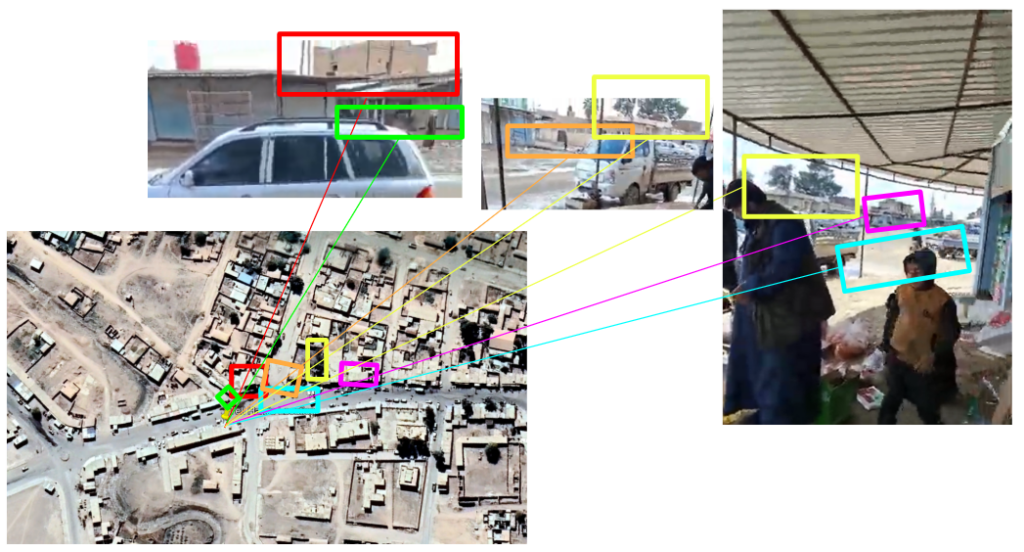
The New Arab geolocated one of al-Ajeel’s videos, which was posted on 26 February 2026 on one of his FB pages, verifying that the clip was indeed recorded in the centre of Tell Hamis.
After the downfall of the Assad regime, Ahrar al-Sharqiya largely merged into the newly established 86th Division of the Syrian Arab Army. The faction is still under US sanctions for its human right abuses and for its role in the assassination of Syrian Kurdish politician Hevrin Khalaf; the militia is also known to enlist former Islamic State (IS) members in its ranks.
TNA has also monitored another Facebook account (33k followers), whose holder goes under the name of “Zuhair al-Anadani” and describes himself as a “media activist” and a “mujahid in the path of God”.
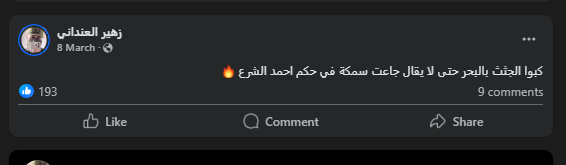
Videos celebrating the massacre of 236 Alawite civilians committed in the village of Sanobar (Latakia province) were posted on al-Anadani’s FB page shortly after the events. “Throw the corpses in the sea so that it won’t be said that a fish went hungry under Ahmad al-Sharaa’s rule,” read one post, echoing a slogan that circulated during the killings.
On June 21, a few months after the massacres, al-Anadani announced on Facebook that he had been reportedly hired for an unspecified job by the Syrian government.
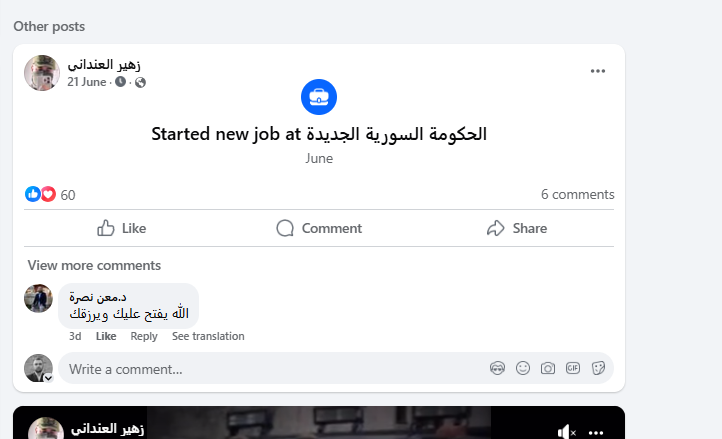
As of the day of publication of this article, al-Anadani’s account remains active.
Despite social media having been flooded with content that instigated violence against Alawites before and during the massacres, The New Arab is not aware of anyone having been indicted for incitement.
Social media mirrors the sense of insecurity targeted communities feel in Syria, with survivors we spoke with lamenting that alleged perpetrators are at large, openly boasting about their involvement in the massacres.
Perceptions of impunity and injustice remain widespread. “[The investigative commission] described [what happened] as retaliatory acts. Retaliatory acts against whom?!”, burst out Hiba, her voice tinged with both anger and sadness, “against my son, a top medical student who was sent to Russia on a scholarship?! Or against my [other] son who was still in school?! […] We had nothing to do with anything that happened over the past years [in the war].”
Due to the legacy of the Assad regime, under which the state was not held accountable for the crimes it committed, survivors are understandably sceptical about any process that seeks to achieve justice – be it a fact-finding body or a journalistic investigation. During our fieldwork on the coast, we were ourselves confronted with difficult questions about our work and the slim chances it stood of having an impact.
Syria’s path towards accountability is indeed a long uphill struggle, but the new authorities are running out of time to demonstrate that they genuinely want to forge trust across the sectarian spectrum, and prove themselves to be subject to the rule of law just like any other Syrian citizen.