 Eurasia Press & News
Many want to share in a possible boom after the toppling of Assad ended civil war and global isolation, but access is limited
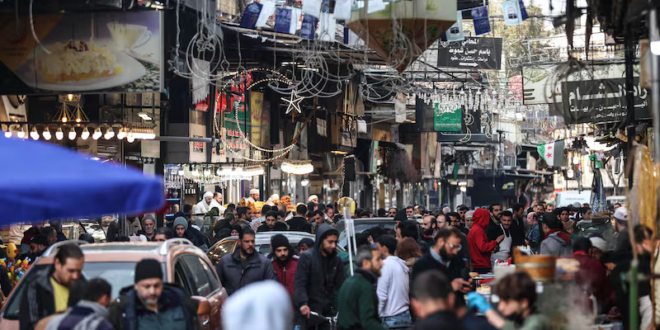
Scouting the old quarter of Damascus for a shop to expand his business, gold merchant Mahmoud Radwan encountered both high rents and the open hostility displayed towards Syria’s emerging rural Sunni elite in a country still brimming with violence a year after civil war ended.
Mr Radwan, who is from the northern province of Idlib, said that every time he parked his car in front of shops in the capital, the owners would shout at him to move on. They would not do the same to cars bearing Damascus licence plates.
“Once, eight of them ganged up on me. When they saw that I had a gun, they backed off,” he said.
The incident underlines the social rifts in Syrian society as the emergence of a new leadership drawn from a hardline Sunni rebel group unsettles the country’s many ethnic and religious minorities, including Mr Al Assad’s Alawite sect, which dominated the power structure for the last six decades.
Mr Radwan’s home province – the last major rebel redoubt in the civil war – was governed by Hayat Tahrir Al Sham (HTS), a hardline Islamist group whose leader formerly had ties to Al Qaeda. The group’s toppling of the dictator Bashar Al Assad in December last year ended nearly 14 years of civil war that claimed hundreds of thousands of lives, displaced more than half the country’s prewar population of 20 million, including about seven million who fled abroad, and left its infrastructure and economy in ruins.
The Assad regime’s fall has allowed a constant stream of visitors to Damascus from rural and formerly rebel-held areas. The capital has also experienced an influx of newcomers who underpin the new bureaucracy and security apparatus, replacing the members of the Alawite sect.
The emergence of this new class has been accompanied by social tension as its members compete with established businesses and communities, particularly in Damascus and Syria’s second city of Aleppo, the centre of the country’s industrial heartland in the north. Businessmen like Mr Radwan, looking for opportunities in urban centres amid expectation of a post-conflict boom, have driven up rents.
Rental reform shelved
Mr Radwan, who has an Idlibi accent and many relatives who are members of HTS, said he avoided associating himself with the new authorities or boasting of his connections so as not to “be counted as one of them”, which would antagonise the Damascenes.
He finally found a shop at the Hariqa market, one of the most expensive for retail space, that was available for $2,500 a month, a huge sum given that the average monthly income in Syria is $60 to $90, and that the shop’s area is only seven square metres.
“I didn’t rent it,” Mr Radwan said. “I am not sure the shop could generate enough income, especially since I would have to move to Damascus.”
Existing tenants in the old city have permanent leases with ultra-low rents and have the right to sublet their premises under long-standing regulations that make removing them impossible without payment of large sums of compensation, which contributes to the high prices.
The governor of Damascus sought to scrap these regulations earlier this year, but abandoned the move after an outcry from the established traders. The episode suggested that the new authorities do not want to appear to be declaring war on Damascenes, but it has contributed to suspicion of the new rulers.
From periphery to centre
Mr Radwan opened a gold shop in Idlib, with help from his landowning father, during the first half of the civil war as demand for gold grew to hedge the collapse of the Syrian pound and devaluations of the Turkish lira. Displaced people, most of them escaping regime bombing in rebel areas, were pouring into Idlib.
The population of the area, under partial Turkish protection, doubled to three million during the conflict. The province, once a rural backwater, became a centre for consumer goods imported from Turkey, and for financial and other services, as well as trade in commodities and big-ticket items once the preserve of Aleppo and Damascus.
However, there are signs that investment is picking up in both cities. According to data compiled by the Syria Report, a business and economy newsletter, 190 new companies were registered in Damascus in the first half of this year – an increase of 40 per cent from the same period in 2024. In Aleppo, there were 26 new company registrations in the first six months, as many as there were for the whole of last year. No information was available on the investors in these new companies.
An elderly craftsman who put his shop in Aleppo’s commercial Baron district up for sale so that he could go and live with his children in Dubai, said the only offers he received were from monied rural people. A new money exchange that opened in the district was established by a man from the Jabal Al Zawiya district in Idlib, which prospered while regime-held Aleppo languished.
As in Damascus, there are signs of strain between newcomers and long-term residents in Aleppo. Old families avoid a giant, gaudy new cafe that was opened in the central Muhafaza area by investors from Idlib.
A Syrian who works with an international aid agency said the tension is palpable. She pointed to damage to the side of her car from being hit by a motorcycle with Idlib number plates that was being ridden along the pavement. “I managed to stop the rider, but he only yelled obscenities and how I had no right as a supposedly privileged Aleppan to demand anything from him,” she said.
New monopolies?
The government is seeking to set up a new social contract and rules for doing business, while accommodating demands for a war dividend from its core rural constituency. However, allegations of nepotism and graft have started to hover around the new order.
Many sensitive positions in the state apparatus have been awarded to people from Idlib and other rural areas, because they are deemed trustworthy and to meet their demands for jobs. Monetary policy is also murky, contributing to a liquidity crunch that has particularly hurt businesses that survived the former regime, associates of which siphoned off the country’s resources and left little for anyone else.
The government even adopted Sham Cash, a money transfer app widely used in Idlib, to pay public employees across the country, with the fees going to the unknown owners of the app. Sham Cash “is not linked to a legitimate or verifiable company”, according to the digital rights site Smex.
The government’s moves to merge the state’s oil production, distribution and refining into a newly established commercial company owned by the government, and to transfer state-owned petrol stations to Taiba Petroleum, another Idlib company whose owners are undisclosed, have also raised questions.
Jihad Yazigi, publisher of the Syria Report, said President Ahmad Al Shara’s intention might be to raise efficiency, but noted at the same time that he has the power to give out contracts to “whoever he wants”. Syria is in a period in which new networks are being formed, but “the bigger picture is quite difficult to see at this stage”, he added.