 Eurasia Press & News
They expect to obtain a client state in at least part of Yemen as their reward for fighting the Houthis.
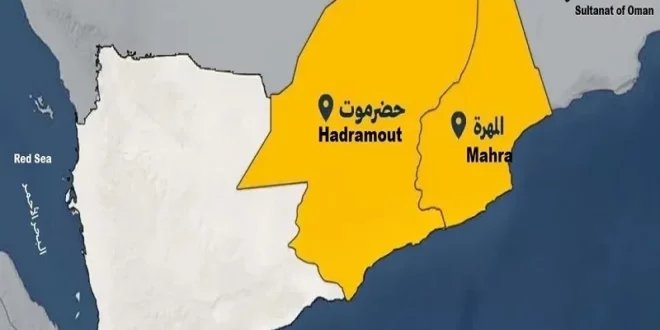
The Southern Transitional Council (STC) claimed that Saudi Arabia carried out warning airstrikes in proximity to its forces, which followed this South Yemeni separatist group dismissing the Saudis’ demand to withdraw from the eastern provinces of Hadhramout and Mahra. As a reminder, the STC – which is part of the Presidential Leadership Council (PLC) and whose leader is its Vice-President – took control of those Saudi-aligned provinces in early December as part of an anti-smuggling operation.
“The De Facto Restoration Of South Yemen Drastically Shifted The Conflict’s Dynamics” by averting what had hitherto been assumed to be the fait accompli of Yemen’s trifurcation between the Houthi-controlled North, the STC-controlled South, and the de facto Saudi-controlled East. It was foreseen that “non-kinetic pressure from the Saudis (e.g. economic coercion and information warfare) to share power with the self-exiled PLC” would follow, but now the Saudis are clearly escalating in a kinetic sense.
The Saudi-led coalition’s spokesman just threatened that “Any military movements that violate [the Saudi’s demand that the STC withdraw from the East, which was made on a de-escalation pretext,] will be dealt with directly and immediately”. This exposes Riyadh’s goal of obtaining a client state in East Yemen, whether as a new Saudi province, a nominally independent state, a de facto independent state in confederation with South Yemen, or the aforesaid as a formally autonomous state within United Yemen.
In pursuit of that geopolitical end, they’re seemingly willing to wage an intra-coalition war against the STC at the cost of further widening the Saudi-Emirati divide (the UAE backs the STC) and possibly emboldening the Houthis to launch an offensive amidst this turmoil, unless they cut a deal with them. On that note, it’s indeed possible that there’s a secret agreement between the Saudis and their Iranian-backed Houthi enemies that could have been reached directly between Riyadh and Tehran.
Neither wants the UAE expand its regional influence even more than it already has via the restoration of South Yemen, ergo why Iran might have agreed to tell the Houthis not to exploit an intra-coalition war in exchange for the Saudis agreeing to leave the North alone if they reconquer the East. Houthi-controlled and Iranian-backed North Yemen would then function as a de facto independent state while it’s unclear exactly what political status the East would have as was explained two paragraphs above.
Hadhramout is the center of Yemen’s oil industry so the STC’s potential loss of that province would make it difficult for South Yemen to ever become financially self-sufficient, thus making it dependent on the Saudi-controlled East in any confederation or on the Emirates if the East and South go separate ways. In that case, South Yemen would struggle to ever restore its full sovereignty, thus dealing a powerful blow to this genuinely popular group’s goals and possibly fueling deep-seated resentment against the Saudis.
If the Saudis go through with airstrikes against the STC and allied forces in the Kingdom carry out a invasion of the East in parallel with that, then the coalition might become irreparably divided just like Saudi Arabia and the UAE could become too, with the latter outcome heightening regional tensions. This blatant power play would therefore expose the Saudis’ geopolitical motives by showing that they always expected to obtain a client state in at least part of Yemen as their reward for fighting the Houthis.