 Eurasia Press & News
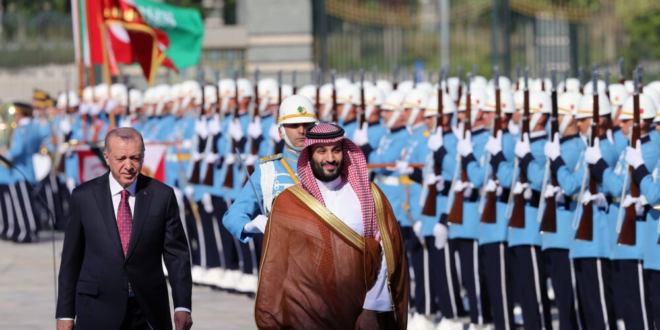
As the rivalry between Riyadh and Abu Dhabi sharpens in Yemen and beyond, Turkey has begun edging closer to Saudi Arabia. Turkish Foreign Minister Hakan Fidan has openly acknowledged Saudi concerns, saying in a televised interview, on January 8, that “developments in the region — especially recent ones — pose a threat to Saudi Arabia.” Shortly afterward, reports emerged that Ankara was seeking to join the Saudi-Pakistani defense pact signed last September, which frames an attack on either country as “an aggression against both.” That “one for all, all for one” language — echoing the North Atlantic Treaty Organization’s (NATO) Article 5 mutual defense clause — has fueled claims in Washington and the Middle East that a new regional order is taking shape: a Turkey-Saudi axis backed by a NATO-like defense architecture, implicitly aligned against Israel and the United Arab Emirates.
This reading overstates the case. Turkey’s regional outlook does increasingly overlap with Saudi Arabia’s — from Yemen to Syria, Libya, and the Horn of Africa. Both Ankara and Riyadh favor strong central states as the foundation of a stable, integrated regional order, while the UAE has often backed actors that undermine those central authorities. Ankara also places a premium on a close alignment with Riyadh, believing that Saudi Crown Prince Mohammed bin Salman enjoys stronger ties with President Donald Trump than Emirati leader Mohammed bin Zayed — a dynamic Turkish officials see as potentially useful in addressing unresolved issues with Washington, according to a Turkish official the author spoke with. In part driven by those considerations, defense and financial ties between Turkey and Saudi Arabia have deepened in recent years.
But Ankara cannot afford an overtly anti-UAE posture. While Saudi Arabia’s ability to inject capital has helped President Erdoğan at critical moments, the UAE’s financial influence is far more deeply embedded across Turkey’s economic architecture — from currency swap lines and capital markets to corporate partnerships — giving Abu Dhabi greater structural leverage over Ankara. Turkey is also wary of the Abu Dhabi’s lobbying power in Washington, which Turkish officials believe damaged Ankara’s interests after the latter backed Muslim Brotherhood-aligned groups following the 2011 Arab uprisings.
Turkey’s interests, therefore, lie in balancing its relationships with Saudi Arabia and the UAE, not choosing between them. Nor is the Saudi-Pakistani defense pact — even with Turkey’s possible participation — likely to morph into a “Muslim NATO.” It is better understood as political signaling: an assertion of Muslim solidarity in response to what these countries view as the destabilizing actions of an increasingly reckless Israel. Crucially, Ankara would prefer the UAE inside this tent rather than outside it, despite persistent differences with Abu Dhabi.
The growing convergence of Turkish and Saudi visions
Ankara drew two hard lessons from its post-Arab Spring policy of backing groups seeking to overthrow central governments in the Middle East. First, the chaos that followed consistently undercut Turkey’s own interests. The Syrian uprising pushed millions of refugees into Turkey, turning it into the world’s largest host of Syrians, and enabled the emergence of an autonomous Kurdish region along its border — an outcome Ankara viewed as a direct security threat. In Libya, the collapse of central authority cost Turkish companies billions in suspended and canceled contracts. And in Egypt, the post-Arab Spring order complicated Turkey’s ambitions in the Eastern Mediterranean.
Second, it left Ankara regionally isolated — and squarely in the crosshairs of Gulf states whose financial backing Turkey badly needs as, to this day, it grapples with a fragile economy. Since 2020, Turkey has recalibrated. It has shifted toward backing strong central governments, rolled back its support for Muslim Brotherhood-aligned movements, and moved to repair ties with Gulf powers such as Saudi Arabia and the UAE. Ankara now sees a pro-status quo regional strategy — focused on stabilization through trade, investment, and infrastructure integration — as essential to both economic recovery and diplomatic influence.
That modus operandi increasingly overlaps with Mohammed bin Salman’s long-term economic strategy for Saudi Arabia, Vision 2030, which rests on promoting regional integration and minimizing conflict to enable economic diversification. In line with that approach, since 2021, Riyadh has strengthened ties with Oman, repaired relations with Qatar, normalized ties with Turkey, reached a China-brokered understanding with Iran, and sought to engage the Houthis and manage tensions in Yemen. Taken together, these moves signal a clear shift away from confrontational regional politics and toward a more pragmatic strategy — one built around supporting internationally recognized central governments across the region and beyond. Turkish policy has time and again followed suit, sometimes in concert with the Saudis, in other instances following a Saudi move, and in some areas incidental to what Saudi Arabia was doing but, crucially, moving in the same direction.
Yemen
In Yemen, where the Houthi takeover of Sanaa in late 2014 sparked a civil war that fractured the state, Saudi Arabia has backed the country’s internationally recognized government, launching a military intervention to support it in March 2015 as part of a regional coalition. Riyadh’s commitment to Yemen’s internationally recognized central authority has come into sharper relief recently as its rift with its former coalition partner, Abu Dhabi, spilled out into the open. On December 30, Saudi Arabia carried out airstrikes on the port of Mukalla in southern Yemen, targeting what it said were weapons shipments from the UAE to the Southern Transitional Council (STC), an Emirati-backed separatist group seeking southern Yemen’s independence.
Turkey has aligned with Saudi Arabia’s emphasis on Yemen’s unity and territorial integrity. Yemen itself is not central to Ankara’s post-Arab Spring regional strategy; rather, Turkey’s position has largely tracked the ups and downs of its relations with Riyadh and Abu Dhabi. Since 2015, Ankara has calibrated its stance on Yemen according to its broader ties with the two Gulf powers. When relations with Saudi Arabia and the UAE collapsed during the 2017 blockade of Qatar, President Recep Tayyip Erdoğan emphasized Yemen’s humanitarian catastrophe and called for an end to the war. When ties with Riyadh later improved, Ankara shifted its tone, openly condemning Iran’s role in the conflict and backing for the Houthis. Turkey’s response to the latest Saudi-UAE clash in Yemen signals a renewed alignment with Riyadh’s regional vision.
Syria
In Syria, too, Riyadh and Ankara have moved in lockstep behind the new government led by President Ahmed al-Shaara. Saudi Arabia has even used its access to President Trump to help push for the lifting of US sanctions, underscoring how invested both capitals are in stabilizing Damascus. For Ankara and Riyadh alike, a strong central authority in Syria is not optional — it is a core national interest.
From Turkey’s side, a stable Syria governed by a leadership in Damascus aligned with Ankara offers a rare opportunity to address long-standing domestic and regional challenges simultaneously. Central to this is Ankara’s effort to end the decades-long insurgency by the Kurdistan Workers’ Party (PKK), which Turkey designates as a terrorist organization. Ankara has opened talks with the PKK’s imprisoned leader, Abdullah Öcalan, but the success of that initiative depends on PKK-linked Syrian Kurdish forces agreeing to integrate into the Syrian national army. A stable Syria is also critical for Turkey’s goal of repatriating millions of Syrian refugees. For Saudi Arabia, the stakes are different but equally high. Years of fragmentation have turned Syria into a source of regional insecurity — fueling transnational militias, the captagon drug trade, and the entrenchment of Iran-aligned armed actors who directly threaten Gulf stability. A functioning Syrian state would allow Riyadh to coordinate counter-narcotics efforts, reopen trade routes between the Levant and the Gulf, and, most importantly, reduce Iran’s influence by bringing Damascus back into the Arab fold.
Sudan
The same logic is shaping Saudi Arabia’s and Turkey’s approach to Sudan. Both countries back its de facto leader, General Abdel Fattah al-Burhan, whose Sudanese Armed Forces (SAF) have been locked in a brutal war with the paramilitary Rapid Support Forces (RSF), supported by the UAE, since April 2023. For Riyadh, chaos across the Red Sea is a direct threat to Vision 2030. Prolonged instability endangers flagship projects such as NEOM and the Red Sea tourism developments, as well as efforts to diversify oil export routes away from the Strait of Hormuz, a key maritime chokepoint that Iran regularly threatens to close during periods of heightened tensions. It also jeopardizes Saudi food-security investments in Sudan, where large-scale agricultural projects have become central to bilateral ties. That is why the Saudi government swiftly lined up behind Burhan when the RSF and its allies announced plans for a parallel administration in Nairobi, publicly rejecting “any illegitimate steps taken outside Sudan’s official institutions that threaten its unity.” Burhan’s subsequent visit to the kingdom — and the announcement of a bilateral “coordination council” — signaled Saudi Arabia’s intent to stay deeply engaged.
Turkey has taken a similar stance. Ankara has backed Burhan with economic and military assistance, viewing Sudan as both a growing market for Turkish defense exports and a strategic node in its broader Africa policy. Sudan’s untapped mineral wealth and access to Red Sea trade routes make it especially valuable to Turkey, which increasingly frames Africa as a strategic priority rather than a peripheral theater.
Libya
In Libya, Saudi Arabia and Turkey — once backers of rival camps — now appear to be converging. Both support the United Nations-recognized government in Tripoli. For Ankara, Libya is central to its Eastern Mediterranean strategy: a key market for Turkish defense exports; a partner for trade and energy ties, including on dividing up valuable offshore mineral resources between themselves outside of regular legal channels; and a gateway to Africa. In early 2020, Turkey intervened militarily to defend the Tripoli government against eastern forces led by Khalifa Hifter. Riyadh initially aligned with the UAE and Hifter’s anti-Turkey camp. But recent signals suggest a recalculation. Saudi Arabia now seems more inclined to work with the authorities in Tripoli, pointing to a quiet realignment that brings it closer to Turkey’s current position on Libya.
Somalia
In Somalia as well, Turkey and Saudi Arabia are aligned in backing the central government. Turkey has been a sustained and influential actor in the country since at least 2011, positioning itself as a key partner in state-building, stabilization, and economic development. A 2012 military training agreement paved the way for long-term Turkish involvement in rebuilding the Somali National Army, combining security assistance with political engagement.
Turkish firms operate and have helped modernize critical national infrastructure, including the Port of Mogadishu and Aden Adde International Airport, while Ankara has invested heavily in roads, hospitals, and public buildings. Turkey has also expanded its footprint into strategic sectors, including offshore hydrocarbon exploration and plans for a space launch facility. The opening of the TÜRKSOM military training base in Mogadishu in 2017 — Turkey’s largest overseas base — marked a major expansion of its security role. The base has trained tens of thousands of Somali security personnel fighting al-Shabaab and has become a central pillar of Turkey’s broader Horn of Africa strategy, aimed at stabilizing a region critical to Red Sea maritime routes and Middle Eastern security competition, including strengthening Somali naval and coast guard capabilities.
Saudi Arabia, for its part, also supports Somalia’s federal government and has deepened its engagement by ratifying a major security cooperation agreement centered on counterterrorism and intelligence sharing in 2023. Riyadh increasingly views Somalia not only as a security partner, but also as a long-term partner for development and infrastructure investment.
Is Turkey joining the anti-UAE axis?
Across the theaters where Turkish and Saudi interests now converge, the UAE has backed forces challenging Ankara- and Riyadh-supported central governments. Both capitals view the recent escalation between Saudi Arabia and the UAE in southern Yemen as more than a localized clash. It reflects a deeper rupture driven by diverging threat perceptions, regional ambitions, and competing visions for the Red Sea and the wider Middle East and North Africa region. In Yemen, Ankara and Riyadh increasingly see Emirati-backed political and military structures — especially those pushing de facto autonomy or partition — as crossing a strategic red line, given the long-term implications for territorial integrity on the Arabian Peninsula.
These concerns have sharpened as Emirati activism has expanded across Sudan, Somalia, and Libya. In Ankara and Riyadh, Abu Dhabi’s moves are no longer read as tactical hedging but as part of a broader pattern that risks entrenching fragmentation and reshaping regional alignments. Worries have also grown over reported Emirati outreach to minority groups in Syria, including the Druze, and the prospect of similar engagement elsewhere. The UAE’s deepening alignment with Israel has compounded these anxieties. A striking illustration came when Israel became the first country to formally recognize Somaliland — an autonomous region that broke away from Somalia — following a diplomatic push facilitated by Abu Dhabi.
Since 2017, the UAE has steadily expanded its footprint in Somaliland, investing heavily, training local forces, and establishing a military presence in Berbera — steps that further separate the region’s security architecture from Mogadishu. Abu Dhabi has also increased its role in Somalia’s Jubaland since 2023, backing separatist forces with drones, equipment, and a base in Kismayo. These moves stand in sharp contrast to the positions of Turkey and Saudi Arabia, both of which condemned Israel’s recognition of Somaliland and continue to back central governments.
This dynamic has fueled claims that Ankara is lining up with Saudi Arabia against a UAE-Israel axis said to favor fragmentation over state sovereignty. It is true that Turkey sees Israel as its most serious geopolitical challenge in the region. But Ankara has no interest in taking an overtly anti-UAE stance. On the contrary, it wants Abu Dhabi inside the tent — working alongside Saudi Arabia, Turkey, and others to rein in what they view as destabilizing Israeli actions.
That logic helps explain Ankara’s response when the Saudi-UAE rift over Yemen spilled into the open. President Erdoğan quickly called both Saudi and Emirati leaders to urge de-escalation and offered Turkey’s mediation. Turkish officials have also been careful to avoid publicly assigning blame to the UAE. This caution is deliberate: Ankara is acutely aware that it cannot afford to alienate Abu Dhabi.
When, during the Arab uprisings of the early 2010s, Ankara found itself in Abu Dhabi’s crosshairs for backing Muslim Brotherhood groups — seen by the UAE as an existential threat and progressively appraised as a negative force by Saudi Arabia — the costs were steep. Turkey was left isolated across the region and effectively cut off from Gulf capital, a blow that became harder to absorb as its economy began to falter. The rupture with Abu Dhabi also had consequences for Ankara in Washington. Turkish officials have long believed the UAE maintains deep ties across US administrations and on Capitol Hill — and that, through its media reach and lobbying networks, Abu Dhabi was well positioned to further damage Turkey’s already fragile standing in Washington.
By 2020, a cash-strapped Ankara reversed course. It moved to repair ties with the Gulf states, especially the UAE, cracking down on Muslim Brotherhood networks inside Turkey. Even Yemen’s Islah party, whose members had found refuge in Turkey, felt the shift as Ankara quietly curtailed their activities to smooth relations with Abu Dhabi. The turnaround was striking: After once accusing the UAE of financing the 2016 coup attempt against Erdoğan, Ankara rolled out the red carpet for Emirati leader Mohammed bin Zayed.
Since then, the UAE has become one of Turkey’s most important economic partners in the Gulf — both as a major investor and a key trade hub. Bilateral trade reached roughly $16 billion in 2024, about double Turkey’s trade volume with Saudi Arabia. Emirati investments in Turkey topped $6 billion last year. Defense ties have also strengthened. Between 2020 and 2024, the UAE was the single largest destination for Turkish arms exports, accounting for around 18 percent of Turkey’s total overseas defense sales. Emirati banks have also been offering ever more multi-million-dollar loans to corporate customers in Turkey. State-level financial links have deepened as well, with Ankara and Abu Dhabi renewing their bilateral currency swap agreement in 2025. First signed in 2022, the deal provides a swap line of roughly $4.9 billion between the two central banks.
Turkish-Emirati cooperation now runs deep in logistics and energy, two sectors Ankara sees as strategic. Dubai-based logistics giant DP World has joined forces with the Turkish Evyap Group to establish a new international logistics hub on the Marmara Sea, a project designed to boost Turkey’s role in global trade and strengthen its position in international supply chains. The partnership reflects Ankara’s push to turn Turkey into a regional transit and logistics hub at a time of shifting global trade routes.
Energy ties are deepening as well. In October last year, UAE-based renewable energy firm Masdar and the Turkish government entered the final stage of a major solar power project in central Turkey, involving a large-scale facility with integrated energy storage in Niğde Province. The project underscores how Emirati capital has become embedded in Turkey’s energy transition. Taking an overtly anti-UAE line would risk undoing the gains Ankara has worked so hard to secure. With its interests increasingly aligned with Saudi Arabia — and its financial, trade, and defense ties with both Riyadh and Abu Dhabi deepening — Ankara is determined to keep both relationships intact. Rather than choosing sides in Gulf rivalries, Turkey’s strategy is to balance, hedge, and preserve partnerships with both capitals.
Muslim NATO?
Some analysts see Turkey’s reported bid to join the Saudi-Pakistan defense pact signed last September as evidence that the Middle East is on the brink of a dramatic realignment — one in which Saudi Arabia, with Turkey at its side, is laying the groundwork for a new regional order to counter a UAE-Israel axis.
The Saudi-Pakistani agreement declares that “any aggression” against one party would be treated as an attack on both — language that inevitably invites comparisons to Article 5 of NATO, especially given that Turkey fields the alliance’s second-largest military after the United States. With reports that Ankara is in advanced talks to join, some have rushed to proclaim the birth of a “Muslim NATO.” That reading, however, overstates what the pact is likely to deliver.
Despite its “one for all, all for one” rhetoric, the agreement is best understood as political signaling — a message to a rising Israel and to the United States that Saudi Arabia has alternatives — rather than an ironclad commitment to automatic military action. Defense cooperation pacts are often designed to project unity and deter shared threats, not to lock states into reflexive war-making. The Saudi-Pakistani statement itself frames the deal as “a shared commitment … to enhance security and achieve peace in the region,” language that points to joint deterrence rather than unconditional battlefield obligations. In practice, such arrangements preserve ample room for political discretion — and fall well short of a NATO-style mutual defense guarantee.
The Saudi-Pakistani pact is a move toward formalizing an existing strategic relationship, not launching a new one. Pakistani forces have been present in Saudi Arabia for decades in training, advisory, and security roles; and military cooperation between the two dates back to the 1960s, when Islamabad first deployed troops to help defend the kingdom’s borders. In that sense, the agreement codifies a long-standing alliance rather than establishes a new one.
Turkey’s interest in joining the pact follows the same logic: an effort to institutionalize already-established military cooperation with both Saudi Arabia and Pakistan. Turkey and Pakistan have built a long-running security partnership that combines defense-industry deals, high-level strategic coordination, and regular joint training, and they are determined to deepen their military cooperation. Turkey and Saudi Arabia have been cultivating a closer defense partnership in recent years as well. In August 2023, Saudi Arabian Military Industries (SAMI) signed a localization deal with Turkish defense firm Baykar, producer of the Bayraktar TB2 unmanned combat aerial vehicle, to boost the kingdom’s capacity to manufacture electronic systems, mechanical components, and aircraft structures, while also expanding aviation testing capabilities. Since then, defense ties between the two countries have continued to deepen.
Although the Saudi-Pakistani pact formalizes long-standing military links, its timing — and Turkey’s bid to join — has clearly been accelerated by recent regional shocks. Israel’s expanding war against Hamas and other Iranian-backed members of the Axis of Resistance has spilled well beyond Gaza, unsettling neighboring states. Israel’s surprise airstrike in Doha targeting exiled Hamas figures during cease-fire talks, which followed the US bombing of Iranian nuclear facilities that came at the tail of end of the 12-day Israeli campaign against Iran, further rattled the region and deepened long-time doubts about Washington’s willingness — or ability — to underwrite regional security.
Against this backdrop, Saudi Arabia’s mutual defense accord with Pakistan was widely read as a signal not only to Israel but also, indirectly, to the United States. From Ankara’s perspective, joining the pact reflects shared anxieties. Turkey is particularly alarmed by Israeli actions that cut against its interests in Syria, Lebanon, and Gaza and increasingly reverberate across the Eastern Mediterranean. For Ankara, the move serves two purposes: institutionalizing already robust military cooperation with Riyadh and Islamabad and sending a political message of Muslim solidarity aimed at restraining Israel’s behavior. Turkish officials think that open “intra-Muslim” confrontation would only sap energy from that task. From Ankara’s point of view, the pact is not meant to be anti-UAE — and that, ideally, Abu Dhabi would be part of it rather than outside it.
The Middle East is being reshaped by a series of shocks: Assad’s fall, Hamas’s October 7 attack on Israel and Israel’s subsequent military response, and Trump’s return to the White House. Together, these developments have reordered regional dynamics. In this emerging landscape, Israel and the UAE appear to be drawing closer and advancing a regional approach that benefits from weak, fragmented states — often by backing actors that undercut central authority.
Against this backdrop, two regional heavyweights, Saudi Arabia and Turkey, find their interests converging around the opposite goal: supporting strong, centralized states as a way to expand their influence and push back against the Israel-UAE axis. Deepening defense cooperation fits squarely into that strategy. Still, these moves fall short of a coordinated effort to build a “Muslim NATO” or a rigid anti-UAE bloc. Instead, they are best understood as steps by Riyadh and Ankara to assert greater strategic autonomy. Whether that strategy will succeed remains an open question.