 Eurasia Press & News
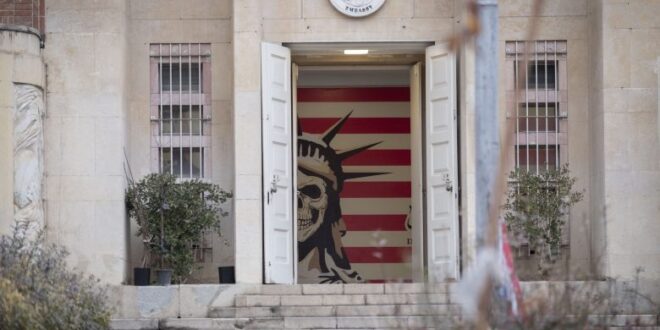
The United States and Iran are not on the brink of open war. There is no countdown, no formal ultimatum, no declared strike order — but Donald Trump’s latest warning has undeniably raised the temperature.
The relationship is entering a phase where the margin for error is shrinking. Danger no longer lies in a single choice but in the accumulation of pressures quietly locking both sides into a more confrontational posture.
Crises rarely begin with declarations. They begin with momentum.
Narrowing Diplomatic Window
Recent attempts at indirect engagement have faltered under competing interpretations. Washington views its calibrated responses — cyber actions, maritime enforcement, targeted strikes on proxies — as signals that diplomacy is still possible. Tehran often reads the same restraint as hesitation.
Iran’s violent crackdown on nationwide protests has further reshaped the political environment.
Reports of mass arrests and lethal force have narrowed Washington’s diplomatic space, where domestic and congressional pressures now make engagement harder to justify.
When a regime turns its security apparatus inward, flexibility abroad contracts. This internal repression has become a strategic accelerant, hardening positions, raising the risk of misread signals, and reducing the room for de-escalation.
Structural Pressures
The United States does not need regime change to act. Its concerns are structural and intensifying: Iran’s nuclear and missile programs; proxy networks threatening US forces and partners; the risk of miscalculation in Iraq, Syria, or the Gulf; and Tehran’s deepening alignment with Russia and China.
In an era of great-power competition, Iran is a strategic hinge point. A more predictable Iranian state — even without political transformation — would reduce pressure on US partners and limit Moscow’s and Beijing’s ability to leverage Tehran.
This logic now shapes US thinking more than any single incident.
Widening Escalation Ladder
Public debate often frames US options as a binary between diplomacy and war.
In reality, the spectrum is far broader, and several rungs are already in motion: limited strikes on facilities; expanded maritime enforcement targeting revenue; cyber operations on command networks; attacks on proxy infrastructure outside Iran; and broader strikes on missile or drone production sites.
More extreme options exist, but even without them, the trajectory is clear: the range of plausible actions is growing, not shrinking.
Rising Miscalculation Risks
Escalation rarely begins with a dramatic order. It starts with misread intentions and the illusion that small actions remain small.
Risks are mounting across multiple fronts: regional spillover involving Hezbollah, Iraqi militias, or the Houthis; attacks on US forces; global energy shocks; opportunistic moves by Russia or China; and internal fragmentation within Iran’s security institutions.
None of these outcomes are inevitable. But once escalation begins, they become far harder to control.
Allied Dynamics
Coordination with Arab and European partners remains steady, but preferences diverge sharply. Some favor calibrated pressure, others decisive action.
Israel, facing what it views as an existential threat, has signaled a willingness to act independently.
This creates a volatile dynamic: Washington must maintain close coordination while preventing unilateral moves that could force its hand or widen the conflict.
Day-After Unknowns
Any confrontation — limited or extensive — raises a difficult question: what comes next?
Iran’s political system is layered and resilient. Even significant damage to military or security infrastructure would not produce a coherent transition.
Russia and China would seek influence, regional states would fear instability, and internal actors would compete for power.
The aftermath is a contested landscape with high stakes and few guarantees.
Trajectory, Not Verdict
The United States has not chosen war. Iran has not chosen capitulation. Yet domestic repression, regional volatility, and accumulated pressures are pushing both sides toward a more dangerous phase.
Recognizing this trajectory is not alarmism — it is a warning and an opportunity.
Without a shift in underlying dynamics, momentum could harden into destiny. The moment to change course is now.