 Eurasia Press & News
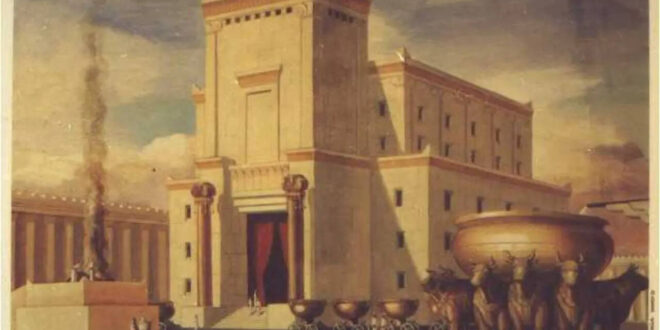
The first Friday Ramadan prayers at Al-Aqsa since the Israel-Hamas ceasefire have revived the Third Temple debate. Here’s why Jerusalem’s Temple Mount keeps the world on edge.
An image plastered across dailies this Saturday morning showed thousands of Muslim devotees offering their prayers on the first Friday of Ramadan at the Al Aqsa Mosque on Jerusalem’s Temple Mount. This was the first Ramadan prayers offered at the mosque since the fragile ceasefire deal was signed between Israel and Hamas in October 2025. The images got me thinking. About the significance of the Temple Mount and how many of us truly see it as the political and religious tinderbox that it is.
From Solomon To Six-Day War: 4000 Years Of History
To understand the current tensions surrounding the Temple Mount, it is important to understand the weight of its past. Jerusalem’s Temple Mount has nearly 4000 years of history behind it. The First Temple, according to the Hebrew Bible, was built by King Solomon, in the 10th century BC. It stood for nearly four centuries before King Nebuchadnezzar II of Babylon (modern-day Iraq) invaded Jerusalem in 586 BC, destroying the Temple and deporting most of the Jews living in and around Judah – an event known as the Babylonian Exile – which became a foundational moment in the history of the Jewish diaspora.
Decades later, Persian ruler Cyrus allowed the exiled Jews to return to their homeland and ordered the construction of the Second Temple. Completed by 516 BC, and far more modest than Solomon’s Temple, it became the heart and soul of Jewish religious life once again. Later in the first century BC under Herod, the Temple Mount was enlarged, with the vast retaining walls and plaza whose western section survives today as the Western Wall.
The Second Temple, however, was destroyed, yet again, in 70 AD by the Romans, following the Great Jewish Revolt (66-73 AD). The Temple was burned and dismantled, and Jerusalem was left in ruins. Although Jewish presence in the land continued, the Temple itself was never rebuilt.
In the centuries afterwards, the site change hands – and identity – multiple times – with the Romans first building a shrine to Jupiter under Emperor Hadrian, and later, the Church of the Holy Sepulchre under its first Christian Emperor, Constantine. In 6th Century AD, the Umayyads captured Jerusalem, building the Dome of the Rock in 691-692 AD, followed shortly by the Al Aqsa Mosque. From that point on, the Temple Mount – known in Islam as Haram al-Sharif – became Islam’s third holiest site. Control passed through successive Islamic dyansties, including the Abbasids, Fatimids, and Seljuks – with a brief, intermittent 100-year rule by the Christian Crusaders, when the Islamic shrines were turned into churches.
From 13th Century onwards, the site came fell under Mamluk authority and later, passed on to the Ottoman Turks, who maintained Islamic administration of the Temple Mount and oversaw renovations of its structures and surrounding walls.
After World War I, Jerusalem came under the British Mandate, which continued till 1948, which is when the State of Israel was officially recognised as a nation. This was soon followed by the 1948 Arab-Israeli war, when the Temple Mount came under Jordanian rule. That changed in 1967 during the Six-Day War, when Israel recaptured East Jerusalem from Jordan.
The ‘Status Quo’ Since 1967
Since 1967, Israel has retained overall security control of the Old City, but the administration of the Temple Mount itself has remained with the Islamic Waqf under Jordanian custodianship – a delicate arrangement often referred to as the Status Quo. Under the Status Quo, Jews can visit the Temple Mount as tourists during limited hours, but they face strict regulations. Their visits are restricted to specific, non-Muslim, morning and early afternoon hours, from Sunday to Thursday, through one designated entrance, and with no, or very limited, public prayer or religious rituals allowed.
Why The Mount Is More Than History
Here is why understanding the history of the site is significant. Each successive layer of rule by Judaism, Christianity and Islam has deepened its sanctity for one faith, while intensifying its sensitivity for another, making the Temple Mount perhaps the most symbolically charged place on the planet.
Add to this the prophecies concerning the site in the holy texts of all the three faiths – in the Hebrew Bible Tanakh, the Christian Bible (the Tanakh + New Testament) and the Quran – and the place ceases to be merely a disputed plateau. It becomes a theological fault line. Layered with past memory and future expectation, the place, quite literally, becomes a theological and political powder keg.
At present, a growing far-right current within Israeli society is testing to see what Jews can do at the site. They are demanding expanded visitation rights and a resumption of their ritual practices – minor acts that were once considered fringe.
Behind these events lies a far more explosive question: could the long-anticipated Third Jewish Temple soon become a reality? That possibility, once whispered only in theological circles, now is openly discussed across religious communities, regional politics, and global diplomacy.
Trump, Jerusalem And Diplomatic Shifts
The US under President Trump took a highly symbolic decision in 2017 when it decided to move its embassy to Jerusalem, recognising it as the capital of Israel. The move was seen by many in Israel and among pro-Israel advocates abroad as laying the diplomatic groundwork for future Jewish assertions of rights to the city’s historic core. Trump’s Peace to Prosperity plan – while backing the ‘Status Quo’ at the Temple Mount – also contained language suggesting that people of “every faith should be permitted to pray on the Temple Mount” – words that alarmed some observers because it might, if implemented, loosen long-standing restrictions. Washington did clarify, however, that any alteration to the Status Quo would require agreement among all parties.
Many in Israel, including fringe religious and prophetic commentators such as rabbis and evangelical activists, have gone to the extent of likening Trump to King Cyrus, the Persian ruler who enabled Jews to rebuild the Second Temple.
So, could the Third Temple soon become a reality? And if yes, then at what cost?
In Jewish eschatological tradition, a future temple – the Beit HaMikdash – is expected to arise in the Messianic age. For most Orthodox Jews, this is a spiritual and divine event, not one caused by human political action.
However, a movement known as the Temple Mount Faithful has called for the reconstruction of the temple and reinstituting ancient rites, including sacrifices, on the site. In fact, this group, which was founded after 1967, was involved in triggering deadly riots in 1990 by announcing plans to lay a cornerstone for the Third Temple.
Today, their voices are part of a broader chorus – including some nationalists and religious activists – calling for incremental changes on Temple Mount, that could slowly reshape the landscape above the Dome of the Rock.
The aftermath of the Israel-Hamas war has seen a tightening of Israeli security oversight at the site, with restrictions being imposed on Muslim worshippers during Ramadan and Muslim custodial staff facing arrests – actions that have alarmed many Palestinians and regional observers. Simultaneously, government figures show that Jewish visitation – including worship and ritual acts – has increased.
These moves have been met with fierce backlash from Palestinians and Muslim countries, who see them as the first steps in a larger agenda to alter the site’s identity. International concern has mounted as well, with the United Nations (UN) warning that even proposals to place new Hebrew prayer spaces within or near the Al-Aqsa compound could inflame regional tensions.
Most Israeli Jews, however, do not support dismantling Islamic holy sites or unilaterally building a Third Temple atop them. Many mainstream religious authorities state that the Third Temple will only be rebuilt with the arrival of the Messiah, not through political maneuvering.
Why the World Is Watching
At stake is more than a piece of real estate in Jerusalem’s Old City. What happens atop the Temple Mount reverberates across continents:
- Regional Stability: The Temple Mount is a hot button. The 2023 clashes at the Al-Aqsa compound – where reports of planned Jewish ritual actions sparked violent confrontations – showed how quickly violence can spiral into broader regional conflict.
- Diplomatic Relations: Arab governments, Jordan in particular (which oversees administration of the site via the Waqf), have condemned actions they view as attempts to undermine the Status Quo. Any shift in control or religious practice risks diplomatic rupture.
- Inter-Religious Sensitivities: For Muslims worldwide, the Al-Aqsa Mosque is a key religious symbol. Changes at the site are often framed in the slogan “Al-Aqsa is in danger,” quickly galvanising broad support across the Muslim world against perceived encroachments.
For Christians – especially some evangelical groups – the idea of a Third Temple relates to prophetic beliefs about the end times, further increasing global interest and often inflating the political stakes beyond local geopolitics.
The Temple Mount’s Unrivalled Significance
For Jews, the Temple Mount is where Solomon’s Temple and its successor Second Temple once stood – the physical centre of ancient worship and sacrificial rites. For centuries, Jews mourned their destruction and prayed facing the site. Islam also reveres the same plateau: the Al-Aqsa Mosque and the Dome of the Rock atop it are the third holiest sites in Islam after Mecca and Medina. Christianity respects the area for its deep links to Jesus’ life and passion. This multi-layered sacredness has created a Status Quo since the 1967 Six-Day War: Muslims pray inside the compound, while Jews may visit but not pray there. This fragile understanding has helped prevent widescale conflict for decades.
Yet today, that Status Quo is under strain. The situation at the Temple Mount is an escalating flashpoint, influenced by increasing Jewish activity and deep Muslim apprehension. That places Jerusalem’s sacred compound at the heart of global concern – not just for local peace, but for broader geopolitical stability.