 Eurasia Press & News
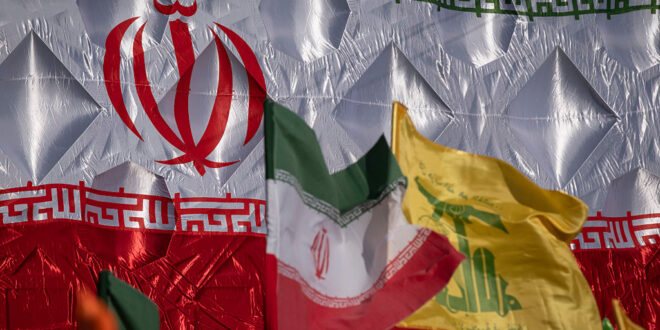
Tensions between Washington and Tehran are rising by the day. But while much of the commentary focuses on what might happen inside Iran, more immediate danger likely lies to Israel’s north. Lebanon is shaping up as the second front of a widening confrontation.
Israel has stepped up its air campaign against Hezbollah, including a high-impact strike in the Bekaa Valley that eliminated at least six of the group’s top missile commanders. That operation was part of a sustained effort to prevent Hezbollah from rebuilding its military infrastructure following the November 2024 ceasefire. Since its implementation, Israel has killed hundreds of Hezbollah operatives in a systematic disruption and deterrence campaign.
Hezbollah Remains Iran’s Most Valuable Proxy
Despite taking significant losses during the Gaza war, Hezbollah remains the most heavily armed terrorist organization in the world and the crown jewel of Iran’s proxy network. It is widely believed to still possess thousands of rockets and missiles, including precision-guided systems capable of striking strategic infrastructure deep inside Israel. Some of those systems also place U.S. regional assets within range.
The fact that Hezbollah has not launched its arsenal during the ceasefire is evidence of calculation, not restraint. Hezbollah may be conserving its firepower for a larger war: a direct U.S. military strike against Iran’s nuclear or missile infrastructure would almost certainly qualify.
IRGC Operating in Lebanon
What makes this moment more dangerous than the 12-Day War with Iran last June is the expanded role of Iran’s Islamic Revolutionary Guard Corps (IRGC). The IRGC is now on the ground in Lebanon directing Hezbollah forces. That increases the likelihood that Hezbollah will join a broader fight if the regime in Tehran comes under direct U.S. attack. During last June’s conflict, Hezbollah’s involvement was limited. With IRGC commanders more deeply embedded and exercising direct influence, restraint becomes far less likely.
Hezbollah does not operate independently of Tehran. It is integrated into Iran’s regional warfighting doctrine. If the regime faces direct American force, it will look to activate its most capable proxy. That means rockets from southern Lebanon, missile salvos aimed at Israeli cities, and potential attacks against U.S. military assets in the Eastern Mediterranean.
U.S. Assets Could Become Hezbollah Targets
Washington appears to understand this. The deployment of the USS Gerald R. Ford Carrier Strike Group to the Eastern Mediterranean, alongside another carrier strike group in the region, signals operational positioning. The Ford can help provide missile defense for Israel in the event of Iranian or Hezbollah launches. But its proximity to Lebanon also makes it a potential target.
American aircraft operating from bases in Jordan are also within theoretical range of Hezbollah systems. And the evacuation of non-essential personnel from the U.S. Embassy in Beirut underscores a sobering reality: Americans on the ground could become targets in a campaign waged by Hezbollah on Iran’s behalf.
Israel, for its part, is communicating clearly. Beirut has reportedly been warned that Lebanese national infrastructure could be placed on Israel’s target list if Hezbollah joins a war against the United States.
The Lebanese government has long promised to rein in Hezbollah. It has neither the capability nor the political will to do so. In a full-scale conflict, Israel is unlikely to draw fine distinctions between Hezbollah’s military infrastructure and the state that hosts and enables it — especially as Hezbollah, like Hamas, embeds its weapons in homes, schools, hospitals, and mosques, and uses civilians as human shields.
Lebanon is not a peripheral arena. With the IRGC now directing Hezbollah forces on the ground, the margin for limited escalation has narrowed considerably. Any serious war plan for Iran must account for the proxy war that will follow. If Tehran cannot strike American forces directly without risking regime-ending retaliation, it will do what it has always done — fight through Hezbollah.
The question is not whether the Lebanese front matters. The question is whether Washington and Jerusalem are prepared for how quickly it could ignite.