 Eurasia Press & News
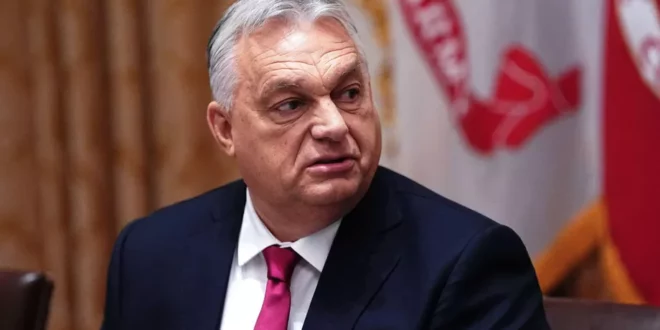
Countries such as Hungary and Slovakia must be able to be overtaken in decision-making when the EU’s security is to be decided now and in the future, writes Juha Ristamäki.
European leaders, including President of Finland Alexander Stubb, travelled to Kiev on Tuesday on the anniversary of the war of aggression to show their support for the Ukrainians.
In Kiev, Stubb said he agreed with French President Emmanuel Macron’s view that there will be no peace in Ukraine in the near future.
This is probably clear, because Moscow has shown no desire for peace, at least not in public. It relies on the power of the Consumer War and the fact that the West is tired of supporting Ukraine.
The visit of EU leaders to Kiev on the anniversary of the war of aggression underlined the current situation of the EU. Strong support was to be presented to the Ukrainians, but instead warm hands were presented.
This is because Hungary has threatened to prevent the 90-billion-euro EU loan and the progress of new sanctions on Russia by appealing for an oil dispute with Ukraine.
For example, a 90 billion loan has already reached a political agreement at the European Council of EU leaders. Hungary has previously blocked or delayed decisions on Ukraine’s aid, but this time its activities can be considered exceptionally outrageous.
Among other things, Hungarian Prime Minister Viktor Orbán feels threatened when the parliamentary elections in April are approaching. The party, led by the pro-EU opposition leader Péter Magyar, is at the top of the polls.
Orbán accuses Ukraine of breaking the supply of Russian oil and once again trying to balance between the EU and Russia – and to be elected Prime Minister once again.
Orbán approaches a point where the remnants of understanding are starting to be scarce. Without EU and NATO membership, Hungary would be weak and without protection.
Finland’s Foreign Minister Elina Valtonen (National Coalition Party) commented harshly on the situation on Tuesday. According to Valtonen, the background is the impending election battle in Hungary, in which Prime Minister Orbán “pulls more into Moscow than he has done so far.”
Russia does not hide its desires to influence the domestic policy of the EU and NATO country Hungary. Recently, Russian intelligence released a statement describing opposition leader Magyaria as an ally of the “globalist elites” and alleged that the European Commission is planning a transition of power in Budapest.
It is clear that if Orbán does not lose the election, the same game will continue with new disputes. The next step is, among other things, that the EU is trying to permanently ban the flow of Russian oil in the EU. Hungary and Slovakia are vehemently opposed to this.
Speaker of Parliament Jussi Halla-aho said in Parliament on Tuesday that the EU’s decision-making system should be made more straightforward.
“This is an intolerable situation that one or two countries are able to prevent the actions that everyone knows to be necessary from their own selfish interests,” Halla-aho said.
This is a permanent topic in EU decision-making. Attempts have been made to steer Hungary by suspending its EU subsidies, and there has also been a lot of talk about freezing its right to vote – but that would require the consensus of the member states, so it has remained at the level of speeches.
The EU should abandon the unanimity requirements, at least in terms of security policy. Although the EU has intensified in the face of Russian aggression, it is no wonder that sometimes its actions are laughed at in Moscow and Washington. Security seems to mean very different things across the EU.
Finland also joined the EU for security reasons. Now that Europe should take responsibility for its own defence, the polishing of Article 42.7 of the EU’s aid code has also been flashed.
It is clear that security measures will not be credible to the end if there are any on the table on a river against Hungary and Slovakia. These countries must be able to be overtaken in decision-making when the EU’s security is to be decided now and in the future.