 Eurasia Press & News
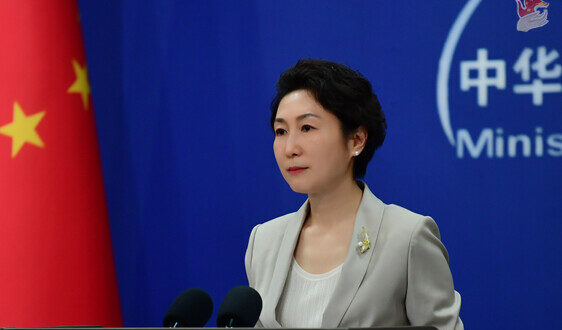
Actions speak louder than words. But right now, words are all that China can afford to offer the regime in Iran. On March 1, the Chinese Foreign Ministry condemned the killing of Iranian Supreme Leader Ayatollah Ali Khamenei while urging an immediate cessation of hostilities.
Beijing has long supported Iran with chemical precursors for propellants used in the regime’s ballistic missile arsenal, sophisticated surveillance equipment, and advanced sensor systems. Beijing purchases substantial amounts of crude from Iran but also depends on supplies from the Arab Gulf states that Tehran is now striking. About half of China’s oil imports and nearly 30 percent of its liquified natural gas imports come from the Gulf through the Strait of Hormuz. Continued Iranian aggression could disrupt these flows, hitting an already-fragile Chinese economy.
China’s restrained rhetoric shows Beijing’s hesitation to prop up a flailing partner when the risk of intervention is high and that partner is actively harming China’s economic security.
China Condemns Attack on Iran, but Without Vigor of Previous Criticism
The Foreign Ministry described the killing of Khamenei as a “grave violation of Iran’s sovereignty and security” and accused Israel and the United States of violating the “purposes and principles of the UN Charter and basic norms in international relations.” While certainly a condemnation, these comments mark a subtle downshift in Beijing’s support for Tehran over the course of the past year.
During the 12-Day War in June 2025 between the United States, Israel, and Iran in June 2025, China immediately claimed that the conflict stemmed from Israel’s refusal to “rein in its war machine” following the October 7, 2023, massacre led by Hamas. Beijing also criticized Israel for taking “aggressive action against civilian targets” during its strikes on Iranian nuclear infrastructure, which China claimed were developed only for “peaceful” purposes, further aiming to delegitimize Jerusalem’s conduct during the war.
China’s Tame Rhetoric on Iran Stems From Beijing’s Energy Vulnerability
Notably, Foreign Minister Wang Yi offered rhetorical support to the growing list of countries targeted by Iran amid concerns over possible interruptions to energy exports. In a call with Iranian Foreign Minister Seyed Abbas Araghchi on March 2, Yi called on Iran to “pay attention to reasonable concerns of its neighboring countries,” signaling strong Chinese trepidation over any attempts by Tehran to further damage the Gulf’s energy infrastructure.
Washington Should Prepare To Diminish China’s Influence in Iran
Regardless of whether the regime falls, the United States should move to ensure that China’s influence in Iran is weakened. Depending on how the days and weeks ahead unfold, the United States could seek to replicate its Venezuela playbook by moving to control the flow of Iranian oil such that sales are made without discounts and in ways that would not involve participation from Chinese firms. This policy should be coupled with the continued application of sanctions on Chinese companies and financial institutions that have historically dealt in sanctioned sectors of the Iranian economy.
The United States should also be prepared to establish an “economic strike force” that can quickly offer conditional economic incentives to a new government in Tehran. If the regime falls — or even if regime insiders remain in power but credibly commit to supporting a transition away from the regime’s authoritarian, antiliberal, and terrorist past — the United States should ensure that China be prohibited from participating in any future reconstruction efforts in Iran, as well as any future investment in the development and upgrading of Iran’s energy sector. These efforts would complement the construction of a strong fiscal foundation for public-private investment to ensure the prosperity of a free Iran.