 Eurasia Press & News
The Iraqi government may not care about protecting Americans from Tehran’s militias, but it should certainly care about protecting its own citizens.
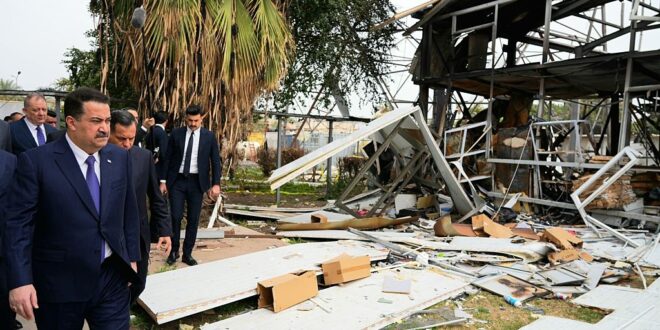
Amidst bombardments against American assets in the region, Iraqi militias struck Iraq’s Counter-Terrorism Service (CTS) on March 22, injuring five, and the Iraqi National Intelligence Service (INIS) on March 21, killing one. Tehran’s Iraqi partners view both security institutions with suspicion due to their close relationship with the United States. Iraqi militias, reportedly with support and coordination from Iranian Islamic Revolutionary Guards Corps-Quds Force advisors, have also been attacking American assets in the country since the start of the war on February 28.
The militias purport to be defenders of Iraqi sovereignty, but in reality, they terrorize Iraqi civilians and Iraqi security forces. If the Iraqi government is unwilling or unable to stand up to terrorist groups killing its own officials, Washington should not have any confidence that it will address militia violence against Americans or American assets.
Iraqi Militias’ History of Threatening Official Institutions
Attacks by the militias against Iraqi security services have precedent. In 2021, a drone struck then Prime Minister Mustafa al-Kadhimi, the most prominent advocate for Iraqi independence from Iran amongst Iraq’s recent leaders, in an apparent assassination attempt. The attack unfolded in the aftermath of parliamentary elections in which pro-Iran factions lost more than half of their seats.
During the latest escalation, the militias have intensified their rhetoric against Iraqi security services that maintain ties with the United States. Abu Mujahed al-Assaf, the spokesman of Kataib Hezbollah, a major Iranian terror proxy in Iraq, claimed that “100 percent of its officers of Kurdish origin are American and Mossad spies.” He further alleged that the core of the INIS is linked to “the American enemy, Jordanian, and Emirati intelligence services,” accusing Saad al-Waqqas al-Hadithi, the deputy director of intelligence, of “helping the enemy to harm his compatriots.”
The militias have shown that they are willing to turn inward and target the institutions that are meant to uphold Iraqi sovereignty, justifying their violence by falsely depicting these organizations as foreign assets.
Militia Threat to Americans
Iraqi militias conducted roughly half a dozen attacks overnight on March 21-22 against the Baghdad Diplomatic Support Center, a key U.S. logistics facility at Baghdad International Airport, while striking U.S. assets in Iraq daily. This is despite the announcement from Kataib Hezbollah of a temporary pause in attacks on the U.S. Embassy in Baghdad, which militias struck more than once since February 28. The temporary ceasefire does not protect America’s other interests in the country.
Kataib Hezbollah Secretary General Abu Husayn al-Hamidawi reiterated the threat against the United States in a statement titled, “Let us make the war comprehensive against the combined forces of arrogance,” using a common pejorative for America and its partners.
Washington Should Watch Baghdad’s Response the CTS and INIS Attacks Closely
Prime Minister Mohammed al-Sudani ordered an investigation into the INIS attack and will hopefully do the same with the CTS targeting. However, an investigation is not sufficient. Only the arrest and prosecution of the culprits, including militia leaders who are senior enough to authorize such an attack, will indicate any seriousness in addressing the issue.
Washington should also impose sanctions on political and financial enablers of the militias if Baghdad refuses to prosecute the perpetrators of attacks against the United States.
Additionally, the U.S. Treasury should designate the Popular Mobilization Forces (PMF) in its entirety, an Iraqi security institution comprised of militias, many of which are backed by Tehran. The PMF protects and enables Iran-backed militias in addition to providing its constituent militias with arms and funds. Six of these groups have already been designated for prior violence against U.S. forces especially. This provision of support to designated groups is a direct violation of U.S. sanctions.