 Eurasia Press & News
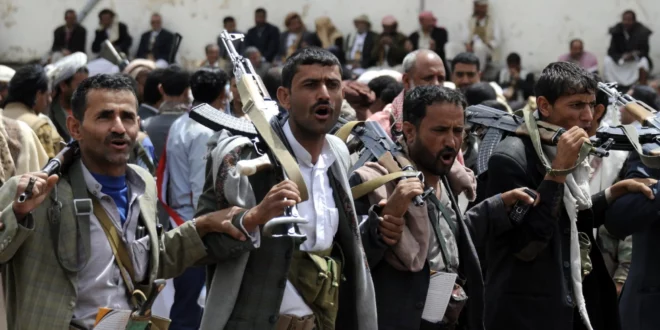
Yemen’s full-scale entry into the conflict could lead to the formation of a multi-layered and extensive front, which could increase pressure on the US and Israel, deprive the enemy of the initiative, and turn the conflict into a war of attrition.
Ansar Allah as a Strategic Asset of Iran: Transnational Doctrine and Regional Security
Ansar Allah, with the power to impose costs on trans-regional actors, “the ability to make decisions and carry out operations at a strategic level” without logistical dependence on external powers, and “strategic alignment” with Iran, is a strategic asset in any trans-regional Iranian doctrine.
Recently, the Islamic Revolutionary Guard Corps of Iran officially announced in a statement that if the enemy wants to start a war again, it will make the war transregional.
Recently, Sanaa has warned about the entry of foreign forces into the region and any new aggression and emphasized that Yemen is ready to confront the aggression of the United States and Israel
An implicit reference by Mohammad Baqer Qalibaf, the Speaker of the Islamic Consultative Assembly, by raising questions about the Bab al-Mandab Strait and Iran’s pressure tools was a kind of attention to Iran’s transregional doctrine. Ali Khazrian, a member of parliament, has also pointed out that Iran has increased its defense doctrine from regional war to the level of transregional operation.
In fact, Iran’s military doctrine is no longer focused solely on “regional deterrence.” Transregionalization of war can have many consequences and effects and endanger the hostile armies.
A new phase of the conflict between Iran and the United States will open new fronts
From this perspective, in any conflict between Iran and the United States, new fronts will be opened for war with the United States. The Strait of Hormuz and Bab al-Mandab, despite their geographical distance, will be considered as two arms in the future as well as a balance of power.
Iran’s military approach stems from a history of several thousand years. Iran’s presence and influence in the Bab al-Mandab Strait was important in the Achaemenid and Sassanid empires.
From the perspective of many in Iran, Sanaa has become an actor that can influence the course of developments. Therefore, one of the components in determining the balance of power is the ability to create costs, expand the geography of conflict, influence the global economy, and expand the role of the axis of resistance and Iran.
Also, any full entry of Yemen into the conflict will lead to the formation of a geographically multilayered, extensive, and diverse front. Coordination between these fronts can also increase the pressure on the United States and Israel, take the initiative away from the other side, and turn the war into a battle of attrition. Sanaa can also change tactics, use diverse tools, and increase costs.
Sana’a’s Approach: From Regional Challenges to Transnational Strategy
Previous multilateral and Western efforts to contain Yemen’s Ansar Allah in the Red Sea have failed to achieve their goals in practice.
Previously, Sanaa strongly condemned the US-Israeli aggression against Iran, calling it a clear violation of Iran’s sovereignty, independence, and territorial integrity, and all international norms and treaties.
In light of the continued military escalation, on April 2, the Yemeni army issued an official statement announcing its first military operation, which targeted sensitive targets in southern Israel with ballistic missiles.
Although the minimal participation of the Yemenis in the war against Iran did not have a widespread impact on the ceasefire, Ansar Allah, as Iran’s “reserve ally,” could change the rules of the game in the future.
Iranian officials’ appreciation of Ansar Allah in Yemen and their continued support for Iran’s cooperation with Lebanon’s Hezbollah reflect the broad ties between Sanaa and Tehran.
The positive view and support of Abdul Malik al-Houthi, the leader of Yemen’s Ansar Allah, towards Tehran, the announcement of the full readiness of the Yemeni army, while the demonstrations of the Yemeni people, the concern about the military cooperation of Tel Aviv and Abu Dhabi in the Horn of Africa, and the siege against Sanaa, reflect Sanaa’s policy in more strategic relations with Tehran.
Recently, Sanaa has warned about the entry of foreign forces into the region and any new aggression and emphasized that Yemen is ready to confront the aggression of the United States and Israel. Also, from Sanaa’s perspective, the persistence of the Iranian negotiators at the negotiating table is a new victory for the axis of jihad and resistance. However, the full entry of Ansar Allah into any possible war in the Middle East is “very important.”
The experience of 8 years of attrition war and the formation of a unique experience of resistance to economic blockade, political pressures, and widespread psychological warfare have led to reconstruction, a level of self-sufficiency in key areas, and the creation of indigenous infrastructure for the production and maintenance of military equipment in Yemen.
Sanaa, while structurally independent and having the ability to possess significant weapons and influence the Bab al-Mandab Strait, is not the initiator of tension in the region. But it reacts in response to broader anti-Iranian provocations.
If the United States wants to increase tension in the region in a preventive action, the Yemeni Ansar Allah may close the Bab al-Mandab Strait with the support of Iran and make travel critical or impose laws.
From the perspective of many in Yemen, the US presence in Bab al-Mandab and the Horn of Africa, the UAE-Israeli alliance, the Israeli base in Eritrea, and Israel’s desire to establish a military base in Somaliland (near the Bab al-Mandab Strait) are not in line with Yemen’s national interests.
Although the arrival of thousands of Pakistani soldiers to deploy in areas near the Yemeni-Saudi border is a kind of activation of the defense agreement between Islamabad and Riyadh, Yemen’s strike power and geographical location allow Sanaa to provide a good deterrent against Gulf Cooperation Council actors.
Also ,Sanaa’s superior power can determine the balance of power in Yemen and be considered a prelude to the formation of a unified Yemen.
Bab al-Mandab is the link between the Indian Ocean and the Red Sea and the Mediterranean Sea; control over this strait allows the Resistance Front to play a more central role in shaping global energy and transit corridors.
While the Bab al-Mandab Strait is one of the six most important straits in the world, 9-11% of global trade (shipping) passes through the strait. Now, 7 million barrels of oil pass through this strait daily, and the main part of Israel’s maritime trade with Asia passes through this route.
Also, Sanaa could have negative effects on the Memorandum of Understanding on Transport Cooperation in Turkey, Syria, and Jordan in April 2026, and the India-Middle East-Europe Economic Corridor (IMEC).
Although the government in Sanaa controls 70 percent of Yemen’s population, it needs to gain international legitimacy. If Ansar Allah consolidates its anti-Western power over the Red Sea and the Bab al-Mandab Strait, this approach will be effective in gaining wider regional and global recognition, especially in relation to eastern actors.
Prospects for the Development of the Situation
Despite growing speculation about a possible initial agreement between Iran and the United States, achieving one still faces significant obstacles, and significant disagreements remain.
In this context, Ansar Allah represents a strategic asset for any transnational Iranian doctrine. It has the potential to exert pressure on transnational forces, is capable of making decisions and conducting operations at a strategic level without being dependent on external logistics, and maintains a strategic alliance with Iran.
Any serious involvement of Yemen in the conflict with Israel and the United States will inevitably expand the range of threats and increase uncertainty for the adversary. Sana’a has already outlined possible scenarios for Yemen’s entry into war against the US and Israel, considering control of the Bab el-Mandeb Strait as a key factor.
As the ports and trade routes of the Red Sea have become an arena of geopolitical competition between global and regional powers, it seems likely that Iran and Ansar Allah will strengthen their cooperation.
A continuation of the ceasefire, the establishment of peace, or renewed tensions between Iran and the United States will likely strengthen Sana’a’s desire to strengthen its influence and become a significant force in the Arabian Peninsula. In this scenario, Yemen could play an even more important role in the future politics of West Asia and within the “axis of resistance.”