 Eurasia Press & News
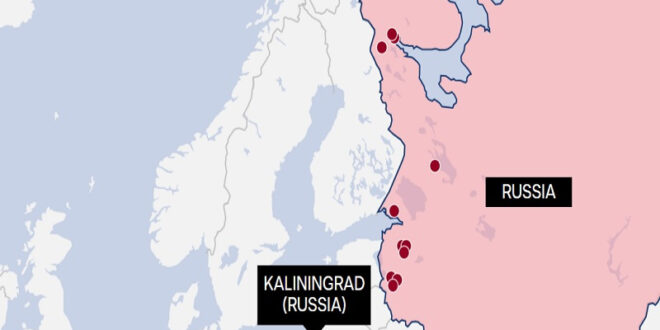
Danish media’s sensationalist report on this subject is the latest in a series of recent moves aimed at justifying NATO’s own military build-up in the Arctic-Baltic region that Russia regards as threatening.
The Danish Broadcasting Corporation (DR per its Danish acronym) sensationally reported in early June that “Russia is arming along Europe’s borders, preparing for a possible war”. This came nearly a month after Deputy Assistant Secretary of State for European and Eurasian Affairs Christopher Smith told lawmakers at a hearing on threats to the Baltic States in mid-May that the US expects Russia to redirect some of its forces from Ukraine towards that front after the special operation ends.
A month prior to that in mid-April, Swedish Chief of Defense Michael Claesson told The Times that Russia might try to seize one of the Baltic’s 400,000 islands to test NATO’s response seeing as how all of the surrounding states except for Russia itself are now members, which was responded to here at the time. Chaining these three recent instances of anti-Russian fearmongering together are three events related to the broader region’s NATO-driven militarization that Russia reasonably regards as threatening.
In late April, the UK assembled a new multinational fleet to contain Russia in the Arctic and Baltic, shortly after which Russian Deputy Foreign Minister Alexander Grushko warned in mid-May about the dangerous trend of merging these two New Cold War fronts into a single one. This was then quickly followed by the Lithuanian Foreign Minister provocatively claiming that “NATO has the means to raze the Russian air defense and missile bases there (in Kaliningrad) to the ground in an emergency.”
The Russian Ambassador to Finland also assessed in mid-April that “Today, the most serious challenge to our security is probably NATO’s extensive electronic and aerial reconnaissance operations from Finnish territory.” Several weeks later, the Russian Ambassador to Norway very strongly suggested that Norway is seeking to lead a “Viking Bloc”, which would include new NATO members Finland and Sweden. All of this set the backdrop for DR’s latest sensational report about Russia’s post-Ukrainian Baltic plans.
According to them, Russia is building new bases and expanding existing ones along its border with NATO, which it envisages being defended by around 115,000 soldiers once the Ukrainian Conflict finally ends. Although they claim that none of their sources have concluded that Russia plans to initiate a war with NATO, it’s very heavily implied throughout their report that this is a credible scenario even though it was earlier explained how “The EU Poses A Much More Credible Threat To Russia Than The Inverse”.
In fact, Medvedev recently drew attention to the 1941-like threat to Russia posed by Germany’s remilitarization, so whatever post-Ukrainian military moves that Russia makes along the Arctic-Baltic front of the NATO-Russian New Cold War would be purely defensive and not aggressive at all. Earlier this month, “Putin Powerfully Rebuffed The Hawks Who Want Him To Attack NATO”, thus signaling that earlier such talk from his side is unacceptable due to it falsely justifying NATO’s containment of Russia.
As it stands, the Arctic-Baltic front of the NATO-Russian New Cold War is already heating up even before their proxy war in Ukraine ends, which doesn’t bode well for post-conflict stability in Europe. Putin’s grand strategic goal of reforming the European security architecture throughout the course of the special operation in order to resolve the NATO-Russian security dilemma at the core of this conflict might therefore not materialize no matter the terms upon which their proxy war ends due to NATO’s obstinacy.