 Eurasia Press & News
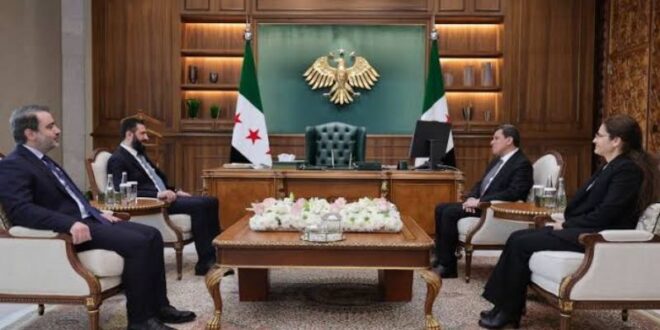
Syrian President Ahmed al-Sharaa and Syrian Democratic Forces (SDF) commander Mazloum Abdi discussed completing the implementation of the integration agreement signed by the two sides on January 29.
The official Syrian Arab News Agency (SANA) reported on Tuesday, August 4, that the meeting, held at the People’s Palace in Damascus, addressed progress toward integrating the SDF and its affiliated institutions into state institutions.
The meeting was attended by Foreign Affairs and Expatriates Minister Asaad al-Shaibani, Deir Ezzor Governor Ziad al-Ayesh, and Ilham Ahmed, co-chair of the Autonomous Administration’s Department of Foreign Relations.
No further details about the substance of the meeting or the discussions between the two sides had been released by the time of publication.
The meeting between al-Sharaa and Abdi came amid growing reports in recent days about the future of the SDF and the Autonomous Administration. Information attributed to government and SDF sources suggested that the dissolution of both structures could soon be announced.
According to those reports, preparations had been made for a meeting between al-Sharaa and leaders of the SDF and Autonomous Administration after several administrative and security files were completed. The meeting was expected to be followed by an official announcement ending the two military and administrative structures.
Al-Sharaa said in an interview with Al-Jazeera a few days earlier that implementation of the agreement with the SDF was proceeding slowly. However, he stressed that the government continued to regard the agreement as the most appropriate way to end the division in northeastern Syria.
Latest Agreement Developments
Abdul Karim Omar, the Autonomous Administration’s representative in Damascus, said the Women’s Protection Units in northeastern Syria would be integrated into the Interior Ministry as a counterterrorism force.
He explained that integrating the Women’s Protection Units into Syrian government institutions had been one of the main obstacles and challenges facing the January 29 agreement between the Syrian government and the SDF. The units, which have experience and expertise, had requested a position within the Defense Ministry, but the ministry rejected the request because it had no women within its personnel structure.
The Defense Ministry proposed integrating the units into the Interior Ministry. The Women’s Protection Units accepted the proposal on the condition that they be incorporated into the ministry as a single bloc and designated as a counterterrorism force, Omar told Rudaw on Tuesday, August 4.
Omar also pointed to obstacles in the education sector, including instruction in the Kurdish language, as well as other matters that still require discussion and dialogue before the agreement can be fully implemented.
At the same time, he said good progress had been made under the January 29 agreement in integrating the security and military institutions, along with the Autonomous Administration’s institutions, into Syrian state institutions.
Mustafa Abdi, a member of the presidential team tasked with implementing the January 29 agreement, previously said the integration of the SDF into Syrian state institutions had reached its “final stages” at various levels, particularly in the military and security sectors. His comments came amid growing reports that the dissolution of the SDF and Autonomous Administration could soon be announced after months of implementation.
Abdi told al-Ikhbariya that implementation was advancing alongside field and humanitarian files, particularly the return of displaced people to their areas. He said mine clearance operations remained the main obstacle to completing the return of residents to Ras al-Ain (Hasakah, northeastern Syria).
He said the SDF integration agreement had reached its “final stages at all levels,” particularly the military and security levels, but did not provide a timetable for announcing the completion of the agreement or details of the remaining steps.
Key Terms of the Agreement Between the Syrian Government and SDF
Implementing a comprehensive ceasefire between the two sides and withdrawing military forces from contact lines.
Beginning a phased process to integrate SDF forces into state military institutions through the formation of three brigades in Hasakah (northeastern Syria) and one brigade in Ain al-Arab (Aleppo, northern Syria).
Deploying Interior Ministry security forces to the centers of Hasakah and Qamishli (Hasakah, northeastern Syria), and beginning the integration of SDF-affiliated security forces into the ministry.
Integrating civil institutions and administrations into Syrian state institutions, transferring control of sovereign files and vital facilities to the Syrian government, and formally incorporating employees into the relevant ministries.
Continuing cooperation in combating the Islamic State group, addressing the files of prisons and camps linked to the group, and working to facilitate the return of displaced people to their areas.