 Eurasia Press & News
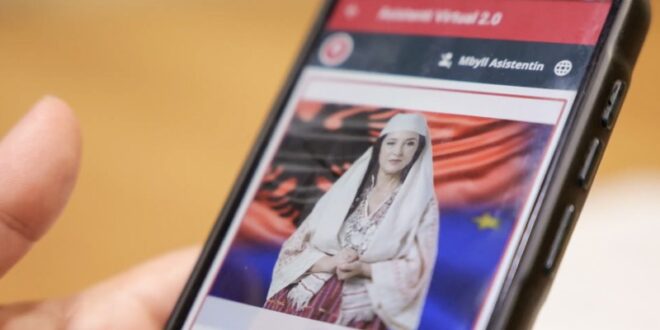
Prosecutors are investigating the agency that developed Albania’s AI-minister ‘Diella’ in a case that involves alleged rigged tenders, a kidnapping, and tens of millions in seized assets. The affair deepens doubts about how artificial intelligence will be used to address the country’s widespread graft problem.
Last September, Albania made headlines around the world when it introduced the world’s first-ever “AI minister.”
Diella, which means “Sun” in Albanian, was a chatbot that had been promoted to ministerial status. Her remit, Prime Minister Edi Rama announced, was to ensure that “public tenders will be 100 percent free of corruption.”
“I do not have personal ambitions or interests,” the AI avatar, who dresses in traditional costume, told parliament in her maiden speech. “I only have data, a thirst for knowledge, and algorithms dedicated to serving citizens… free from prejudice, discrimination, clientelism, nepotism, or corruption.”
At the time, there were doubts over whether Diella could offer any real solution to Albania’s long-standing corruption problem.
It appears that some of the reservations may have been well-founded. Experts caution that Albania’s plan to use Diella as a buffer against corruption has flaws, given that information generated by AI is not inherently neutral, and that there has been little transparency so far on how the technology will be deployed.
These concerns have been further compounded by an explosive corruption case inside the very agency that created the virtual assistant.
According to anti-corruption prosecutors, the leaders of the government agency that developed Diella, the National Agency for the Information Society (AKSHI), are suspected of rigging tenders in favor of a criminal group that profited from privileged access to the agency’s contracts.
The special prosecutors accuse the AKSHI officials (in a court order issued by a judge) of receiving kickbacks that included wine boxes filled with cash. The agency’s director and deputy director were charged in the same document with violating public tender rules and cooperating with a criminal organization.
Two owners of IT firms — one of whom was arrested last month in France, where he was found to also own a castle — have also been charged with organizing and collaborating in the scheme.
The deputy director of Tirana’s police force, meanwhile, has been suspended from duty while under investigation for allegedly covering up or collaborating with the group’s illicit activities.
AKSHI, the government, and lawyers for the accused businessmen and officials did not respond to OCCRP’s questions. None of the individuals have been indicted, as the investigation is ongoing.
In total, authorities ordered a seizure of assets — including real estate, vehicles, bank accounts, and cash — worth more than 40 million euros connected to the scheme.
Diella’s development was not one of the tenders involved in the alleged corruption scheme. Yet the allegation that graft ran to the top of the agency which created her has deepened doubts about the government’s plan to use the technology to tackle corruption more broadly.
Albania is under heavy pressure from the European Union to root out corruption in order to proceed with its years-long effort to join the bloc. According to the latest assessment from Brussels, which was released before the AKSHI scandal broke, perceptions of corruption in the public sector remain high.
“Even the most sophisticated AI is only as good as the humans who build, operate, maintain, and improve it,” said Erjon Curraj, an expert in digital transformation at the SCiDEV Center, a Tirana-based think tank, told OCCRP.
“Who feeds the data, and who verifies its integrity? Who catches errors and hallucinations before they become decisions? The people who maintain such a system can nourish it or let it quietly degrade.”
Bojan Perkov, the Digital Policy Coordinator of the SHARE Foundation, a non-profit focused on digital rights and security in the Western Balkans, also warned that cleaning the state of corruption “cannot be achieved with any kind of ‘magic’ technology, and especially not AI tools.”
Flashy announcements about a new use of technology are “often used for politicians’ publicity” rather than forming part of a strategic plan to bring “long-term benefits for a society, which should build its governance mechanisms based on rule of law,” he added.
The Albanian government, ASHKI, and the office of the Prime Minister did not respond to requests to comment.
‘Cooperating with a Criminal Organization’
In the summer of August 2025, Albanian tech entrepreneur Gerond Meçe walked out of his home in Tirana and was confronted by a black Land Rover Defender with a police siren.
A man in uniform emerged and called his name, Meçe later told authorities. Grainy CCTV images also captured the moment.
“You need to come with us, get in the car,” Meçe recalled the man saying, claiming to be an official from Albania’s anti-graft unit, the Special Structure against Corruption and Organized Crime (SPAK).
But as the bulky 4×4 pulled out of the car park and the men put a hood over Meçe’s head, it became clear that this had been a ruse.
“We’re asking you to cooperate,” one of the men told Meçe when the car stopped about an hour later, according to testimony he later gave to actual SPAK prosecutors. “Otherwise you’ll have a bullet in your head.”
Prosecutors suspect the kidnapping was orchestrated by the criminal group that had allegedly been running ASKHI’s kickback scheme, and was aimed at convincing Meçe to withdraw his tech company’s appeals on more than a dozen tenders put out by the agency.
Meçe’s firm had complained that the tenders — which covered a range of projects including making software for state agencies like the police — appeared to be rigged in favour of insiders, a move that had stalled AKSHI’s contracting process with the alleged criminal collaborators.
After Meçe agreed to retract his appeals, the kidnappers let him go.
When reached for comment, SPAK said the investigation was ongoing and that the case had not yet been sent to trial.
Killing the Bribe
Diella was first launched by AKSHI as a chatbot in January 2025 with the goal of helping citizens navigate the e-Albania government web portal, where they could access everything from birth certificates to pensions.
Her rollout was part of the agency’s drive to digitize government services and help speed the country’s accession to the European Union, which Albania hopes to achieve by 2030.
Some tech-savvy Albanians have found the online portal helpful. Klodisa Përnezha, a 26-year-old nurse living in Tirana, said it has made her work faster, more efficient, and better organized.
“I no longer need to wait in lines at institutions or waste time traveling in person for every document,” she said. “Most services are now completed online, from home or even through my phone.”
But with 95 percent of the government’s services now exclusively online, some Albanians are struggling to use Diella’s assistance on their own.
This has led to the emergence of a cottage industry of middlemen who have opened up offices around Tirana to help clients navigate the portal for a fee.
Some see this service as merely an expensive formalization of the old system, in which one customarily slipped the equivalent of $2 to a local administrative clerk to expedite a family certificate or property deed.
“Before, you knew whom to give the [cash] to, and you received the service. Now, you give it without thanks. It’s obligatory,” said Bajram Hasxhepa, a 66-year-old who suffers from diabetes and lost the lower part of his legs 13 years ago.
For Hasxhepa, the “seamless” digital state looks like this: He wheels himself 600 meters down the street to an office supplies shop that doubles as a private internet booth, just to get a family certificate printed.
The shop has no wheelchair ramp, so he is forced to sit outside on the sidewalk, shouting his personal details over the traffic to a young clerk inside — and paying a roughly $12 “application fee” for a document the state says is free.
‘Diella is Pregnant’
Diella’s remit has been steadily growing since she was first unveiled to the public.
From her beginnings as a chatbot for the government’s online portal, she was elevated to the role of cabinet minister in September 2025. Then, a month later, there was more news.
“Diella is pregnant and she’s expecting 83 kids,” the prime minister quipped at an international business conference in Berlin in October.
These digital “children,” he explained, would participate in parliamentary sessions, analyze EU legislation, and even alert absent politicians if a rival mentions their name, so they can prepare a response.
Diella, who floated like a modern-day genie on a screen above the audience, added her two cents: “Artificial Intelligence will help identify investment barriers before they become crises, detect corruption risks before they become scandals, and predict market opportunities before they are missed.”
For retiree Sadete Suta, who has spent the last year paying middlemen to interact with Diella so she can secure her pension, Rama’s joke didn’t land so well.
“We’ll bring her some pancakes,” she said sarcastically, referring to a local tradition of delivering special foods to new mothers.
As part of her ministerial duties, officials promise, Diella will soon be monitoring state purchases, evaluating bids, and overseeing billions of euros in government tenders. The exact details of her role in all this, however, have yet to be spelled out.
Black Box
Experts caution that Albania’s plan to use Diella as a defense against corruption has holes.
“Diella will inevitably sort, prioritise, and frame the information on which political decisions are based,” noted an essay published by the European Union Institute for Security Studies, a foreign and security policy think tank.
“The question is therefore to what extent human judgments are shaped, constrained, or biased by these outputs.”
Furthermore, without clear oversight or traceability of her “decisions,” Diella “risks adding a further layer of opacity to governance rather than reducing it,” the think-tank warned.
Curraj, from the digital transformation from the SCiDEV Center, urged the government to create a transparent “sandbox” — a secure testing environment where the technology could run safely without impacting the real world, and where academics and civil society experts could offer feedback.
Without this step, “you cannot launch it in live production,” he said.
Who exactly will be held accountable for Diella’s decisions — something that the opposition has raised as part of a complaint it filed with the constitutional court— remains unclear.
Responding to critics who argue that algorithms can be manipulated and controlled, Rama said Diella’s decision-making “will remain fully auditable.”
Final decisions will still be made by officials based on the information Diella provides, he said.
“Anyone who wishes to review the process manually will be able to do so. Nothing that emerges from the system will be untraceable.”
But as the public waits for more details, Diella has already run into legal trouble herself.
In April, Anila Bisha, the actress on whom Diella’s likeness and voice are based, filed a lawsuit against the government, accusing it of misusing her image, which the government denies.
Bisha said she gave permission for her image to be used as an AI-powered virtual assistant — but not as a politician in Rama’s government.
The actress discovered the change when watching the news with her husband, and has since faced harassment in the street and online, she told OCCRP.
“There are those who tell me that I have gained fame. But I do not see any fame here, I even say this is not fame at all.”
Now she worries about what Diella might be assigned to do next.
“I have a fear that with the development technology has taken, I no longer know how else they might use my face and my voice,” the actress said. “My data has been put on the market.”