 Eurasia Press & News
As an extension of Operation Epic Fury, U.S. officials are pressuring Iraq to reduce its links to Iran, including by restricting U.S. aid to Iraqi government forces and deliveries of U.S. currency to Iraqi banks.
Iran-aligned Iraqi militias have attacked not only U.S. installations in Iraq, but also facilities in Kuwait and other Arab Gulf states, contributing to Tehran’s effort to pressure the U.S. to end the conflict.
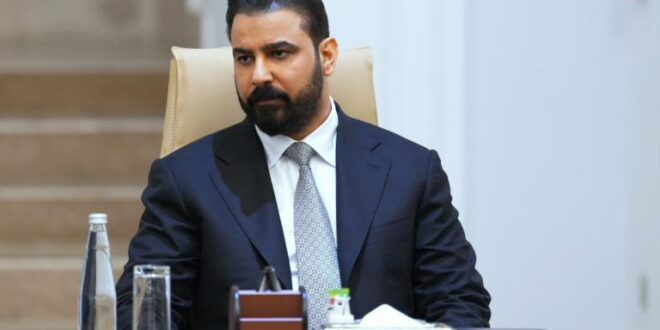
Iraqi leaders have turned to businessman Ali al-Zaidi as a technocratic compromise candidate for the executive post of Prime Minister, signaling a balance between Tehran and Washington.
The incoming Iraqi government will immediately face a major challenge from Iran’s blockage of oil exportation through the Strait of Hormuz, which threatens the government’s ability to pay its workers and sustain its economy.
The U.S.-Iran war is upending Baghdad’s decade-long effort to remain out of the crossfire between Tehran and Washington, as well as its ambition to reintegrate with the Arab world after the many years of isolation during the rule of Saddam Hussein. Iran-aligned militias in Iraq, whose commanders operate autonomously but represent significant segments of the Iraqi population, have joined Tehran’s defense effort by attacking U.S. diplomatic and military facilities in Iraq as well as a variety of targets in the Arab Gulf states. Since the war began, several Iran-aligned militias that form a coalition calling itself the “Islamic Resistance in Iraq,” have collectively launched at least 400 strikes against U.S. bases, energy facilities, and airports in Saudi Arabia, Kuwait, the UAE, Qatar, Bahrain, and Jordan. The militias have particularly targeted neighboring Kuwait, including attacking its international airport several times, reflecting Iraq’s longstanding animosity. Iran-aligned militias have struck the U.S. Embassy in Baghdad at least four times, and the U.S. consulate in Kurdish-controlled Erbil as well — a province to which most U.S. forces have relocated since 2025.
To try to suppress the Iraqi militia effort, U.S. and Israeli airstrikes have retaliated against Iraqi militia targets in eight Iraqi provinces, killing nearly 100 militia fighters, as well as some regular Iraqi forces that are co-located with militia units. The Gulf states have issued unprecedented public and joint condemnations, summoned Iraqi diplomats, and warned Baghdad of potential economic and diplomatic penalties if it fails to prevent militia attacks from Iraqi territory.
Baghdad’s failure to keep all its constituencies and factions out of the war has damaged Iraq’s economy, harmed the population, and set back longstanding efforts by Iraqi leaders to establish the government as the sole source of sanctioned armed force within Iraq’s borders. Even though the Iran-aligned militias have drawn Iraq into the U.S.-Iran conflict, the war has given the militias additional domestic support — at least while the war remains unsettled — for resisting efforts by outgoing Prime Minister Mohammad Shia al-Sudani to disarm and demobilize them. The war has enabled the militias to burnish their credentials as resistance to what many Iraqis, particularly the majority Shia Arabs, see as unwarranted U.S. aggression against Iran.
Yet it is actions by Iran — particularly its virtual closure of the Strait of Hormuz — that have caused Iraq’s oil production to fall by about 70 percent. Because oil exports account for an overwhelming share of Iraqi government revenues, a Strait closure presents Baghdad with a public-sector payroll crisis and an inability to fund its imports. A mid-April estimate by the International Monetary Fund (IMF) predicts Iraq’s gross domestic product (GDP) will decline by nearly 7 percent in 2026 — a figure that indicates a severe recession. Unlike Saudi Arabia or the United Arab Emirates (UAE), the Iraqi government has no significant alternative to exporting oil through the Strait. An Iraq-Türkiye pipeline carries Iraqi oil produced in the Kurdish-controlled north, which accounts for only one-third of Iraq’s total exports. But that line has been repeatedly shut down by financial and political disputes between Baghdad, Ankara, and Iraqi Kurdish leaders who govern the semi-autonomous region in northern Iraq.
In the context of the conflict with Iran, U.S. officials have sought to shape the Iraqi government formation process in Washington’s favor and to the detriment of Iran, which it competes with for influence inside Iraq. Iraqi leaders have been struggling to form a new government pursuant to the 2024 elections for a 329-seat National Assembly. Sudani’s political movement won the most seats (46), but not enough to dominate decision-making in a broader, pan-Shia Arab coalition called the Coordination Framework (CF), whose parties collectively hold 187 seats in the body. Of the CF deputies, members and commanders of armed groups number nearly 100, providing them with significant influence over the selection of the next Prime Minister. In early February, President Trump publicly threatened to cut off all U.S. cooperation with Iraq if the CF used its numbers in the Assembly to return former Prime Minister Nuri al-Maliki to power. Washington views Maliki as a pro-Iranian sectarian whose policies in office during 2006-2014 fostered the rise of the Islamic State (IS) in 2014, which necessitated a return of U.S. forces to Iraq.
Fearing a cutoff of U.S. aid, Maliki and his CF allies bowed to Trump’s threat, withdrawing Maliki’s candidacy and triggering a nearly two-month effort by the CF to reach a compromise on an alternative prime ministerial candidate acceptable to both Trump and Tehran. In April, the U.S. diplomatic team in Iraq admitted to applying “sustained pressure” on Iraqi leaders to influence the selection of a new government that would “adopt a fundamentally different approach” to the Iranian-backed militias, according to a State Department cable reported by the Washington Post. Judging Sudani ineffective in his efforts to disarm the Iran-aligned militias, Washington did not push to return Sudani for a second term. U.S. officials also apparently successfully derailed an attempt by some CF members to engineer the selection of Bassim Al-Badri, a senior Islamic Dawa Party loyalist.
On Monday, the eve of a constitutional deadline to nominate a candidate for Prime Minister, the CF settled on 43-year-old businessman Ali Al-Zaidi, who has not previously served in government. He has not attracted a veto from either Washington or Tehran, although many U.S. officials doubt his willingness and ability to deliver on Washington’s insistence that the government rein in the autonomy of the Iran-aligned militias. Upon his naming, Zaidi messaged Washington by promising to focus on making Iraq “a balanced country, regionally and internationally.” The U.S. Embassy in Baghdad declined to comment on the nomination.
Zaidi’s business interests also portray a willingness to accommodate Tehran’s interests. He served as chairman of the privately owned Islamic South Bank, one of a handful of Iraqi banks that the U.S. Treasury Department has prohibited from dealing in U.S. dollars because of past transactions with Iranian businesses and armed actors. He owns Dijlah TV, a popular television station, and holds lucrative state contracts for foodstuffs. Zaidi has 30 days (until May 26) to secure Assembly confirmation of a council of ministers, and it is unclear whether the unresolved U.S.-Iran conflict will delay or derail this cabinet selection and confirmation process. Typically, Iraqi prime minister-designates seek to balance the interests of Iraq’s various communities and factions when nominating ministers.
The Trump administration will likely press Zaidi, if confirmed, to distance Baghdad from Tehran and curb the activities of Iran-aligned armed groups. On Monday, two Iraqi officials told journalists that the U.S. had suspended cooperation with and funding for Iraq’s security services, at least until Washington can evaluate the orientation of a new Prime Minister. According to the New York Times, the halt to security cooperation encompasses joint counterterrorism actions against IS and other radical organizations, as well as training and other support for Iraq’s military forces, including the Iraqi air force. The suspension of U.S. support came days after a visit to Iraq by General Esmail Qaani, the commander of Iran’s Islamic Revolutionary Guard Corps – Quds Force (IRGC-QF), the arm of the IRGC that supports Iran’s non-state armed allies. He was sent to Iraq to try to influence the government formation process to Tehran’s advantage. The suspension might also have been triggered, in part, by an early April militia attack on U.S. diplomats escorting American journalist, Shelly Kittleson, after her release from captivity by a key Iran-aligned militia, Kataib Hezbollah (KH).
On the financial front, U.S. officials are pressing Baghdad to deny Iranian actors the opportunity to acquire U.S. dollars through transactions with Iraqi entities. The Washington Post reported last week that the Treasury Department had suspended deliveries of some U.S. currency to the Iraqi government, reportedly in part to influence the selection of the Iraqi prime minister. The move blocked delivery of $500 million, representing proceeds from Iraqi oil sales. The cash deliveries are part of a post-2003 U.S. occupation arrangement under which Iraqi oil revenues are sent first to the Federal Reserve Bank of New York. Even though the physical cash cutoff affects only five percent of U.S. transfers of dollars to Iraq’s bank accounts, the restriction caused alarm in Baghdad about the extent of leverage the Trump team can exert over the country’s receipt of vital oil revenue. Regular infusions of U.S. cash prop up Iraq’s currency, the dinar. Some Iraqi officials predict dire consequences for the already fragile Iraqi economy if the U.S. restrictions continue, telling journalists that U.S. officials “know that dollar shipments are Iraq’s only gateway to foreign currency…If they stop, the Iraqi government will collapse.” U.S. officials will likely tie the halting of the currency delivery restriction to Zaidi’s compliance with U.S. insistence that Baghdad demobilize the Iran-aligned militias. However, the deep social base of the militia forces is likely to frustrate Zaidi’s de-mobilization efforts, should he undertake them, just as similar efforts by Sudani were thwarted.