 Eurasia Press & News
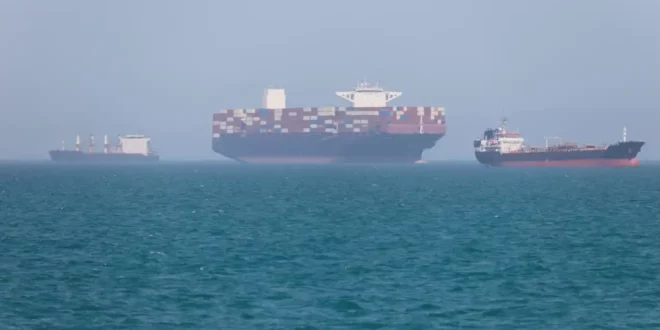
Crude prices jumped after Iran resumed attacks against the UAE and vessels trying to transit the Strait of Hormuz on Monday.
Brent contracts rose sharply on Monday night but were down slightly at $113.09 per barrel at 03:02 GMT on Tuesday. West Texas Intermediate contracts followed a similar pattern and were at $104.29, down 2 percent. Brent reached $126 last week.
Iran launched more than 15 missiles and drones at the UAE after the US navy began implementing Project Freedom, a more formal campaign to guide stuck vessels out of Hormuz. It was the first challenge to a ceasefire between the US and Iran that came into effect last month.
One strike hit an oil facility in Fujairah, Reuters reported, a port on the Gulf of Oman the UAE has relied on to bypass the locked strait.
A handful of foreign workers were injured. Several security notices for airline pilots were issued for Emirati airspace, while alerts again rang on the phones of UAE residents. It was announced schools and universities would return online for the remainder of the week.
Iran also hit a tanker linked to state-owned Abu Dhabi National Oil Company (Adnoc) and a ship owned by South Korea’s HMM, according to Reuters.
It targeted US warships that were following through on President Donald Trump’s order to escort vessels through the strait, admiral Brad Cooper, who leads US Central Command, said on Monday, as reported by the Wall Street Journal.
Cooper said Trump would react forcefully if “the process is interfered with”.
“And over the last 12 hours, Iran has interfered,” Cooper said.
Trump threatened in a phone call with a Fox News reporter that Iran would be “blown off the face of the Earth” if it attacked US forces, but otherwise did not clarify if he thought Iran’s new strikes broke the ceasefire.
The UAE foreign ministry said the Gulf state reserves “the right to a full and legitimate response to attacks”.
Shipping giant Maersk confirmed that one of its ships was among two US-flagged vessels that passed Hormuz with a US escort, according to Central Command.
The Dow Jones Industrial Average closed down 1.1 percent, the S&P 500 fell 0.4 percent and the Nasdaq slid 0.2 percent.
Saudi Arabia’s benchmark index dropped almost 1 percent, Oman’s 0.4 percent and Kuwait 0.2 percent, while markets in Dubai, Abu Dhabi, Qatar and Bahrain were slightly up.
Waleed Al Mokarrab Al Muhairi, deputy group CEO of Mubadala Investment Company, remained bullish on the future of the UAE.
He said Mubadala has had its two best years ever after the global financial crisis and the Covid pandemic and that he has “every reason to believe that over the next couple of years, we’re gonna see something very, very similar.”
“We as the UAE and as Abu Dhabi and as Mubadala… will not be defined by a few weeks of disruption and volatility,” Al Muhairi said on Monday at the Milken Institute’s annual global conference in Los Angeles.
“Rather we’re going to be defined and we are defined by the decades of stability that we have shown as a country and as an institution that is underpinned by a clear long-term vision.”