 Eurasia Press & News
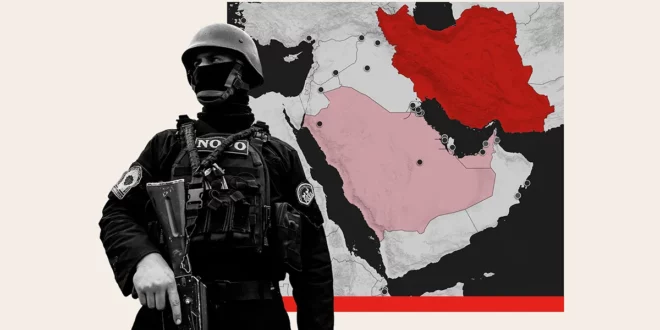
As Saudi Arabia and the United Arab Emirates (UAE) reportedly become increasingly involved in the war launched by the United States and Israel against Iran, the conflict is straining the cohesion of the Gulf Cooperation Council (GCC) and accelerating a shift in the lines of the region’s geopolitical sands.
While Riyadh and Abu Dhabi remain committed to their longstanding partnership, the latter’s ties to Israel have become a growing source of contention. Israel’s confirmation of an alleged recent visit by Prime Minister Benjamin Netanyahu to the UAE to meet President Sheikh Mohammed bin Zayed, and the UAE’s denial has only fueled further questions regarding the nature of the budding partnership between the two nations that established formal ties in 2020 as part of the Abraham Accords backed by President Donald Trump’s first administration.
The UAE has also been the subject of reports alleging its role in aiding non-state actors across the Middle East and North Africa, particularly in Libya, Sudan and Yemen, where Saudi Arabia backed an operation earlier this year to dismantle a powerful southern secessionist movement tied to Abu Dhabi in one of the most visible manifestations of the rift between the two countries.
The impact goes beyond Saudi Arabia, the UAE and Israel and has begun to take on a broader scope, involving other major actors including Egypt, Turkey and extending to South Asia, where India and Pakistan also have stakes.
Nawaf Obaid, senior fellow at King’s College War Studies Department and a former adviser to the Saudi royal court, described the shifting Saudi-UAE dynamic using a theory recently in the spotlight due to Chinese President Xi Jinping’s usage of the phrase last week as a cautionary tale for U.S.-China relations during his meeting with Trump in Beijing.
“This increasingly resembles a regional version of the Thucydides Trap: an emerging power attempting to expand its influence against an established dominant power,” Obaid told Newsweek.
The Saudi Center of Power
Since its establishment upon the unification of Arabian Peninsula holdings under the House of Al Saud in 1932, Saudi Arabia has commanded a unique position across the Arab and Islamic worlds, most notably due to its custodianship of Islam’s two most sacred sites, the cities of Mecca and Medina. The discovery of vast oil reserves and a strategic partnership with the U.S. helped further cement the kingdom’s status as a key regional player.
The UAE emerged much later, earning its independence from the United Kingdom in 1971. While smaller in size and population, the nation’s rapid modernization and development under the House of Al Nahyan have also afforded it an influential regional position as well as the second largest economy behind Saudi Arabia.
Still, Obaid argued Riyadh was well-positioned to retain its place at the helm.
“The problem is that Saudi Arabia is not simply the dominant GCC state; it is the central Arab power,” Obaid said. “Scale matters—geography, population, energy, financial depth, military capacity and religious legitimacy. Those are structural realities that cannot be replicated for a small state like the UAE.”
“Saudi Arabia remains the center of gravity of the Arab Gulf and the broader Arab system,” he added. “OPEC is Saudi-shaped, the GCC remains Saudi-centered, and regional strategic realities continue to gravitate toward Riyadh. Parallel maneuvers may create friction, but they do not create an alternative regional center of power.”
That applies to the UAE’s relationship with Israel as well, he argued.
“From Riyadh’s perspective, the issue is not whether the UAE maintains relations with Israel. Sovereign states make sovereign choices,” Obaid said. “The question is whether alternative alignments can fundamentally alter the Gulf balance of power. The answer is no.”
And yet “the greater risk,” he argued, “is not a shift in the balance of power; it is strategic miscalculation.”
The Emirates Step Up
While the UAE’s partnership with Israel predates the war, as does its competition with Saudi Arabia, the conflict appears to have emboldened the strategic shift.
The UAE has been the nation most targeted by Iran, which fired thousands of missiles and drones at Israel along with GCC states hosting U.S. military bases since the onset of the war that begin in late February. A ceasefire announced by Trump on April 7 has so far averted a return to large-scale hostilities, though limited strikes persist, including an unclaimed drone attack that struck the UAE’s Baraka nuclear power plant on Sunday.
Meanwhile, destruction dealt to oil and gas facilities and the throttling of maritime trade through the Strait of Hormuz has continues to wreak havoc on global energy markets and disrupt GCC economies.
There have also been geopolitical ramifications in the energy world. The UAE announced late last month that it would be quitting the Organization of Oil Exporting Countries (OPEC+), a group that has dominated much of the world’s oil market through collectively established quotas, with Saudi Arabia serving as its unofficial chief.
Mohammed Baharoon, director general of the Dubai Public Policy Research Center, framed the decision as being rooted in long-term planning rather than merely an immediate reaction to current events.
“Exit from OPEC is not anti-status quo,” Baharoon told Newsweek. “The blocking of the Strait of Hormuz has intensified energy security. The dynamics of supply not of price will be the dominant on in energy market especially with the amount of energy needed to run data centers. The UAE’s decision is future, not present, driven.”
Baharoon also downplayed the magnitude of divisions with Riyadh and its potential effects on GCC security, noting how the UAE has joined fellow members in calling for de-escalation in the conflict with Iran.
Trump on Monday credited appeals from the heads of Saudi Arabia and the UAE, along with Qatar, in his stated decision not to move forward with planned strikes to be conducted against Iran on Tuesday, demonstrating an ongoing commitment from GCC leaders to the weight of mounting a unified position.
“Criticism is not animosity,” Baharoon said. “We can’t blow things out of proportion. There is criticism between Germany and Hungary, but it doesn’t affect the EU or compromise European security.”
As for the relationship with Israel, he said it was one of many countries involved in the UAE’s efforts to diversify its foreign relationships, and “possibly less of a security partner when it comes to the industry complex than Turkey or even South Korea.”
“The net value of the partnership is also not very high,” Baharoon said. “The UAE has committed far more into this relationship than Israel did. However, the UAE doesn’t see the Abrahamic Accords as a bilateral normalization but as a regional approach to reduce identity conflicts in the region. This is challenged both by Iran and Israel but may not stop at them.”
‘Zero-Sum Game’
Yet Israel continues to place significant value in this relationship. Yoel Guzansky, senior researcher and the head of the Gulf Research Field at the Institute for National Security Studies who previously who previously served on Israel’s National Security Council official and as adviser to several premiers, described the UAE as not only Israel’s top partner among Arab states but one of its closest partners in the world.
“You need to separate between open normalization and tacit quiet relations that we have with a lot of countries, but the UAE is exceptional,” Guzansky told Newsweek. “It’s exceptional in many areas, and also in its relations with Israel. It was the deepest before the war, and it’s gotten even more substantial since the war.”
Despite the controversy associated with Israel, largely based on overwhelmingly negative public opinion across the Arab world, the UAE has not only invested in political contacts but also shored up defense collaboration. The UAE reportedly hosted Israeli troops and received one of Israel’s signature Iron Dome air defense systems amid the regional conflict.
“You had visits not just by the prime minister, it was revealed in Israel that the head of Mossad, the head of Shin Bet, the chief of staff, almost the entire Israeli leadership visited the UAE during the war,” Guzansky said. “And it seems that it was defense, although some suggested it was also offensive, meaning both countries not only helped the UAE defend itself better, but perhaps maybe do something else vis-à-vis Iran.”
“Iran attacked both Israel and the UAE, and both Israel and the UAE attacked Iran, either separately or in some sort of coordination between them,” he added.
Guzansky also acknowledged the blowback of this partnership in Saudi Arabia, a nation with which Israel has long sought to normalize ties as a gateway to the broader Arab and Islamic worlds. Saudi officials have previously entered into talks to discuss a U.S.-backed deal with Israel, though negotiations largely unraveled with the October 2023 attack by the Palestinian Hamas movement against Israel that first plunged the region into a still ongoing period of conflict and turmoil.
Saudi Arabia has since expanded its contacts with other nations, namely Egypt, Turkey and Pakistan, the world’s only Islamic nuclear-armed state with which Riyadh signed a defensive pact last September. The so-called “Quartet” has emerged as a potentially key geopolitical bloc in a region where Iranian influence, spearheaded by Tehran’s Axis of Resistance coalition, has suffered severe setbacks at the hands of the U.S. and Israel.
On the other hand, Israel and the UAE are also not alone in their alignment. India has increasingly invested in its relationships with two countries alongside the U.S. through the I2U2 framework.
Guzansky argued that these coalitions remained “fluid, ad hoc and largely unsustainable in the long-term,” though he felt it was inevitable that various countries would seek to seize upon any vacuum created by a rollback in Iran’s regional influence.
“The war created changes,” Guzansky said. “It’s zero-sum game in the Middle East. If Iran is weakened, countries will see Israel is getting stronger, or even Turkey, and they will balance against it. This is 101 political science.”
Escalation Management
There are risks associated with the pivot. Iran, though battered, remains a formidable force and has demonstrated its capacity to make good on threats to strike nations associated with its foes.
F. Gregory Gause, professor emeritus at Texas A&M University’s Bush School of Government & Public Service, felt the UAE’s particularly close relationship with Israel served as a “major factor” in Tehran’s calculus to devote so much firepower to its cross-strait neighbor.
He also noted that Israel’s image in the region had suffered not only due to popular outrage over scenes of death and destruction associated with conflict in Gaza and Lebanon, but also Netanyahu’s unprecedented decision to strike an alleged Hamas meeting in the Qatari capital of Doha in September.
“The UAE is doubling down on its ties with Israel, particularly on the military side,” Gause told Newsweek. “But ties with Israel remain unpopular in the Arab world, particularly in the wake of the Israeli assault on Gaza and its new occupation of southern Lebanese territory.”
“In the Gulf itself, people remember that Israel’s attack on Doha was not that long ago,” Gause said. “So even the UAE, which really does not have much of a public opinion to worry about (only 10% of the residents are citizens), does not want to trumpet its ties to Netanyahu.”
When it comes to Saudi Arabia, which retains significant regional and international clout, he predicted that the UAE would also operate with caution. This includes avoiding the kind of major incident that befell Qatar in 2017 when Saudi Arabia banded together the UAE, Egypt and Bahrain and several other states to boycott the fellow GCC nation over its alleged support for Islamist militant groups, ties to Iran and other issues.
So, while “the UAE divergence from Saudi Arabia is certainly significant,” he saw “no hints, as there were in the Qatar case, that Riyadh was trying to weaken the ruler domestically.” Rather, he pointed out, that Saudi Crown Prince Mohammed bin Salman and the UAE’s Sheikh Mohammed maintain communication and appear poised to continue cooperation on many areas of common interest.
“There is a clear difference between the two states on the Israel question,” Gause said. “The UAE is doubling-down on the Israeli connection as a result of the war. The Saudis see the Israelis as being regional disruptors, maybe not on Iran’s level, but in ways that worry the Saudis, in Lebanon, Syria, in the 2025 bombing of Qatar and in encouraging the U.S. to enter the current war.”
“That will remain a divergence between the two,” he added, “but will not prevent cooperation in other areas.”