 Eurasia Press & News
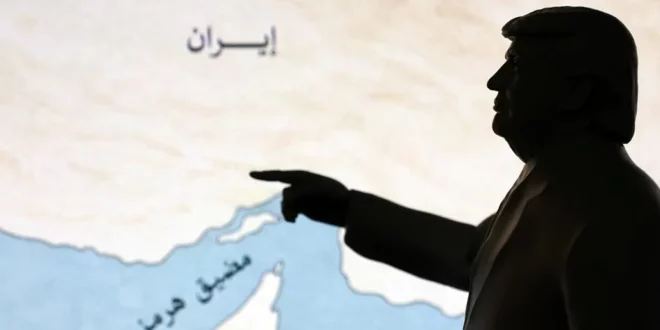
The US President Donald Trump hints at plans to expand the Abraham Accords as an exit strategy from the Iran war, along with announcing the end of the US naval blockade of Iran. This move could shift regional security to Israel, making the US less responsible.
A Diplomatic Exit Strategy Disguised as Regional Realignment
President Trump recently indicated that he was now hustling for an exit that Washington and Tel Aviv had imposed on Tehran, by stating that he had asked regional powers, including Pakistan, Turkey, Jordan, Qatar, Egypt, and Saudi Arabia, to join the Abraham Accords during the closing moments of the war. He maintained that he wants to make the truce to end the Iran war more historic through this move, but analysts around the world see this with suspicion. It seems that the United States seeks a face-saving through this move for an exit from the war on Iran’s terms. Trump’s recent announcement to lift the naval blockade of the Strait of Hormuz has further strengthened these speculations.
This move will also increase Israel’s role in regional security while leaving Washington no longer responsible for the security of Middle Eastern oil supplies. However, the United States will also ensure a limited share in the regional security. The move will also mark the transformation of the Abraham Accords from merely a framework centered on recognition of Israel into a broader regional security architecture, capable of substituting for US security guarantees in the Middle East while remaining backed by Washington.
Strategic Contradictions and the Logic of Separation
The recent Iranian attacks on the Gulf States have shown the reality of the US guarantees
However, there are numerous underlying flaws with this proposal, which seem less the product of strategic planning than of President Trump’s recognition that an emerging deal with Iran cannot plausibly be presented as a victory. The central logic will be to disentangle the nuclear issue from negotiations over the reopening of the Strait of Hormuz. The Iranian nuclear programme is merely a Zionist agenda, while the reopening of the Strait of Hormuz is a universal demand, as it led to global oil, energy, aluminum, and urea supply disruption. Thus, separating these two issues for further negotiations implies leaving the Zionist lobby dissatisfied. This raises a critical question: Is President Trump scrabbling to find a way to show Israeli and American Zionists that he has got something for them out of this self-imposed war on Iran?
President Trump’s recent announcement to lift the US blockade of Iran signals a possible deal in the coming days. Moreover, Iran’s upper hand in the conflict and its strong retaliation and uncompromising stance made this war an invincible conflict for the United States. The Trump administration’s whole idea of regime change was dependent on domestic protests and revolution in Iran. However, the US-Israel attacks on Iran reunited the divided populace of the country. For Iranians, this war was more about saving their civilization. Trump’s threat to destroy a whole civilization further cemented the Iranian unity. Another major reason behind this blowback was the US atrocities in Iraq, Libya, Afghanistan, and other regional countries after regime change operations in these states.
Blowback, Geopolitical Costs, and Regional Resistance
This Iranian unity and strong Iranian retaliation to the US-Israeli attacks led to a shameful US defeat in this war. President Trump seemed entangled in this war because he had no plan B in case of failure of his regime change operation. The Trump administration seemed frustrated to get a truce signed between the two sides. However, the Iranian government, despite heavy losses to its economy and key leadership, seemed calm and composed. Moreover, the Iran war also ruptured the United States’ international image and standing, creating a power vacuum that Russia and China eagerly filled. Due to this war, the Russian and Chinese soft power further increased around the globe. All these developments put the US in an uncomfortable position.
It seems that the upcoming deal will be more favorable to Iran, which would obviously dissatisfy the Zionist lobby internationally. The Zionist lobby has an unprecedented influence on the US establishment. It also plays a critical role in securing electoral victories for US politicians. A favorable deal to Iran and separating the nuclear issue from the reopening of the Strait of Hormuz will have a daunting impact on Trump’s political future. Therefore, President Trump seeks to offer Israel an extended regional security architecture in the Middle East.
Complications for Washington’s Post-War Middle East Vision
However, the key problem with this face-saving maneuver is that it has put several US allies in a difficult position. Egypt, Jordan, and Turkey have already recognized Israel; none of these countries appears willing to get involved in any sort of military or intelligence-sharing cooperation with the Zionist regime of Israel, as previous signatories of the Abraham Accords are. Saudi Arabia and Pakistan also stand firm in their stance that they will not recognize Israel without a clear pathway to Palestinian statehood.
After the recent Gaza genocide and the US-Israeli attack on Iran due to its nuclear programme, the situation has become more complicated for the Muslim nations. No Muslim state is in a position to sign the Abraham Accords under the current circumstances. Moreover, the recent Iranian attacks on the Gulf States have shown the reality of the US guarantees. Therefore, Trump’s attempt to gain face-saving and offer Israel an expanded security role and legitimacy for its war crimes may not succeed under current global circumstances.