 Eurasia Press & News
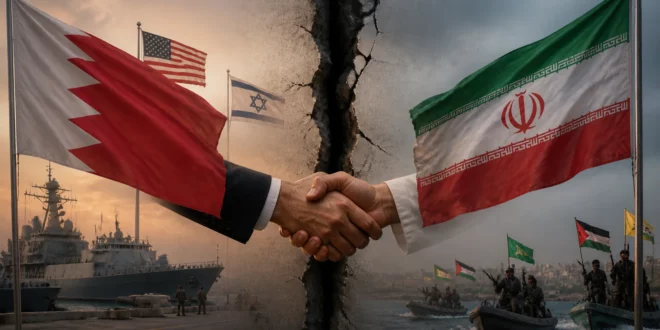
Normalization and pragmatic development of Bahrain’s relations with Iran, oriented towards the East and multilateral cooperation, are inevitable conditions for ensuring regional stability and security, despite current conflicts and historical differences.
In many periods of the history of ancient Persia, Bahrain was part of Iran’s territory. The dispute over the March 2011 protests in Bahrain brought widespread challenges to relations between Tehran and Manama. Following the Iran-Saudi Arabia dispute in 2016, Bahrain severed diplomatic relations with Iran.
As tensions between Iran and Saudi Arabia eased in 2022, efforts were made to reduce tensions between Iran and Bahrain and normalize relations. In recent years, with the presence of the Bahraini Foreign Minister in Tehran in June 2024, negotiations to establish a mechanism to resume relations, and Araqchi’s visit to Bahrain in October 2024, hopes for full normalization of relations had increased.
The agreement between Iran and the United States could bring about positive changes in Iran-Bahrain relations
Bahrain pledged neutrality during Israel’s June 2025 attack on Iran last year and condemned the attacks on Iran in June 2025. Even before the recent war, the foreign ministers of Iran and Bahrain discussed bilateral relations, regional developments, and diplomatic relations in a telephone call.
The effects of the Iran war on Manama-Tehran relations
With the start of the US-Israeli war against Iran on February 28, 2026, Bahrain made its airspace, bases, infrastructure, and military capabilities available to the aggressors. Iran also took defensive retaliatory measures against these bases, infrastructure, and targets.
For example, from February 28 to April 1, Bahrain announced that it had intercepted and destroyed 419 drones and 186 missiles.
Bahrain’s current presence in the UN Security Council has led it to use multilateral institutions to gather international resolutions, confront Iran, and challenge Tehran’s position, mobilize global support, and maintain long-term diplomatic pressure on Tehran, paving the way for sanctions, international lawsuits, and broader costs for Iran.
Bahrain’s attempt to grant “international legitimacy” to the aggression against Iran, presenting plans at the UN to impose sanctions and military measures against Iran, is while Manama is the headquarters of the US Navy’s Central Command (US Fifth Fleet) and one of the most important operational bases for aggression against Iran.
Iran has also accused Bahrain of abusing the United Nations Security Council (UNSC) and firmly and completely rejects Bahrain’s claims as baseless and deliberately misleading. From Iran’s perspective, while Bahrain illegally provided facilities, territory, and airspace to the aggressors during the war, Manama is trying to distort the real and legal framework of the issue.
In addition, Bahrain’s direct and indirect cooperation in planning, preparing, equipping, and waging war against Iran, the depth of Bahraini officials’ ties with Israel, and the public gratitude of US officials to Bahrain for its participation in military operations, political and diplomatic complicity, contradict Manama’s efforts to be neutral. Therefore, with Bahrain’s international responsibility and role in the aggression against Iran, it is obliged to fully compensate for the damages, including in particular the payment of compensation for the acts of aggression against Iran.
Iran also continues to maintain its right under international law to take all necessary and appropriate measures, including self-defense.
Bahrain certainly sees the United States as a strategic ally through the Comprehensive Security and Prosperity Integration Agreement (CSIPA). Bahraini political elites believe that proximity to Washington and Tel Aviv, security agreements, intelligence cooperation, and normalization of relations with Israel can create a kind of strategic immunity. In contrast, Tehran considers it a threat or “blatant betrayal” of regional security.
Bahrain has demands regarding the Strait of Hormuz and asks Tehran to reopen it. Therefore, it is trying to build an international consensus against Iran’s approach. In contrast, Tehran believes that Iran’s current actions in the Strait of Hormuz, given the war situation in the region, have legal legitimacy based on the principles of existing international law and are defensible in international forums and courts. From this perspective, Iran’s new arrangements aim to restore the balance between safe international navigation and the legitimate security requirements of the coastal state.
Bahrain is also wary of historical claims by some Iranian media outlets and figures regarding Bahraini territory and Bahrain’s “separation” from Iran in 1971. Bahrain’s Shia community, with its Shia majority, is of particular importance to Tehran. Of course, disagreements over Bahrain’s Shia opposition and the presence of Manama’s opponents of the government and al-Wefaq in Iran, are a significant challenge to relations.
Since February 28, Bahrain has announced the dismantling of at least several terrorist and espionage cells. Bahraini opposition groups are on Manama’s terrorism list or are trying to mobilize anti-American protests and bring about internal change.
From Manama’s perspective, Tehran has played a role in creating and supporting Bahraini Shia factions. Therefore, it responds by banning its citizens from traveling to Iran and by exercising greater control, or it considers Iran’s approach to be interference in its internal affairs.
While Bahraini Shiite opponents consider any Western military presence in the region a direct threat to their security and demand the closure of the US base and the Israeli embassy in the country, Manama took immediate action against “Iran supporters,” arresting dozens of Bahraini citizens (especially Shiites) and revoking their citizenship. In contrast, Iran considers “connections” with resistance groups such as Hezbollah and resistance groups in Iraq to be within the framework of its constitution and in compliance with international law and to support such movements. In addition, Tehran has condemned the continued arrest of Shiite clerics and the revocation of citizenship of several Bahraini citizens.
Outlook
The consequences of the war against Iran continue to worsen relations between Iran and Bahrain. In the meantime, with the presence of Persian speakers and a Shiite majority in Bahrain, the role of Iran’s soft power is prominent among public opinion.
Any widespread regional conflict or the start of a ground war with Iran could highlight the role of Bahraini opponents and quickly affect Bahrain’s national security, interests, and government. In contrast, any possible agreement between Iran and the United States could bring about positive changes in Iran-Bahrain relations.
Certainly, if a new realism in foreign policy, diversity and pragmatism in relations, and Bahrain’s security, political, and economic multilateralism lean towards the East, China, and Russia (Eurasian), tension reduction, normalization, and the expansion of relations with Iran are also certain.
Also, the revival of Bahrain-Iran relations will have many positive consequences for both countries. In the meantime, Russia, with its strong relations with Iran, can play an important role in the revival of Bahrain-Iran relations.