 Eurasia Press & News
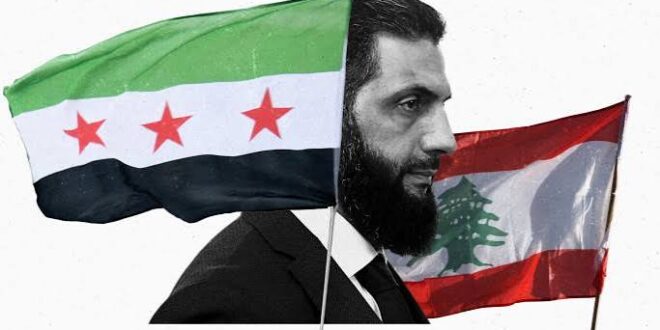
Syrian President Ahmed al-Sharaa has effectively ended weeks of speculation over whether Damascus might deploy troops to Lebanon, following repeated public calls by U.S. President Donald Trump urging Syria to “resolve the Hezbollah issue.” The proposal had stirred widespread political unease in Lebanon, reviving memories of Syria’s decades-long military presence.
Sharaa’s latest remarks shut the door firmly on any military intervention. Yet they simultaneously opened a new political channel: the Syrian president signaled readiness to assume a diplomatic role, including the possibility of direct engagement with Hezbollah if such talks serve the interests of both states. The message was widely interpreted as a sign that Damascus may be preparing to step in as a political mediator rather than a military actor.
Lebanese Prime Minister Nawaf Salam, who recently met Sharaa in Damascus, welcomed the clarification. His comments followed a series of high-profile Lebanese visits to the Syrian capital—including by veteran Druze leader Walid Jumblatt and former Prime Minister Najib Mikati—fueling questions about Syria’s evolving posture toward its neighbor.
Mutual Signals and Diplomatic Groundwork
Analysts say recent interactions between Damascus and Lebanese factions reflect a pattern of reciprocal signaling that could lay the foundation for a Syrian mediation role, particularly under U.S. oversight and amid mounting regional pressures.
Ziad Alloush, Executive Director of the Lebanese Diplomatic Academy, notes that these developments point to a growing level of trust between the two capitals. He highlights Jumblatt’s second visit to Damascus, during which he reportedly conveyed messages between Syrian officials and Lebanon’s “Shiite Duo” — Amal and Hezbollah. This coincides with a noticeable softening in the rhetoric of Shiite leaders toward Syria, including recent remarks by Hezbollah Deputy Secretary-General Naim Qassem, as well as an absence of tension along the border.
According to Alloush, these shifts are taking place against a backdrop of heightened regional pressure involving Israel and Iran, making the Syrian-Lebanese channel increasingly relevant.
Political researcher Hamza al-Muhaimed adds that Sharaa’s speech implicitly urged Hezbollah to avoid military escalation that could derail ongoing domestic negotiations. He argues that Syria is positioning itself at equal distance from all Lebanese actors while aligning its broader geopolitical and economic interests—chief among them the ambition to transform the Eastern Mediterranean into a major energy transit corridor to Europe.
New Levers of Influence
With renewed Arab backing, growing European engagement, and active coordination with Washington on several political and security files, the new Syrian administration holds significant diplomatic leverage. Alloush says this gives Sharaa credibility as a potential mediator, especially amid Saudi and Qatari support for Syria’s current trajectory—a shift that Hezbollah appears to have acknowledged in its recent messaging.
Al-Muhaimed notes that the deep geographic, political, and economic interdependence between Syria and Lebanon makes Damascus a natural candidate for mediation, provided Lebanese factions can reach consensus. Stabilizing Lebanon, he argues, is essential for safeguarding shared economic projects. This long-term outlook also explains Sharaa’s decision to postpone the contentious issue of border demarcation until regional security conditions improve.
Damascus and Hezbollah: Navigating Regional Pressures
Sharaa’s willingness to meet with Hezbollah “if it serves the interests of both countries” is widely viewed as a calibrated signal aimed at insulating Syria from broader regional confrontations that Washington may seek to impose.
Alloush says the Syrian leadership is pursuing a long-term diplomatic strategy to avoid being drawn into non-political tracks in Lebanon, particularly as Israel attempts to convert recent battlefield gains into lasting political arrangements. With Israel having succeeded in decoupling the Syrian and Lebanese negotiation tracks, Sharaa’s reassurances are intended to give Hezbollah space to manage its southern front without fearing a shift in Syria’s position.
Al-Muhaimed adds that Damascus categorically rejects any alignment with Israeli efforts to encircle Hezbollah—an assumption Israeli planners had partly relied upon during recent operations. Instead, Sharaa is working to reinforce a unified Syrian-Lebanese negotiating stance in the face of ongoing Israeli attempts to reshape regional spheres of influence.
In essence, the strategy emerging from Damascus favors regional stability, political dialogue, and diplomatic engagement over historical patterns of military entanglement—positioning Syria not as a dominant power, but as a potential arbiter in Lebanon’s unfolding crisis.