 Eurasia Press & News
Documents on the secret negotiations between Russia and China, which were at the disposal of The Insider (and verified by the publication), confirm that military cooperation between the countries has gone deeper than it was publicly known. Among other things, China has involved Russia in the program to combat the Starlink satellite system Elon Musk, which includes both legal and diplomatic warfare measures and means of direct destruction of satellites. In addition, China has proposed a number of its technological developments in the field of barrage munitions, air defense/PRDO and artificial intelligence so that Russia can test these technologies in Ukraine in real combat mode and share the results of tests with China.
At the disposal of The Insider were documents related to Russian-Chinese military cooperation. These include four presentations presented in November 2023 at the Third China-Social Forum on Military-Technical Cooperation in Guangzhou (a regular bilateral meeting that has never been advertised), and a signed bilateral working protocol following the talks in Moscow in June 2023.
The documents cover five areas of weapons – space weapons and the destruction of satellites, integrated air and missile defense systems, autonomous loitering munitions in the “district”, new-generation armored combat vehicles and military aviation.
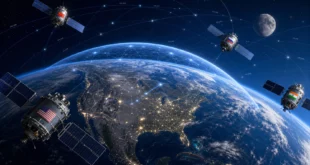
As follows from the documents, China offered Russian partners to actively fight the Starlink satellites of Elon Musk, and a variety of methods – from legal and bureaucratic to direct destruction.
Fighting with Starlink
By the autumn of 2023, Starlink began to play a key role on the battlefield. Ukrainian doctors used its terminals to coordinate evacuations, artillery units – for targeted designation, drone operators – for real-time management. By November of the same year, SpaceX had supplied Ukraine with more than 40 thousand terminals. The system has become so important for the military operations of the country that American officials called it irreplaceable.
In the same November, in the southern Chinese city of Guangzhou, engineers from the most important Chinese space and defense institutions gathered for a secret meeting. One of the topics of discussion was how to destroy Starlink.
The documents of the Third Sino-Russian Forum of Military-Technical Cooperation contain a presentation of the program to combat Starlink. Although the presentation is bilingual (in Chinese and Russian), numerous and obvious errors in the Russian language indicate that the document was prepared by the Chinese side. The presentation was presented by two researchers from the China Aerospace Science and Technology Corporation (CASC): Huang Hui (黄辉) and Ren Jie.
CASC is China’s chief state space contractor, responsible for the Changzheng family of missiles (aka Long March, or Great Hike) and much of China’s military satellite infrastructure. The document has a classification – 密级:内部, “internal”. This is one step above the level available for public attention.
At the beginning of the document, the transition of the Starlink system from commercial broadband access to the network military infrastructure is described: backup of navigation in conditions of GPS signal deterioration, high-precision constant observation and, above all, distributed architecture. The latter characteristic makes the system especially difficult to suppress, since the main node-transmitter simply does not exist. The jamming of one ground station or the destruction of one relay node does not lead to a significant deterioration in the network – the system is elastic.
In the document, this flexibility is presented as a threat. The CASC researchers claim that Starlink has already created a “space blockade” tightly occupying low-orbit areas and key electromagnetic spectrum ranges in a way that it excludes the possibility of competition. This allowed the authors of the document to justify the fight against Starlink as self-defense, not aggression.
Level: Strangle Starlink legally
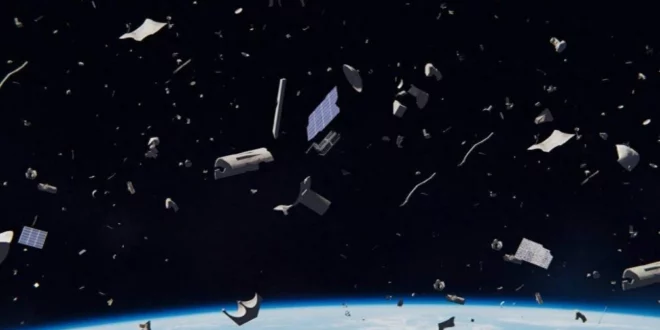
The first level of the fight against Starlink is the joint Russian-Chinese legal and diplomatic pressure. Its main message is that the system increases the risk of collision of satellites. Due to the high density of satellites in low Earth orbit, the risk of collision, the question is, especially high. Therefore, it is proposed to create an international coalition that would achieve regulatory restrictions on the expansion of the Starlink program.
Second level: take the spectrum
The second level of struggle with Starlink suggests that China and Russia will jointly apply for frequency bands and orbital positions necessary for Starlink expansion. That is, using their influence in international regulatory bodies, Beijing and Moscow will try to prevent the future deployment of Starlink. The document directly considers this as a coordinated military countermeasure directed specifically against Elon Musk’s company.
Along with the use of the spectrum, the researchers propose to create a joint architecture of electromagnetic interference – “power suppression and adaptive interference”. The goal is to selectively block Starlink’s connection in certain geographic areas. The proposal is to combine Chinese and Russian independent programs to counter satellites into a coordinated system with common technical standards and a complementary geographical coverage.
Third level: Physical Destruction
The third level is moving from the usual geopolitical competition to an unprecedented level of escalation.
First, these are cyber attacks on Starlink through civilian user terminals. The document proposes to use “fake access, infection with viruses and manipulation of vulnerabilities” to download through terminals of malware users distributed over the network. This should lead to “parralization of the network”.
The presentation does not say anything about the possible humanitarian consequences of the “separational network”. Starlink terminals are used by humanitarian organizations, hospitals in remote areas, journalists in conflict zones, fishing fleets and conventional subscribers in dozens of countries. But the authors of the presentation obviously do not care.
Secondly, the authors of the presentation are considering the possibility of physical destruction of satellites. The CASC researchers propose to develop “inexpensive countermeasures” in “one-to-many” mode to destroy Starlink satellites in orbit. According to the authors of the concept, if the stability of the group is due to its number, then the solution is weapons that are cheap enough to destroy satellites faster than SpaceX will be able to launch new ones.
At the same time, the translation of the term 低成本对抗 contains a noticeable error. The Russian text says “low costs against low costs”. In this formulation, the asymmetric logic of the original is lost, in which we are talking about cheap Chinese interceptors that destroy expensive American satellites.
The document calls on China and Russia to jointly explore all three components – legal, kinetic and cybernetic, as well as to expand the coalition – to involve “relevant interested countries” in the association, which in the presentation is directly called a technical alliance against Starlink.
The Secret Negotiations
Five months before the forum in Guangzhou, a Chinese military delegation led by a colonel of the Central Military Council of China went to Moscow for nine days. In the Russian capital, secret talks were held with the leading Russian air defense manufacturer Almaz-Antey. Delegates returned with a contract for the supply of weapons.
The signed working protocol of these negotiations, available to (and independently confirmed by the flight data of the participants indicated in it), shows that the Russian-Chinese military partnership has gone far beyond the general rhetoric and has become a structured multidisciplinary program to create weapons that none of the countries could develop alone.
The protocol in question consists of ten pages in Chinese and Russian and signed by both parties in Moscow on June 5, 2023. Its official name is “Working Protocol” (工作纪要). Theme: joint development of an integrated low-altitude air defense system and missile defense systems at the end of the trajectory — 末段低层防گЇ JavaScript器系统 — designed to intercept American hypersonic missiles.
The Chinese delegation was headed by Colonel Tong Xiafeng (童晓峰), deputy director of the Technical Cooperation Bureau for Technology of the Department of Technology Development of the Central Military Council, a senior PLA official engaged in procurement and has direct access to the highest military body of China. He arrived in Moscow three days earlier (May 25) to prepare for the negotiations — and flew on June 3, two days before the signing of the agreement.
On the fifth day of the negotiations, the Chinese delegation visited the Research Institute of Instrumentation. Tikhomirova (NIIP) in Zhukovsky. This institute of radar design, among other things, is responsible for the development of the Belka radar for the Su-57 fighter and the main components of the latest Russian air defense systems. The visit is recorded in the protocol without details.
The Russian delegation included twelve officials from three organizations: Rosoboronexport, the Almaz-Antey concern and NPO Diamond. The Russian side was headed by Andrei Kovalev, deputy director of the research and technology department of Rosoboronexport. He was accompanied by Alexander Kotelnikov, a senior expert of the same department. The Russian delegation was also attended by Pavel Sozinov, the general designer of Almaz-Antey – the most experienced weapons designer in the Russian air defense system, responsible for the entire line of S-300 / S-400 / S-500.
Joint air defense / missile defense project
One of the key links in the joint program is a comprehensive system of air and missile defense of the new generation. It is designed to intercept ballistic missiles, maneuverable warheads and hypersonic missiles at the final stage of the flight. The technical characteristics agreed in Moscow – updated in comparison with the previous meeting and accurately fixed in the protocol – determine the goals of the jointly developed system.
The system should intercept medium-range ballistic missiles at distances up to 4000 km (during the negotiations in Moscow, this figure was increased from 3500 km). In addition, it is supposed to cope with the goals maneuvering with side acceleration up to 25g – instead of 20g. It should also intercept hypersonic missiles at altitudes up to 40 km instead of 30 km.
The requirement for reloading during maneuvering in 25g is specifically aimed at evasion flight profiles that make it difficult to intercept hypersonic weapons by existing systems. The ceiling of heights of 40 km extends into the near space, where hypersonic planning devices operate.
It is implied that the first stage will jointly investigate key technologies, including the design of interdomain missile systems that integrate the capabilities of air defense, missile defense and countermeasures in near outer space; joint management of ground, aviation and radio-electronic means; and automated control of multi-special missiles in a multi-specaid combat mode. Physical prototypes of components will be developed to test these technologies.
The protocol also contains an agreement on the second parallel project: “Design and operational assessment of advanced air defense systems/PR”. The technical task project has already been initialed.
The protocol contains an accurate schedule of execution of the contract. The Russian side pledged to submit a draft contract and a commercial proposal to the Chinese side by August 2023 – two months after signing in Moscow. Indeed, in August, the Russian delegation flew to Beijing.The Moscow protocol set a deadline for the start of negotiations on the contract in Beijing – the fourth quarter of 2023. This period was met with: Kovalev and Kotelnikov, the two highest-ranking Russian officials who signed the protocol in June, flew together to Beijing on December 17, 2023.
Russian combat experience in exchange for Chinese technology
In the presentation of the researcher from the Academy of Military Sciences, PLA Li Jun (under荣) presented at the forum, it is proposed to put on the flow of the transmission of data on the fighting of Russian drones in Ukraine to China.
China has 160 types of loitering munitions from more than 50 manufacturers, but has little real combat experience in any of them. Russia has data on the combat use of drones. The proposal is to formalize the exchange – Russia shares knowledge from the battlefield, and China – AI technologies and mass-produced resources for the joint development of the next generation of autonomous “swar” munitions.
The results of this agreement are already visible during the Ukrainian war. The V2U autonomous drone used by Russian troops in Ukraine (according to documents of the Ukrainian military intelligence from 2025) works on Chinese artificial intelligence modules, Chinese Lidar sensors, Chinese batteries and Chinese solid-state drives. Components are already available. The participants of the forum in Guangzhou discussed how China’s engineering decisions will, in fact, be tested on the battlefield in Ukraine.
The second presentation at the forum, presented by Chen Wang (rig旺) from the Chinese Northern Research Institute of Vehicles, contains an analysis of armored vehicles: a detailed assessment of the destruction of Russian armored vehicles in Ukraine ATGM Javelin, NLAW, Bayraktar TB2, Switchblade 600, systems HIMARS – which is presented as the basis for the joint development of next-generation armored vehicles with active protection based on artificial intelligence, uninhabited towers and the integration of “swar” drones.
The speaker’s notes by direct saying that, faced with “sanctions, especially with current restrictions on chips and raw materials”, China and Russia should mutually use supply channels between both sides to solve the problem of “bottlenecks”.
It is implied that China supplies chips and electronics, and Russia supplies raw materials and those components that China is difficult for China due to Western sanctions.
The third presentation – from Yu Wu (尤伍) from the First Aviation Institute AVIC – is devoted to the aviation sphere. The document demonstrates that China no longer acts as a buyer here. Now we are talking about joint laboratories, joint use of intellectual property, mutual technology transfer. The presentation explicitly states that China has “opportunities and desire to contribute to the development of Russian aviation technologies.”
The country, which has been buying drawings of Russian fighters for 30 years, now offers Russia to learn something.