 Eurasia Press & News
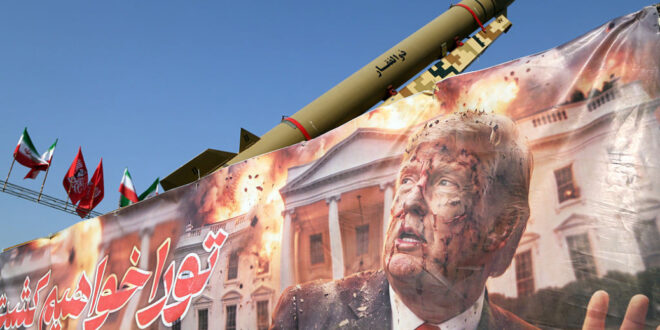
Saudi Arabia played a key role in persuading the US president to once again walk back on his threats of a devastating bombing campaign in Iran
Donald Trump on Saturday again pulled back from the brink from a devastating bombing campaign in Iran.
In an announcement on his Truth Social platform, the US president said he had cancelled attack plans having just hours earlier threatened a major escalation in the five-month conflict.
What happened?
Trump has over the past week repeatedly threatened to launch a massive round of bombing in an attempt to force Iran to re-open the Strait of Hormuz.
Multiple US news outlets said over the weekend that the president had authorised a fresh attack. CBS News reported that the US and Israel were planning a joint operation to destroy Iranian power plants and oil refineries.
“We’ll be hitting them very hard,” Trump said on Friday. “At some point, they’re going to say, ‘We just can’t take it anymore.'”
But just hours later, the president announced he had cancelled the attack and claimed a peace a deal was close to being worked out.
“We have just been asked by Iran, and other Middle Eastern countries, to hold off any attack in that the perimeters of a deal has been agreed to,” Trump wrote on Truth Social.
The agreement would include the “immediate, complete, and total opening of the Hormuz strait and an end to Iran’s nuclear threat,” he said.
This is the latest example of a recurring pattern that has seen the US president repeatedly walk back on aggressive threats.
This occurred most notably in April when he issued his notorious threat to wipe out Iranian civilization, only to agree to a ceasefire the following day.
What role have the Gulf states played?
Trump’s allies in the Middle East are believed to have played a key role in persuading him to hold fire amid fears Iran would mount a huge retaliatory attack in the Gulf.
A US official told Axios that Saudi Crown Prince Mohammed bin Salman “expressed concern” over potential US strikes in a call with Trump on Saturday. A second source said he urged Trump to de-escalate the situation.
Saudi Arabia has come under particularly heavy fire from Iran’s regional allies over the past week, with Yemen’s Houthis and Shia militias in Iraq conducting several attacks on its oil facilities.
On Friday, Iranian media published a list of targets in the Gulf and Israel that it said could be hit if the US bombs civilian infrastructure.
The list included the biggest oil fields in Saudi Arabia, the UAE and Kuwait, some of largest refineries in the region, and Qatari gas infrastructure. It also included Israel’s Leviathan and Tamar Mediterranean gas fields.
In a call with his Saudi counterpart on Saturday, Iran’s top diplomat Abbas Araghchi said Tehran would provide a “decisive and proportionate response” to any attack by the US or Israel, Iran’s foreign ministry said.
Is the US capable of defending against Iranian attacks?
Concerns within the administration and the military over Iran’s response appear to have played a role in cancelling the attack.
Multiple US officials briefed The Washington Post that the head of US European Command, Gen. Alexus Grynkewich, had warned the administration this week that his forces are no longer equipped to continue defending Israel.
In a letter to the Pentagon, he said that without another destroyer he would be forced to choose whether to defend the US or Israel.
Officials and analysts have recently issued warnings about the depletion of the military’s defensive munitions, raising questions about how much longer it will be able to defend against Iranian attacks.
The US and its Gulf allies have used thousands of interceptors to defend against Iranian ballistic missiles and drones since the start of the war.
Following the April ceasefire, analysts raised concerns about the depletion of interceptors for the Patriot and THAAD air defence systems and estimated it would take at least three years for the military to fully replenish its stockpiles.
How has Iran responded to Trump’s statement?
Iranian officials are insisting that the Strait of Hormuz will remain closed until the US agrees to end the war and that Iranian armed forces are ready to respond to an attack.
“As long as the United States maintains its hostile actions, the Strait of Hormuz will remain closed,” the semi-official Fars news agency quoted a source close to Iran’s negotiating team as saying.
Officials have also denied Trump’s claim that Iran requested the cancellation of the attack. Iran’s Mehr news agency on Sunday quoted military officials calling the allegation “nothing but a new lie”.
What are the prospects of a deal?
It remains unclear what parameters Trump was referring to in his Truth Social post.
Lead mediators Pakistan and Qatar, along with other countries in the region, have pressed both sides to de-escalate but until now there has been no indication that negotiations could resume.
The June memorandum of understanding fell apart last month, with Iran and the US accusing each other of violating its conditions.
From mid-July, the two sides engaged in a new exchange of strikes, with the US targeting Iranian military sites close to the strait and Iran attacking US bases and civilian infrastructure in the Gulf.