 Eurasia Press & News
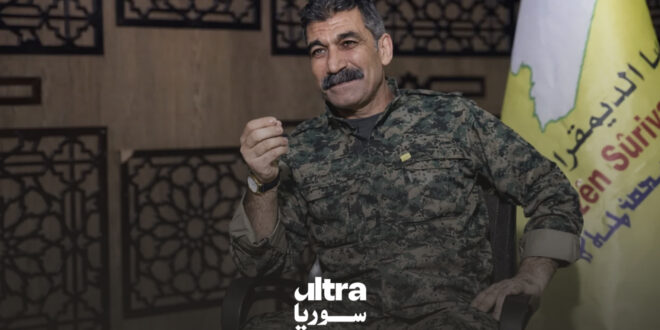
Ankara’s decision to remove Sipan Hemo, Syria’s Deputy Minister of Defense for Eastern Region Affairs, from its terrorist “Red List” marks a significant political and security shift in the regional landscape. This is far more than an administrative adjustment. It reflects a deeper evolution in Türkiye’s approach to the Syrian Kurdish file and signals an emerging strategy to recalibrate its relationship with the Syrian Democratic Forces through official Syrian government channels.
The move comes at a moment when Turkish security priorities intersect with Damascus’s efforts to restore full state sovereignty, and as the SDF continues its gradual integration into Syrian national institutions after years of de facto autonomy in the northeast.
Since the beginning of the Syrian conflict, relations between Ankara and the SDF have been defined by profound tension. Türkiye consistently viewed the SDF as an ideological and organizational extension of the Kurdistan Workers’ Party, prompting repeated military operations in northern Syria and the blacklisting of prominent Kurdish commanders. Today, as negotiations between Damascus and the SDF advance, Türkiye appears to be adopting a more pragmatic posture, one that privileges strategic engagement and political incentives over exclusive reliance on direct confrontation.
The delisting gains additional weight amid reports of an impending visit by Hemo to Türkiye. If confirmed, it would be the first official visit of its kind by a figure of his rank, raising essential questions about the contours of Ankara’s strategic shift and the future trajectory of Türkiye–SDF relations.
International relations researcher Firas Allawi told Ultra Syria that removing the former SDF commander from the wanted list forms part of a broader sequence of measures designed to support the Syrian central government and reinforce regional stability. Allawi explained that the move aligns with foundational agreements between Damascus and the SDF to absorb the latter’s forces into state institutions, directly aiding Syria’s effort to reassert control over its entire territory.
He added that Ankara intends to signal that current Syrian internal developments enjoy Turkish backing. The step also serves to weaken the SDF’s insular organizational structure by encouraging pragmatists aligned with Damascus, thereby isolating factions opposed to integration or hostile to Türkiye.
The Strategic Dimensions of Hemo’s Anticipated Visit
Addressing reports of Hemo’s planned visit to Türkiye, Allawi outlined two principal vectors.
The first involves an internal realignment within the SDF aimed at strengthening ties with its pragmatic wing, encouraging additional leaders to join the political process while neutralizing resistant elements.
The second intersects with Türkiye’s broader domestic Kurdish track, including ongoing dialogues involving Abdullah Öcalan and PKK leadership, to foster a more stable regional security environment.
Allawi suggested that further delistings of Syrian Kurdish figures may follow as Ankara seeks to reward leadership elements that commit to the Syrian national integration framework.
Integration within the Damascus–SDF Dialogue
Allawi described these steps as a calculated framework of incentives, where delisting functions as a tangible reward for leaders choosing alignment with the Syrian state. Türkiye, he noted, is signaling to Kurdish leadership that internal policies must adjust to the broader reality of state-level integration.
Dr. Mourtada Kouzmak, a scholar of Turkish affairs, offered a complementary analysis to Ultra Syria. He observed that the delisting represents a qualitative turn in Turkish strategy. Recognizing that direct military containment yields diminishing returns, particularly amid visible progress between Damascus and the Autonomous Administration, Ankara is shifting toward direct political and security engagement.
Kouzmak highlighted that Hemo’s visit could open direct security channels to address border management and mitigate threats to Turkish national security. He emphasized, however, that sustained progress depends on Kurdish leadership systematically severing organizational ties with the PKK and dismantling parallel security structures in favor of the regular Syrian armed forces.
He noted that this strategy may induce internal division within the SDF between cooperative and resistant factions. Its ultimate success hinges on consistent Turkish support for the Syrian government and on Damascus’s capacity to reassert authority in the eastern provinces without provoking renewed ethnic grievances.
In the end, removing Sipan Hemo from the Red List stands as an early barometer of a new era in Turkish–Syrian Kurdish dynamics. As Türkiye balances political engagement with security guarantees, the future of these relations will depend on whether both sides can move from prolonged confrontation toward a pragmatic, structured accommodation.