 Eurasia Press & News
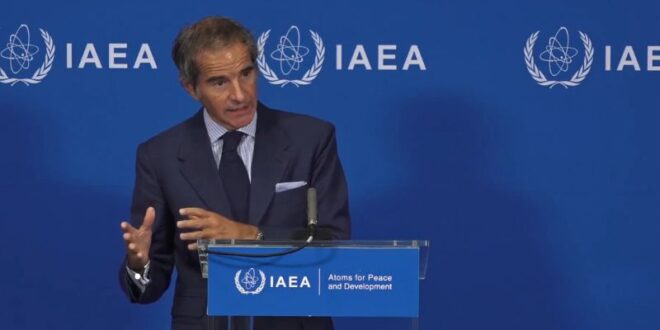
International Atomic Energy Agency Director General Rafael Grossi said the nuclear reactor in Syria was close to completing in 2007, before Israeli fighter jets destroyed it, was the type of reactor capable of rapidly producing fissile material that could be used to manufacture nuclear weapons.
Grossi said on Monday, September 7, during a press conference at the agency’s headquarters, that recent investigations into secret nuclear activities in Syria under the rule of the Assad family represented a “historic breakthrough,” according to Reuters.
He revealed that the investigation found about 73 metric tons of natural uranium metal, most of it in the form of reactor fuel.
Grossi had said in a post on X on August 18, “We confirmed the presence of several tons of natural uranium metal” at an undisclosed site outside Damascus, adding that the agency and the government had agreed that the undeclared material would be verified and placed under the IAEA’s routine safeguards procedures.
Grossi: Reactor Was Nearly Complete
Grossi added at the press conference that the agency had confirmed in a report sent to member states its earlier findings that the site bombed in Deir Ezzor governorate (eastern Syria) was a nuclear reactor under construction and that its fuel had been manufactured inside the country, matters that should have been declared to the agency at the time.
“This reactor is highly efficient in producing fissile material that can be used directly in the manufacture of nuclear weapons,” he said, adding that the reactor had been close to completion and represented a “serious proliferation concern.”
Grossi said that “after obtaining the necessary access and information from Syria, the agency was able to clarify and resolve questions related to outstanding safeguards issues connected with Syria’s past nuclear activities.”
He welcomed the transparency and cooperation Syria had shown toward the agency, saying this would facilitate resolving outstanding issues related to past activities.
Grossi: Syrian Government Will Decide Uranium’s Fate
The IAEA director general also announced that the uranium discovered in Syria is under agency safeguards, explaining that the material is located in a place that is difficult to access, according to Al-Monitor.
Grossi said that “the Syrian government is the party that will decide what happens to these materials,” stressing that the agency’s concern is to know where the materials are at all times and what is happening to them.
He noted that the government of Syria’s deposed regime had been trying to conceal its activities from the international community.
IAEA Moves to Close Syria’s Nuclear File
IAEA Director General Rafael Grossi had previously disclosed the presence of tons of natural uranium in Syria and said an agency delegation had visited the “Deir Ezzor site” to monitor “ongoing excavation activities in close coordination” with Syria.
On August 18, he said the agency had visited a site where large quantities of graphite are stored, which is also connected to past nuclear activities in Deir Ezzor, thanking the Syrian government for its “proactive cooperation.”
Grossi said at the time that the visit came “in the context of ongoing cooperation with the Syrian government to clarify and resolve outstanding safeguards issues related to the implementation of the safeguards agreement under the Nuclear Non-Proliferation Treaty (NPT) with the International Atomic Energy Agency.”
For his part, Syrian Foreign Minister Asaad al-Shibani said during a joint press conference with Grossi in Damascus at the time that Syria had provided access to the Deir Ezzor site “after more than 18 years, on its own initiative and by a sovereign decision,” adding that Syria was dealing with the legacy of the former regime regarding nuclear activities.