 Eurasia Press & News
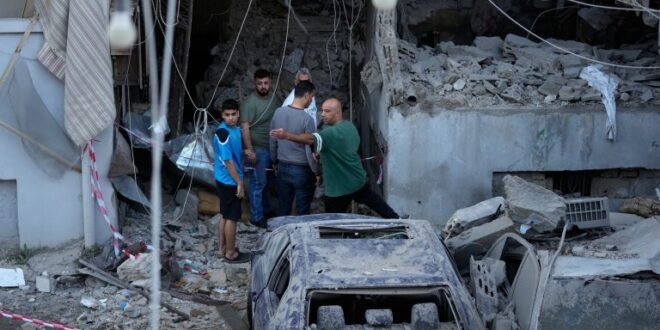
Israel has escalated pressure on Hamas and Hezbollah by moving deeper into both Gaza and Lebanon and killing two successive leaders of Hamas’ military wing.
Israeli leaders view the combat as increasing their leverage before finalization of a U.S.-Iran peace agreement that reportedly will require Israel to halt its operations against Iran-aligned factions.
S.-backed peace agreements in both Gaza and Lebanon are stalled, and neither Hamas nor Hezbollah has shown any sign of agreeing to comply with provisions requiring them to disarm.
Arab and Islamic leaders accuse the Trump foreign policy team of tacitly backing Israel’s operations against the two groups, which Washington has long characterized as terrorist organizations helping Tehran project power in the region.
Israel has escalated its attacks on Iran’s allies in the Gaza Strip and in Lebanon as U.S. and Iranian officials close in on an agreement that would end the three-month-long U.S.-Israeli war on Iran. Israel’s Prime Minister Benjamin Netanyahu and his team assess that President Trump is preparing to accommodate Iran’s insistence that a U.S.-Iran agreement end the wars on “all regional fronts,” including requiring Israel to cease its offensive against Lebanese Hezbollah. Israeli strategists view the escalation against Hamas and Hezbollah as increasing Israel’s leverage before Trump insists Israeli forces halt their attacks. By contrast, regional officials argue that Israel is expanding its operations in Gaza and in Lebanon in order to derail a U.S.-Iran accord, calculating that Tehran will withdraw from the talks in support of its regional allies.
Even as the U.S. and Iran negotiate (Axios Media and other reports Thursday indicate an accord has been reached, subject to leadership approvals in Washington and Tehran), tensions remain high. U.S. forces on Wednesday again struck Iranian drone and air defense targets along the Strait coast that the U.S. perceived posed a threat to U.S. forces. A similar U.S. “defensive” strike took place Monday.
The Israeli decision to escalate in Gaza and in Lebanon, even as U.S. officials asserted an agreement with Iran was at hand, suggests Trump and his team would have difficulty enforcing any directive that Israel strictly abide by the ceasefires in place in both territories. Arab and other regional leaders, as well as Hamas and Hezbollah, have accused Israel of routinely violating its ceasefire commitments, and cite the Trump team for failing to restrain Israeli operations. Yet U.S. officials, although urging that all U.S.-brokered ceasefire commitments be upheld by all parties, also align with Israel’s view of both Hamas and Hezbollah as terrorist organizations that promote Iran’s regional objectives. Washington insists both groups fully disarm and demobilize, sharpening its position toward both groups since the October 7, 2023, Hamas attack on Israel, which Hezbollah subsequently joined by launching missile and drone attacks on Israel.
In Lebanon, Israel has been on the offensive since the U.S.-Israeli war on Iran began on February 28, and Hezbollah, two days later, joined Iran’s retaliation with missile and drone attacks on Israel. Israel has sent ground troops into southern Lebanon and established positions throughout the territory south of the Litani River. In order to provide diplomatic space to negotiate with Iran, Trump has insisted that Israel limit its operations against Hezbollah to retaliatory and defensive operations only since early April. However, Israel has continued to pressure the group militarily to try to force it to disarm and demobilize. The Trump team has largely turned a blind eye to the Israeli operations in Lebanon, viewing the degrading of Hezbollah’s arsenal as adding leverage to the U.S. bargaining position with Tehran.
On Tuesday, the Israel Defense Forces (IDF) struck more than 100 Hezbollah sites across southern Lebanon and the eastern Bekaa Valley area, targeting storage facilities, command centers, and observation points used to attack into northern Israel. One strike hit the eastern village of Mashghara, killing 12 people, including several members of the same family, according to Lebanon’s state-run National News Agency. Hezbollah retaliated with rocket, artillery, and exploding drone attacks on Israeli troops and vehicles mobilizing along the river toward the villages of Yohmor al-Shaqif and Zawtar al-Sharqieh. In recent days, Israeli forces have crossed the Litani and edged closer to the southern city of Nabatiyeh. On Wednesday, the IDF warned residents to leave the southern Lebanese city of Tyre, and began striking Hezbollah positions around that city. The latest Israeli actions have added to the already widespread displacement of Lebanese civilians, estimated in late April at more than 1.2 million.
Israel’s stepped-up offensive in Lebanon not only threatens to derail a U.S-Iran agreement but also might upend the fledgling, U.S.-brokered official talks between the Beirut government and Israel. Israel and Lebanon agree Hezbollah should be disarmed, but Lebanon’s leaders insist that the Lebanese Armed Forces (LAF) demobilize the group gradually and with Hezbollah’s cooperation — not by the use of force from Israel. Netanyahu’s escalation in Lebanon has come days before Lebanese and Israeli military officials are scheduled to meet Friday at the Pentagon to add a new “military track” to the government-to-government dialogue that began in April. IDF and LAF representatives are to discuss, among other issues, strengthening the ceasefire that’s been in place for over a month and that the two sides agreed last week to extend for another 45 days.
Israel is also escalating in the Gaza Strip, after a long period in which a U.S.-brokered peace plan for Gaza, agreed in October, muted Israel-Hamas combat. The U.S. plan, which established a “Board of Peace” as an international body to oversee Gaza, fueled optimism that Gaza would no longer be led by Hamas and eventually be rebuilt. In the months since the Board was inaugurated in February, aid has been flowing, and humanitarian conditions have improved, but Israel and Hamas each control separate sections of Gaza. The two sides have continued to engage in low-intensity clashes as Israel presses Hamas to abide by the peace plan’s requirement to disarm. A National Committee for the Administration of Gaza (NCAG) — the transitional technocratic governance body charged with providing the people of Gaza with everyday public services — was named in January but remains in Egypt, unable to relocate to a still-unstable Gaza.
The Iran war has added complications to U.S. and Board of Peace efforts to deploy an International Stabilization Force (ISF) to Gaza —the cornerstone of the plan’s roadmap to pacify Gaza and transition it from Hamas rule. Arab and Muslim leaders, who had initially indicated they might donate forces to the ISF, do not want to openly cooperate with the United States and Israel, which their populations view as aggressors against Iran. Even before the Iran war, partner countries were reluctant to pledge forces for the ISF, fearing their personnel would be challenged by a still-armed Hamas. A major blow to the planned ISF came a week after the U.S. and Israel attacked Iran on February 28, when Indonesia put its commitment of 8,000 troops on indefinite hold. Some 1,000 were to be sent in April, with the remainder in June. The Board of Peace’s executive officer for Gaza, Bulgarian diplomat Nickolay Mladenov, has said the ISF will not be able to begin operations until there is an agreement and implementation of a second phase of the ceasefire, which would see Hamas disarm and Israel begin to withdraw.
But instead of withdrawing, Israeli troops have in recent weeks increased the Gaza territory under their control to 60 percent, up from 53 percent of the territory within Israel’s declared “yellow line” designated in October. In at least one spot, Israel moved the line forward a few hundred yards to intersect with Salah al-Din Road, Gaza’s main north-south artery. Israel has also been fortifying the line that separates it from areas controlled by Hamas. In remarks to Israeli reporters on the sidelines of a conference in the occupied West Bank on Thursday, Netanyahu said he has given the IDF orders to expand its control to 70 percent of the Gaza Strip, which would presumably include some heavily populated areas. For their part, Hamas leaders give no indication they will disarm. Mladenov, in a recent speech in Jerusalem, stated: “You cannot build a future with armed groups running the streets, hiding in tunnels and stockpiling weapons…You cannot deliver reconstruction with militias on every corner.”
Israel has also, in recent weeks, returned to its earlier “decapitation” strategy, which most experts consider a violation of the ceasefire because such strikes are, by definition, pre-emptive rather than retaliatory. On Tuesday, an Israeli strike in the Gaza Strip killed the de facto commander of Hamas’s military wing, Mohammed Odeh. The Tuesday strike, which hit a residential building in one of Gaza City’s busiest market areas, also killed Odeh’s wife and two of his children, and injured dozens. Observers said the streets around the building were busy with shoppers ahead of the Muslim holiday of Eid al-Adha. Israel’s military and Shin Bet security service said the buildings targeted served as a hideout for Odeh, whose movements the Israelis were tracking for several months. Earlier in May, a similar attack felled Odeh’s predecessor as commander of the group’s armed wing, Izz ad-Din al-Haddad. Both figures were reportedly involved in planning and executing the October 7 attack.