 Eurasia Press & News
The price of Urals, which jumped after the closure of the Strait of Hormuz above $100, is again fluctuating around $ 50, which threatens to reduce revenues by hundreds of billions of rubles, and Ukrainian strikes on the refinery add problems: the cost of processing will reduce production. The Russian oil industry not only gives to the budget, but also receives compensation and benefits from it, so the losses can further increase. With the fall in production and the preservation of payments from the budget – now also for the purchase of imported fuel – the budget deficit will grow several times. Then there will not be enough even state stocks for its coverage.
“I would note such key changes in the structure of our economy as a decrease in the share of the fuel and energy complex, which previously amounted to about 18-20%. Now its share has decreased to 13%, and in the structure of income, the share has decreased in general from 42 to 22%, ”said заявилJuly 1, the profile Deputy Prime Minister Alexander Novak.
Statistics look like Russia has fallen sharply from the oil needle: by the end of 2025, the share of oil and gas revenues in the federal budget really fell to almost 22% (8.48 trillion rubles) and in 2026 continues to decline. However, behind this sign of “recovery” is not the growth of high-tech sectors, but sanctions and the specifics of the military economy.
First, commodity revenue subsided simultaneously due to sanctions and long logistics, due to which Russian oil goes to Asian markets at a discount, while gas exports to Europe have virtually stopped. In addition, global oil prices at the end of 2025 were at five-year lows due to the excess of supply over demand, increased production both within OPEC+ and outside the cartel.
Secondly, non-commodity revenues are growing – but not because of the rise in the economy, but due to the fact that the state was forced to increase uncarbonated taxes to finance the war. Since 2025, after increasing the rate from 20 to 25% for most organizations, the federal budget receives more income tax. In 2026, this part grows along with the rate of value added tax (VAT, from 20 to 22%).
Experts of the Center for Macroeconomic Analysis and Short-Term Forecasting (TSMAKP) in the January-April review (the last available) note:
“The income of the budget system increased by 1.7%. The constraintary factor was the reduction of oil and gas revenues (-38%): the increase in prices for domestic energy was largely offset by the stronger ruble exchange rate. Non-oil and gas revenues continued to grow (+ 9%), primarily due to consumption taxes (+18%) and insurance premiums (+11%). The increase in consumption taxes reflects an increase in the VAT rate, the expansion of the range of its payers, as well as the indexation and increase in excise rates on individual excisable goods.

The dynamics of taxes on income and profit (+6%) remained more restrained against the background of weakening the profits of the organizations. Additional support for income was provided by taxes, fees and payments for the extraction of non-oil and gas resources (+ 22%), including due to the growth of mineral extraction tax revenues against the background of high world prices. Revenues of customs duties decreased (-14%), which is largely due to the strengthening of the ruble.
The analysis of TsMAKP gives an overall picture of the decline in economies: budget revenues are growing not due to the profitability of enterprises, but because of the increase in the burden on them. However, the analysis does not yet take into account the new drop in the price of oil.
How to get money from the oil company
The Russian oil and gas industry is arranged as a vertically integrated oligopoly with the state in the role of the largest shareholder and beneficiary. Two backbone companies – Rosneft and Gazprom – form the tax base of the entire structure.
At the same time, the tax system in oil and gas is two-tiered. The mineral extraction tax (NDP) is paid by all companies from everything they produce. This is a direct federal tax, that is, money goes to the federal budget. In 2025, its total revenues fell by 24% (to 8.5 trillion rubles) – primarily due to the collapse of oil refining minite electricity against the backdrop of low world prices and additional discounts on Russian raw materials.
There is also a tax on additional income (PD) introduced in 2019, as the name regarding successful deposits. NDT, in fact, replaces the disappeared export duty and partially mineral extraction tax. It is charged from the proceeds from the sale of oil minus the cost of its production and transportation. And it is more sensitive to the prices and the ruble exchange rate. In 2025, the NDM amounted to about 1.6 trillion rubles, declining by about 20% by 2024.
There are no breakdowns about which companies and deposits to the budget this money, in the public space since 2022. However, it is known that the undisputed leader of the industry is Rosneft, traditionally the largest taxpayer in Russia.
As the chief executive officer Igor Sechin boasted at the annual meeting of shareholders, Rosneft paid 5 trillion rubles to the budgets of all levels in 2025. This is about 60% of Rosneft’s revenue (8.2 trillion rubles), but, however, less than a record 6.1 trillion rubles paid in 2024. The amount decreased after the decline in production: in 2024 it amounted to 184 million tons, in 2025 – 181.1 million tons.
“The dynamics of the indicator is due to a change in the quota of oil production in accordance with the decisions of the government”, – explained “Rosneft”.
Key assets are Samotlorskoye and Priobskoye fields in Western Siberia, the Vankor cluster in the Krasnoyarsk Territory and the promising Arctic project Vostok Oil with a resource base of about 6.5-7 billion tons of low-sulfur oil.
However, Rosneft is always the first and in the queue for benefits. So, since 2017, Samotlor receives 35 billion rubles of tax deductions per year from the budget (with expensive oil), and since 2024 this amount has reached 50 billion rubles. Benefits are necessary, because this is the largest deposit in Russia has passed the peak of production back in 1980, Explained Sechin Putin, and now, to slow down the fall in production, needs a lot of investment. It must be recognized that Rosneft managed to slow down the decline from 5% on average per year (in 2008-2017) to 1% per year.
Priobskoye field also enjoys benefits of about the same scale (deduction of 45.96 billion rubles a year). This is a former asset of Mikhail Khodorkovsky, as well as the manager of RN-Yuganskneftegaz, now the main mining asset of Rosneft (all together 40 license plots in the Khanty-Mansiysk Autonomous Okrug are provided by about 30% of the entire production of the state-owned company).
LUKOIL, the largest private company, produces oil in Russia several times less – at the level of 75 million tons. Its main site is the Tevlin-Ruskinskoye field. Taxes (except income tax), which she paid at the end of 2025, amounted to 1.33 trillion rubles.
Gazprom Neft revealed a similar line for 2025 in a report: 979 billion rubles with a record production of 130.7 million tons of oil equivalent. But it also uses temporary deductions with expensive oil: 13 billion per year (or 79.2 billion rubles from April 1, 2023 to March 31, 2029, but with a refund – in the period from April 1, 2029 to March 31, 2035). Tatneft and Surgutneftegaz are also large payers, but they reveal significantly less production and financial parts.
As for gas, Gazprom at the time of the peak load in 2022 totaled more than 6.6 trillion rubles to the budgets of all levels. However, after the stoppage of the “Nord stream” became less useful for budget revenues. Gas production in 2025 amounted to 405 billion cubic meters, a decrease of 2.6% compared to the previous year. Its key deposits are Bovanenkovskoye in Yamal with initial reserves of about 4.9 trillion cubic meters and Chayandinskoye in Yakutia.
NOVATEK is the largest independent gas producer whose resource base is concentrated in Yamal and Gydan. US sanctions against Arctic LNG-2 since August 2024 have effectively frozen the country’s second-largest LNG project. Last year, NOVATEK produced 84.6 billion cubic meters of natural gas (+0.6% by 2024) and 14.1 million tons of oil (+2.3%).
The group’s revenue decreased by 6.5%, to 1.45 trillion rubles, primarily due to the strengthening of the ruble and a decrease in oil prices. Net profit fell by 63%, to 183 billion rubles, under the pressure of the increased income tax rate for LNG producers (from 2024 to 2025 it was 34%, and from 2026 it was reduced to 25%). The company does not disclose separate data on the MET.
Oil refining under attack – in all senses
Russia has 38 medium- and large-capacity refineries with a total processing potential of about 330 million tons per year. According to the results of 2024, the volume of processing amounted to about 267 million tons – this is at least since 2012. The financial results of individual plants do not enter public circulation, since from 2022 all significant figures will be consolidated at the level of parent holdings. For this reason, it is possible to estimate the direct losses of revenue from the downtime of specific refineries only indirectly, through a decrease in group indicators and through exchange indicators of the domestic market of petroleum products.
The main structural problem that the drone attacks made obvious is that Russian processing has concentrated its capacity in Central Russia and the Volga region for decades, that is, exactly where Ukrainian drones with a range of up to 2 thousand km are most active in the spring and summer of 2026.
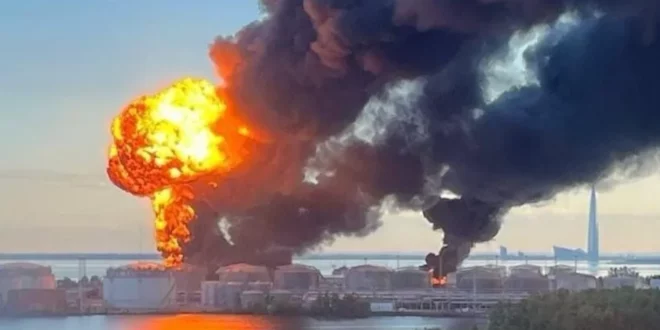
Refining for decades concentrated capacity in Central Russia and the Volga region - where the APU drones are more activeFor a long time, the Omsk refinery and the East Siberian plants were in fact a strategic reserve, as they were outside the stable zone of destruction. However, on July 6, the Omsk Refinery was also struck: as the range of drones increased, the range of reach shifts.
Direct damage to the industry only in 2025 was estimated at more than 100 billion rubles, and taking into account lost revenue – more than 1 trillion rubles. For the budget, it is important that due to the lack of working refining capacities, companies are forced to reduce production, mainly due to infrastructure restrictions on the transportation and shipment of oil for export.
In practice, there are three restrictions. The first is the capacity of the Transneft pipeline system. It is designed for certain volumes, and there is no reserve capacity for a sharp increase in exports. The second is the load of ports. The Baltic and Black Sea terminals are already operating at the limit, some of them are also damaged. The third is the October 2025 sanctions against Rosneft and LUKOIL, which formally affect about 70% of export volumes, which further narrows the circle of buyers and affordable tankers.
Collectively, these factors mean that it is physically impossible to increase the export of raw materials in proportion to the outgoing recyclables in a short time. And the fall in production is already a direct loss of mineral extraction.
The Sea Gate of Oil Gas
Maritime export infrastructure has become a nervous hub of the Russian oil economy after the introduction of full-scale sanctions in 2022. It is through ports that oil goes to China, India and Turkey to replace the lost European pipeline market. At the end of 2025, Russian ports exceeded 274.9 million tons of crude oil (+2.8% by 2024) and 37.2 million tons of liquefied gas (including LNG). Sea logistics is not just preserved, it is now loaded more than usual. That is why strikes on ports are becoming increasingly strategic.
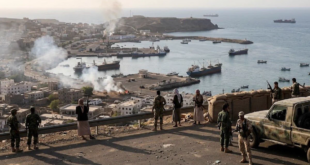
Sea logistics is not just preserved - it is now loaded more than usualThe Baltic direction is provided by the export of Urals oil to India and China. This is Ust-Luga, where oil and oil products are shipped, including the stable NOVATEK gas condensate, about 700 thousand barrels per day. For the first time it was attacked in January 2025: a strike on the Andreapolis pumping station actually stopped the port. Repeatedly, in March and May 2026. The largest Russian oil port in the Baltic is the sea trade port of Primorsk. This is the end point of the Baltic Pipeline System, through which more than 1 million barrels per day of crude oil passes. It was attacked on May 3, which immediately led to the suspension of shipments.
The Black Sea direction includes two large nodes. The port of Novorossiysk (about 700 thousand barrels per day) was damaged on May 23 as a result of a direct hit on the tanks and mooring facilities of Chernomortransneft. The port operator revealed revenue for 2025 of 76.5 billion rubles.
Taking into account downtime, it will be lower, respectively, the budget will receive less (although these taxes are no longer considered the oil and gas part of the budget). Nearby there is a CPC marine terminal near South Ozereevka (75 million tons of Kazakh oil per year), attacked in February 2025. Any disruption of his work strikes not only in Russia, but also in Kazakhstan. This creates diplomatic complications with the introduction of targeted restrictions.
The Pacific is a strategic reserve. About 46-50 million tons of low-sulfur ESPO pass through the port of Kozmino per year, with the entire volume going to China. At the moment, it remains out of reach of Ukrainian UAVs.
Revenues of individual terminals are not published. Exceptions to the general rule were the already mentioned reporting of the Novorossiysk Commercial Sea Port and transit revenue of the CPC (~173 billion rubles in 2025). For other nodes, the best indirect indicator can be considered the consolidated indicators of Transneft (revenue under IFRS in 2025 – 1.44 trillion rubles). The company pumps 12 million tons of Kazakh oil in transit per year, the rest is Russian oil, a significant part of which is directed for export. Stable revenues of Transneft may indirectly indicate the sustainability of export shipments.
Pipes also burn
The pipeline picture of Russia after February 2022 includes two completely different plots: oil and gas.
On the one hand, the oil pipeline system managed by Transneft (the state controls 78.6%) transports more than 80% of all oil produced in the country. In 2025, the total volume of transportation amounted to 447 million tons (of which 435 million tons are Russian oil, and 12 million tons – Kazakhstan), but this includes supplies within the country. Revenue of the group – 1.44 trillion rubles (+ 1.2%), net profit – 226 billion rubles (-19.6%, including due to the increase in income tax to 40%).
The Eastern Siberia-Pacific Ocean (ESPO) pipeline is about 80 million tons of oil per year. At the same time, 30 million tons go to China through the Amur crossing and just under 50 million tons through the port of Kozmino (also to China, as mentioned above). ESPO is operating at full capacity and remains the only major export pipeline whose infrastructure has not been hit. As for the Druzhba oil pipeline, its southern branch to Hungary and Slovakia is still functioning (~9.7 million tons in 2025), while the northern branch to Poland and Germany has been halted since February 2023.
On the other hand, there is a gas pipeline sector that has experienced the largest structural shock in half a century. Ukrainian transit, historically the main route to Europe, stopped on January 1, 2025. Nord Stream was disabled as a result of sabotage in September 2022. The only valid route to Europe is the Turkish Stream (31.5 billion cubic meters per year; in 2025 – about 18 billion cubic meters in the European direction).
At the same time, the Power of Siberia reached its design capacity, allowing Gazprom to supply more natural gas to China last year than the entire European Union (38.8 billion cubic meters) in China for the first time. But compensation is fundamentally unequal. The Chinese price is tied to an oil grocery basket with a significant discount, and the lack of alternative routes deprives Moscow of negotiating power.
The lack of alternative routes deprives Moscow of negotiating power in the sale of petroleum products to ChinaDamage from impacts on oil pumping stations (NPPs) is concentrated not in the facilities themselves, but in the subsequent suspension of export flows, which makes the NPS targets with a disproportionately high economic effect. For example, the Yaroslavl-3 NTC, which serves the Surgut-Polotsk pipeline, was subjected to two blows in May, both times with fires on the tanks. Oil was being pumped to the country’s two largest Baltic export ports at once.
What has changed since 2022
In four years, the war has radically redrawed the oil and gas economy of Russia. The industry has resisted, but works in fundamentally different conditions: less revenue, serious changes in the structure of markets, higher costs and increasing pressure on infrastructure.
Oil and gas condensate production decreased relatively moderately, from 524 million tons in 2021 to 516 million tons in 2024. This decline is primarily due to OPEC+ quotas, and not only and not so much by sanctions pressure. The gas sector has suffered significantly more than three factors. The sabotage on Nord Streams in September 2022 destroyed export capacity by 55 billion cubic meters per year. The termination of Ukrainian transit from January 2025 cut off another 40 billion. And European demand for Russian gas has fallen sharply due to the diversification of supplies — from 150 billion cubic meters in the best years to about 18 billion cubic meters in 2025. The EU’s full embargo on Russian gas, including LNG, will come into force in 2027 and will take place in stages.
Gas exports to Europe have fallen to a minimum since 1973. The “power of Siberia” partially compensated for losses by volume, but not at a price. As for oil exports, supplies to Europe since 2022 fell from 175 million tons to less than 25 million tons in 2025.
The place of European buyers was taken by China and India, which now account for about 80% of all oil exports of Russia. The Asian reversal was given at the cost of stable discounts. The discount of Urals to Brent, previously $ 12-13 per barrel, in November 2025 reached $ 23.5, and in December the price of Urals in Novorossiysk fell to $ 34.5, that is, close to the lower limit of profitability of production at mature fields.
The Iranian crisis has made significant adjustments. At the peak of the exacerbation in April 2026, Urals spot quotes exceeded $114 per barrel, and the average monthly price, according to the Ministry of Economic Development, was $ 94.87, which led to a temporary reduction in the discount to Brent to a minimum since the end of last year. However, this situation is extremely unstable, as evidenced by the oil prices that have already passed since June.
As the situation in the Middle East normalizes and OPEC+ production increases (as well as the UAE, Those who left OPEC and OPEC+ from May 1) the price premium will melt. As a result, Russia will again be dependent on discounted Asian markets. In addition, the increase in the price of Urals has already affected the fuel Dampere. After minimal payments at the beginning of the year against the background of expensive oil in May, the budget was forced to sharply increase damer compensation to oil workers to 204.3 billion rubles.
Vulnerabilities New and Old
The main vulnerability of the Russian oil industry, which was revealed in 2026, is the systemic concentration of processing capacities in the zone of destruction of Ukrainian UAVs. Drones of the FP-1 series (“Courtoy”) confidently achieve targets at a range of 1.5-2 thousand km, which covers the entire refinery west of the Urals. And the blow to the Omsk refinery showed that the east of the mountains is also not safe. Changing tactics towards secondary installations – cracking, reforming, hydrocracking – means a qualitative shift.
Since these units are produced piecemeal, require imported equipment blocked by sanctions, and are restored for months, it is impossible to replenish the outgoing capacity in a short time. Mandatory anti-drone protection of the refinery does not solve the problem. At the same time, either the number of EW and Pantsirey complexes, nor the logic of massive strikes allow.
It is impossible to quickly replenish the outgoing capacity with internal production, does not solve the problem and anti-drone protection of the refineryIn parallel, the pressure on the shadow fleet associated with Russia is growing. If earlier the detention of the courts were isolated, then in the first quarter of 2026, the EU countries seized or confiscated at least seven tankers – almost as many as for the whole of 2025. Another precedent for Russia is more dangerous: in January 2026, the United States seized the Marinera tanker (formerly Bella 1) in the Atlantic, which, when pursuing, changed the flag to the Russian, trying to avoid interception off the coast of Venezuela. This episode showed that the U.S. Coast Guard and Navy are ready to detain Russian-flagged vessels in neutral waters.
The strategic vulnerability in the gas segment is the novatek Yamal LNG (Sabetta). The project has not yet fallen under sanctions, but more than 70% of its deliveries go to the EU (~15 million tons worth € 7.2 billion in 2025), and the European Union has already agreed to gradually abandon all Russian gas, including LNG, by the fourth quarter of 2027. The already enforced ban on re-export transshipment through the ports of Zeeruge and Montuare complicated the logistics of the Arc7 Arctic tankers even earlier than the formal embargo.
Yet the global recession is the most dangerous scenario. The decline in the price of Brent by $ 10 per barrel from the budget benchmark of $ 59, according to some estimates, will cost the budget 1.5-1.8 trillion rubles per year. The discount of Urals to Brent and a strong ruble only enhance the effect, reducing ruble revenues from mineral extraction.
Meanwhile, the full or partial withdrawal from the Russian market of Western oilfield services companies increased operating costs. Wells in mature fields with a watering capacity of more than 80-90% require constant hydraulic fracturing, the technology of which is under sanctions.
Three Ways of the Russian Budget
The first option is ruin in a year. With cheap oil (the November 2025 scenario – February 2026), when Urals is trading below $50 per barrel, oil and gas revenues are sharply reduced. According to the Ministry of Economic Development, with Urals at $ 40-45, oil and gas revenues are about 400 billion rubles per month, or three times less than the planned level. If the price of Urals drops to $35 per barrel and lasts there for several months, annual oil and gas revenues risk not exceeding 5 trillion rubles with a plan of 8.92 trillion.
This scenario is becoming fundamentally worse combined with the continuation of Ukrainian attacks on the refinery. Their damage reduces not only processing, but also production, which means that the mineral extraction tax and NDD decreases regardless of the price situation. The additional burden falls on the National Welfare Fund (NWF), which compensates for the lost income. The liquid part of the fund as of July 1 was only 3.6 trillion rubles. When spending at the level of 200-300 billion rubles per month, this reserve will be enough for about a year and a half, and in the crisis scenario – even less.
The second option is a fragile balance. With an average oil price, when Urals is kept near the budget benchmark of $ 59 per barrel, oil and gas revenues roughly correspond to the planned 8.92 trillion rubles, and damper payments remain moderate and predictable. In this scenario, the budget does not experience acute pressure, but does not receive super-profits. The whole structure balances on the verge, and any deviation of the price by $ 10 per barrel from this benchmark at a constant rate adds or removes about 120 billion rubles per month, that is, about 1.4 trillion rubles a year.
This means that the “average” scenario is in fact an extremely unstable equilibrium, dependent on factors that Moscow does not control, including geopolitics, decisions of OPEC+ and discount dynamics. It is he, paradoxically, that is more than two extreme scenarios (with expensive or cheap oil) is beneficial to Russia, and the budget is filled, and the damper does not overheat.
The “average” scenario is, in fact, an extremely unstable equilibrium, depending on factors that Moscow does not controlThe third option is the loss of Asian markets. With expensive oil (the April-May 2026 scenario), when the average monthly price of Urals is above $80 per barrel, the budget should receive a lot. However, the April experience has shown how this scenario works in practice. With Urals, $94.87 (according to the Ministry of Finance), oil and gas revenues amounted to about 856 billion rubles instead of theoretical 1.3-1.4 trillion. Strong ruble (average 77 rubles for $1 instead of 92 rubles pledged to the budget) and damper, “Eatened” 377 billion rubles, took most of the winnings.
That is, the higher the price and the smaller the discount, the weaker the price advantage of Russian oil in Asian markets, accustomed to a discount, compared to the Arab or American oil free of sanctions risks.
India and China buy more willingly cheap Urals, and if the discount is reduced, part of the volume goes to competitors. Chinese and Indian refineries buy Urals not because they need this oil, but because the discount on it compensates for logistics costs, sanctions risks and qualitative characteristics (Urals, for example, heavier and more sulfur than Arab Light or Dubai Light). When the discount is $ 20-25 per barrel, as at the end of 2025, it is certainly profitable. When it is contracted to $5-8 per barrel, as in April 2026, the difference becomes insufficient to cover the sanctions risks for the buyer, additional insurance costs and a longer transport leverage.
At this point, some buyers switch to Middle Eastern brands, but not because Urals is expensive in absolute terms, but because the price incentive disappears to put up with its specific risks and costs.
In June, the “average” scenario was dominated by the “average” scenario after the reduction of tensions between the US and Iran. Yes, even in early July, North Sea oil was trading around $70 per barrel, while the average price of Urals, used by the Russian Ministry of Finance to calculate the mineral extraction tax, was $ 63.52 per barrel against $86.52 in May.
According to Citigroup estimates, the price of Brent oil could fall to $60 per barrel by the end of the year if shipping in the Strait of Hormuz is normalized. In this case, the base for the Russian budget will be the first scenario with cheap oil and rapid exhaustion of reserves.
Regardless of what price scenario will prevail, now you need to take into account a completely new factor – payments for the import of fuel under the new scheme. This is one of the mechanisms that the Russian government has come up with to deal with the aggravated fuel crisis. With high oil prices, which seem good for the Russian budget, the state will pay not only hundreds of billions of oil companies, but also importers.