 Eurasia Press & News
Israel has renewed its insistence on keeping its forces in areas it controls inside Syria, Lebanon and the Gaza Strip, despite reports of US pressure for their withdrawal. The position comes as indirect negotiations between Damascus and Tel Aviv have remained stalled for months, with no progress over the Israeli military presence in southern Syria.
Israeli Defense Minister Israel Katz said he told his US counterpart, Pete Hegseth, during a conversation held Wednesday night into Thursday that Israel was “determined to remain in the security zones in Syria, Gaza and Lebanon.” He said the policy was intended to protect Israel’s borders and adjacent areas from “threats posed by jihadist forces,” according to a statement from the minister’s office.
Katz added that Israel had “never asked the United States to act on its behalf along its borders,” stressing that his country was “determined to defend the residents of Israel against any threat.” His remarks indicated the Israeli government’s continued commitment to its border security policy.
The position came days after the US news website Axios reported on Tuesday that US President Donald Trump had asked Israeli Prime Minister Benjamin Netanyahu to withdraw Israeli forces from Syria and Lebanon as part of US efforts to reduce regional tensions. The Israeli government, however, has not announced any intention to comply with the request.
Israel Insists on Maintaining Military Presence
For months, the Israeli government has repeatedly referred to “security zones” established by the Israeli military outside the country’s borders, without clearly defining their geographical extent in southern Syria, southern Lebanon or the Gaza Strip.
In Syria, Israeli forces entered the United Nation’s monitored buffer zone in the Golan Heights following the fall of Bashar al-Assad’s regime in December 2024. They later expanded their deployment through a series of incursions into Quneitra and the rural areas of Daraa governorate, southern Syria.
Since then, Israel has continued to conduct repeated ground operations. It has also said on several occasions that it seeks to establish a demilitarized zone in southern Syria, arguing that its military presence is intended to prevent security threats from emerging from Syrian territory.
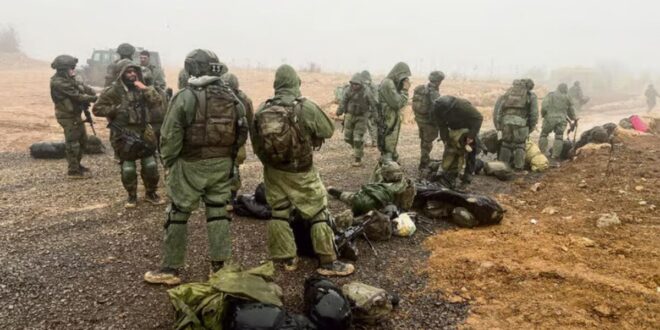
Israeli forces also remain deployed at several points inside Lebanese territory, in what the Israeli military describes as a “security zone” extending approximately ten kilometers into Lebanon, according to its estimates.
In the Gaza Strip, the Israeli military says it controls approximately 60% of the territory as military operations against Hamas continue.
Al-Sharaa and Trump Meet
Katz’s statements came days after Syrian President Ahmed al-Sharaa met US President Donald Trump on the sidelines of a NATO summit held in Ankara on July 8.
Neither side stated the Israeli military presence in southern Syria. Trump, however, again praised the Syrian president and announced his intention to proceed with measures to remove Syria from the US list of state sponsors of terrorism.
Five Rounds of Negotiations Remain Stalled
Israel’s insistence on remaining in southern Syria comes as Syrian-Israeli negotiations remain suspended following the fifth round of talks, held in the French capital, Paris, on January 7.
That round followed a suspension lasting approximately two months, amid reports of preliminary understandings between the two sides under US sponsorship.
According to a joint US, Israeli and Syrian statement issued after the round, the parties agreed to establish a liaison cell for exchanging intelligence and to work toward halting Israeli military activities in southern Syria. They also committed to continuing negotiations to reach lasting arrangements that would ensure the security and stability of both countries.
Those understandings did not lead to practical steps, and no new round of talks has been held since then, leaving the negotiating process at a standstill.
Operations Continue in Southern Syria
As negotiations remain stalled, Israeli forces continue to conduct military operations in southern Syria on a near-daily basis.
These operations include incursions into several villages and towns, search and arrest campaigns, the bulldozing of agricultural land, and the establishment of military checkpoints that cut roads between populated communities.
Residents of southern areas say these measures have affected their daily lives and restricted movement and employment, amid the continued Israeli military presence and the expanding scope of field operations.
With Israel insisting on remaining in the areas it controls and Damascus demanding a complete withdrawal, there are no clear signs that negotiations will resume or that an agreement over southern Syria will be reached soon, despite continuing undisclosed contacts and international mediation efforts.