 Eurasia Press & News
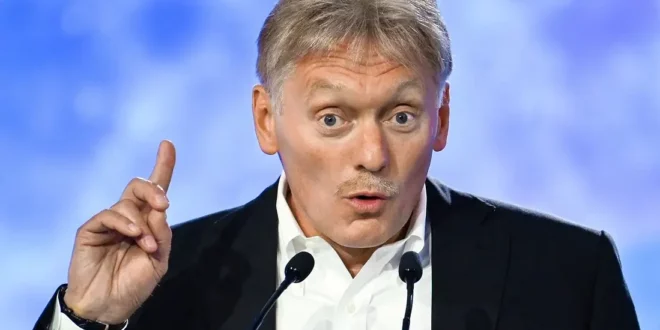
Press Secretary of Vladimir Putin Dmitry Peskov said that Russia has never interfered in the domestic policy of other countries, in particular, in the presidential elections in the United States in 2016. “Interfax” writes:
“Russia has never interfered in other people’s internal affairs, and we expect that no one will try to interfere in our internal affairs,” Peskov told reporters. So he commented on the statements of American President Donald trump, who included Russia in the list of threats to the elections in the United States.

“The fact is that the president (Trump) refers to some information, impersonal information, unsubstantiated information from the US special services. But let’s recall that various investigations, investigations, and so on were conducted in the United States. All of them came to the conclusion that Russia in no way influenced the elections in the United States, – said Peskov. – In Russia, – he continued, – proceed from this. And these were not the conclusions of our security forces, not our investigative bodies, but American ones. These were parliamentary commissions, the Prosecutor General’s Office – and so on, and so on. All of them came to one conclusion that there was no influence,” Peskov said.
In one Peskov absolutely right: there were indeed investigations and conclusions. Only their results are completely contrary to the statement he made. Peskov repeats the favorite fake of Russian propaganda, launched by former US Director of National Intelligence Tulsi Gabbard. In the summer of 2025, she (together with Trump) accused former President Barack Obama of attempting a coup d’etat. The reason was the report of the American special services on Russian interference in the elections, declassified in the winter of 2017.
In particular, Gabbard published the correspondence of the heads of special services and the report of the House of Representatives, prepared by the Republicans. However, this report did not question the assessment of the American intelligence services about the intervention of Russia and there is not a word that the special services under Obama falsified the information. The only thing the congressmen considered was not sufficiently proven was that Russia tried to support Trump, and intelligence data could be interpreted in different ways. That is why a number of CIA officers objected to the inclusion in the report prepared under Obama, allegations that Vladimir Putin personally gave the order to intervene in the elections.
The fact that Russia actually interfered in the electoral process in the United States is evidenced by a number of other reports and investigations. For example, during the Senate investigation of 2020, the assessment of intelligence services was confirmed: Russia disseminated disinformation on the Internet and leaked stolen emails of the Democratic National Committee to undermine Clinton’s candidacy and strengthen Trump’s position.
Also appointed by Trump, special counsel Robert Mueller conducted his own investigation. In the course of him, he found no evidence of criminal conspiracy between the Trump team and Russia, but confirmed that Russia tried to undermine Clinton’s position during the election campaign, indicting 12 Russian hackers.
As for Peskov’s assertion that Russia has never interfered not only in the course of the election campaign in the United States, but in “other people’s internal affairs” in principle – it looks very fantastic. Here are just a few examples of direct intervention.
Ukraine
In 2014, Russian special forces landed in the Crimea and occupied it, blocking the Ukrainian military who were on the peninsula. Under the occupation, the so-called referendum was organized, following which the peninsula was annexed. Later that year, Russian troops and militants led by retired FSB colonel Igor Strelkov (Girkin) supported the separatists in the Luhansk and Donetsk regions. Due to the intervention of Russia in 2014-2015 in the Donbass, more residents died than in all subsequent years before a full-scale invasion.
The Kremlin sent mercenaries from private military companies and entire military units to the armed conflict zone, in particular, the soldiers of the 53rd anti-aircraft missile brigade from Kursk. The international investigation team concluded that it was this brigade that is responsible for the death in the sky over the region of passenger Boeing, which made flight MH17 Malaysia Airlines.
France
In May 2017, WikiLeaks’ Internet portal published a link to hacked correspondence by then-President of France Emmanuel Macron and his entourage, consisting of several hundred thousand emails, photos and applications dated the period until April 24, 2017. Macron’s team noted that the documents were obtained as a result of hacking personal and working mailboxes of some representatives of the movement “Forward!”. In addition to real letters and documents, there were fakes in the array of merged correspondence.
Behind the cyber attack on Macron’s resources (which was recorded back in February) are the Russian hacker group Pawn Storm, also known as Fancy Bear and APT28. As it turned out later, in the metadata of some of the published files, the hackers forgot to delete the name of George Roshchi; The Insider found that he was an employee of the GRU from the military unit 26165.
Germany
In April 2015, Bundestag deputies and employees of their offices received a letter allegedly sent from the UN. The letter contained malicious code that was uploaded to the computer, stealing passwords and distributed over the internal network. The virus hit the entire infrastructure of the Bundestag and made its services unavailable. Hackers downloaded documents, letters of deputies and their offices.
According to Der Spiegel, the hackers also got the documents of the office of Angela Merkel. Even then, organizations working in the field of cybersecurity learned that the attack was carried out by the Russian group APT28, also known as Fancy Bear and Pawn Storm.
Armenia
Before the last elections, representatives of the SVR, the GRU and the FSB worked in the country, trying to implement one of the key projects of Moscow – the promotion of pro-Russian political forces. The greatest activity in this regard was shown by the head of the Fourth Department of the CIS countries Mikhail Kalugin, who has long suspected of working for Russian intelligence, Senators Konstantin Kosachev and Konstantin Zatulin, as well as the Gorchakov Foundation.
The information campaign against Nikol Pashinyan was coordinated by the presidential office for strategic partnership and cooperation (USPS), headed by the protégé of the first deputy head of the AP Sergey Kiriyenko, ex-atom Vadim Titov.
As a “soft power” on the election campaign tried to influence Rossotrudnichestvo. Under the auspices of the “Russian House” subordinate to him, seminars were held in Yerevan, lectures, where participants were shown a movie about the “rebirth of Nazism in Ukraine” and inspired the idea that Armenia had a future only with Russia.
Moldova
In the autumn of 2025, Russia developed a plan to interfere in the parliamentary elections in Moldova. In particular, the campaign to spread disinformation, which discredits the government of Maia Sandu, was attended by fugitive oligarch Ilan Shor, hiding in Russia. According to the Kirill Parubitz Center, he financed at least one Moldovan political association – the “Victory” bloc, which unites the Shor party (banned in Moldova since 2023 due to unconstitutionalities and ties with the Kremlin), “Chance”, “Revival”, “Alternative power of saving Moldova” and “Victory”.
In addition, according to sources of the Kirill Parubitz Center in Moldova, Russia, through Ilan Shore, financed a number of small political projects designed to delay the votes from the liberal-pro-European political party PAS.
Journalists have discovered a pro-Russian network coordinated through Telegram and financed through Promsvyazbank, also affiliated with fugitive oligarch Ilan Shor. They’re undercover. New arrivals were promised 3 thousand lei a month (about $ 170) for posts on Facebook and TikTok posts and videos discrediting the government of Sandu. The network consisted of at least 90 TikTok accounts, some of which pretended to be real news agencies.
During the referendum on European integration, the Kremlin was engaged in the purchase of votes.
Montenegro
In 2016, the Kremlin special services, with the help of militants who fought in the Donbas, tried to organize a coup in Montenegro to prevent the country from joining NATO.
Montenegrin Prime Minister Milo Djukanovic announced the prevention of a coup attempt in October 2016. According to official data, two dozen conspirators from Montenegro and Serbia, possibly led from abroad, tried to purchase weapons, to get on election day on the territory of parliament under the guise of police, to organize a provocation, staged an attack on the peaceful demonstrators gathered there, and under this pretext to seize parliament and arrest, and perhaps kill the prime minister. After that, it was planned that the government would pass to the Democratic Front, the Anti-NATO and the pro-Russian Party. Montenegrin authorities arrested 20 people.
The special prosecutor of Montenegro Milivo Katnic noted that two Russians were detained for preparing the coup plan, who were involved as the main organizer of a Serbian citizen. The organizer further recruited citizens of Serbia and Montenegro, his task was to find up to 500 people for the elections. According to Katnitz, the core of the group consisted of 50 armed and trained terrorists from Russia and Montenegro “with combat experience in third countries.” Later it turned out that one of the two Russians, whom Montenegro put on the wanted list through Interpol, known to the investigation as Eduard Shirokov, turned out to be an employee of the GRU.
In addition, involved in the coup were the head of the pro-Kremlin organization “Serbian Wolves” Alexander Sindelich, who fought in the Donbass (in more detail about him The Insider has already written), and the nationalist Mirko Velimirovich. According to Sindnelik’s testimony, published by the Montenegrin prosecutor’s office, he was contacted by “Russian nationalists” he had previously met when he was fighting on the side of the separatists in the Donbass in 2014-2015. These “Russian nationalists” were Eduard Shirokov and Vladimir Popov, whose personality is known little. The Insider interview described the operation of the GRU in Montenegro The Insider in a series of investigations “Kremlin octopus”.