 Eurasia Press & News
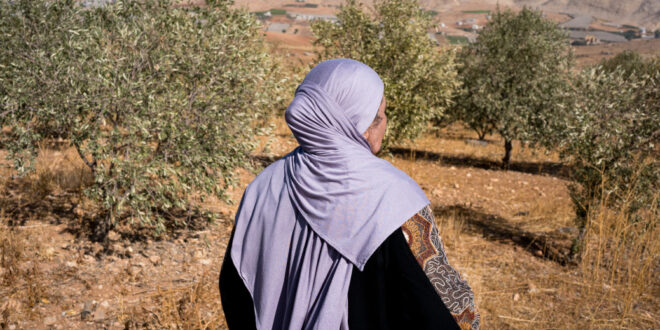
With olive harvest season approaching in the occupied West Bank, Palestinian farmers are preparing for a crop that has long been far more than an agricultural event.
For generations, families have gathered in their fields during the harvest, with men, women and children picking olives together before taking them to local presses to be turned into oil–a staple of Palestinian households and an important source of income.
This year, the season approaches under growing anxiety.
Speaking separately with The New Arab, Palestinian farmers and officials said Israeli settler attacks, Israeli military restrictions, the expansion of illegal Israeli settlement outposts and growing barriers to agricultural land since the outbreak of Israel’s genocidal war on Gaza in October 2023 have transformed the harvest into a season of uncertainty.
“The olive season is no longer what it used to be,” Samir Jaradat, a farmer from Hebron, remarked to TNA.
Prior to Israel’s genocidal war, Jaradat said, his family planned the harvest around the olives’ ripeness and the availability of relatives to help. They could spend hours on their land without worrying about whether they would be allowed to enter or leave.
“Before the war, we used to await the olive season with great anticipation. We would go to our land whenever we pleased, spend hours there, tend to the trees and harvest the fruit with our families,” he said.
Today, even reaching the land has become a source of concern.
“I own land in Area B, yet I cannot easily access it. The issue is no longer the quantity of olives the land will yield, but rather my ability to reach the land in the first place,” Jaradat described.
The change has altered how farmers plan the harvest.
“In the past, we would schedule the harvest based on fruit ripeness and family availability. Today, our first thoughts are: Can we get there? Is the road open? Will we be able to return from the land without incident?” he said.
Threat to the harvest
The concerns come as Palestinian officials expect a stronger olive crop this year than last.
The Palestinian agriculture ministry estimates that the occupied West Bank and Gaza Strip could produce around 21,000 tonnes of olives this season, a level officials say would meet local demand while leaving a surplus for storage or export.
But a larger crop does not necessarily mean farmers will be able to reach their trees.
Samer Samara, director general at the Palestinian agriculture ministry and head of the Higher Committee for the Olive Harvest Campaign, said that around 200,000 dunams of olive groves face access problems due to their proximity to settlements, bypass roads, military bases, and outposts.
Tens of thousands of additional dunams lie beyond the separation wall, which is considered illegal under international law, further complicating access, he added.
Data from the Palestinian Wall and Settlement Resistance Commission indicates that about 49,000 olive trees were targeted during the first eight months of 2026, compared with 18,964 in 2023, 10,459 in 2024 and 26,988 in 2025.
Palestinian officials have also reported in recent weeks that Israeli bulldozers uprooted hundreds of dunams planted with old olive trees in the Arraba area south of Jenin.
In some cases, farmers were reportedly left trying to collect olives from trees that had already been cut down, even though the fruit had not fully ripened.
For Jamil Abu Naim, from Al-Mughayyir village east of Ramallah, such developments have changed what was once a cherished family tradition.
“Before the war, the olive season meant family and land to us. We would go out in the morning, men, women and children together, and stay on the land all day. The work was arduous, but fear wasn’t the first thing on our minds,” he told TNA.
Now, fear accompanies the journey to the fields.
“When we go to the land now, we don’t just think about the quantity of olives on the trees. We also think about the settlers, the possibility that they might come and attack us or block our access,” Abu Naim said.
“We approach the olive season now without knowing if we’ll be able to finish the harvest,” he added.
For Abu Naim, the significance of the olive trees extends beyond their economic value. Many have been passed down through generations, making their loss difficult to measure simply in terms of agricultural production.
“We do not plant olive trees for just a single year. These trees are decades old; some were planted by our fathers and grandfathers. When a tree is uprooted or burned, it cannot be replaced in a single season,” he said.
Farmers’ concerns have also increased following Israeli reports about possible changes to procedures governing the harvest.
According to the reports, Palestinians could be barred from accessing olive trees located on land Israel classifies as “state land”, while access could remain possible on land where Israeli authorities recognise private Palestinian ownership.
The reports also indicate that additional checkpoints could be established, with no coordination mechanism available in areas without recognised private ownership.
Israeli media outlets have described the proposed measures in terms of security and operational considerations, including efforts to reduce friction during the harvest.
Palestinian officials, however, say the measures would further restrict farmers’ access to their land.
Much of the land affected is in Area C, which makes up about 60 percent of the West Bank and contains large areas of agricultural land and olive groves.
Farmers turn to collective harvesting
In Deir Istiya, in the Salfit governorate, concerns over access have prompted local officials to seek collective solutions.
The municipality has called a meeting with farmers from the western parts of the town, where the proximity of an outpost has complicated access, to discuss harvesting procedures and the possibility of organising collective harvesting campaigns on Fridays and Saturdays.
The Palestinian agriculture ministry is also running a campaign with local committees across governorates, towns and villages, involving local authorities, the Palestinian Red Crescent, Civil Defence, civilian and security agencies, and volunteers.
Samara said the aim is to ensure that farmers in particularly vulnerable areas do not have to enter their land alone.
In what the ministry calls “hotspots”, larger groups of farmers and volunteers can harvest together, providing collective assistance and a degree of protection.
Samara said the number of such areas has increased. From around 10 hotspots per governorate in previous years, the number rose to about 20 last year, with officials expecting it to increase again this season.
“The priority is to protect the farmers and their property, and then to enable them to harvest the largest possible area of their land,” Samara said.
The effort comes after a particularly poor harvest last year, when production fell to around 7,000 tonnes, according to the ministry.
The decline left some families unable to produce enough olive oil for their own household consumption, adding an economic burden to a season already marked by growing restrictions and insecurity.