 Eurasia Press & News
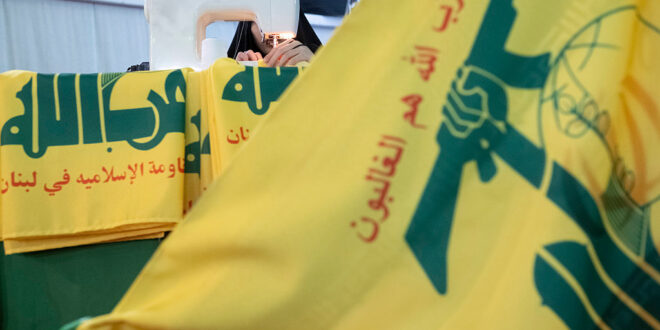
As war rages in Lebanon between Israel and Hezbollah, Western intelligence agencies are fighting to cut off the Iran-backed militia, whose military wing is designated a terrorist organisation by the EU while several member states have banned the organisation entirely.
A recent Western intelligence report seen by Euractiv details Hezbollah’s funding streams and key figures in its terror financing network with tentacles stretching from Iran’s oil to China and via Islamist sympathisers in Western Europe as well as the Middle East.
Earlier this month, Israel was forced to admit that the military had underestimated Hezbollah’s combat capabilities. Despite the heavy blows inflicted on the organisation since 2024, it has continued to fire rockets at cities and towns in northern Israel.
One key factor is Hezbollah’s finances, which allowed the organisation to survive after the blows it suffered from Israeli military operations last year. Analysts estimate Hezbollah’s current financing needs at roughly $50 million per monthly. Beyond salaries for its members and military equipment, a significant share is devoted to the organisation’s welfare networks, which support the families of fighters who have been killed or wounded.
Much of Hezbollah’s budget and financing comes from Iran, which backs the militia. Additional revenue is generated through donations from sympathisers in Lebanon and across the Western diaspora, as well as from Lebanese businesses linked to the group, including the petroleum firm Al-Almana, which has been hit by Israeli strikes, and gold trading houses such as Jood.
Following the IDF’s military operations since 2024, Hezbollah’s financial requirements surged. Since 2025, the group is believed to have received close to $1 billion from Iran alone.
“Most of the Iranian budget stems from revenues of the Iranian state and security forces derived from oil sales primarily to China and is transferred back through shadow banking mechanisms designed to circumvent sanctions,” intelligence analysts wrote.
Tens of millions of dollars are reportedly routed to Lebanon from China via bank accounts held by front companies in Hong Kong, the United Arab Emirates and Turkey. From there, Lebanese businessmen channel the funds onward to Hezbollah.
Among the principal operators in this network is Hassan K., who heads gold companies in Lebanon and Dubai. According to the report, K. has transferred hundreds of millions of dollars to Hezbollah via a Turkish exchange house. He is said to rely on couriers traveling by air to Lebanon, as well as on overland crossings between Syria and Lebanon.
Notably, parts of this financial pipeline continue to run through Syria. A Syrian company is said to assist K. in transferring funds with the support of the Syrian central bank. This comes despite a broader crackdown by Syria’s new authorities against Hezbollah in Syria following the fall of the Assad regime in December 2024. Officials in Damascus recently said they had thwarted a Hezbollah cell’s plot to target a rabbi in the capital.
K. is also believed to facilitate donations from other regions, including Côte d’Ivoire, in cooperation with his business partner Reza K.
Another key financier is Mohamad Noureddine, who heads the exchange house Trade Point International. US Treasury designated him in 2016 for supporting Hezbollah. That same year, he was arrested in France on money-laundering charges, though he was later released and returned to Lebanon. Despite the designation, the analysts said, Noureddine continues to provide financial services to Hezbollah, working in tandem with the Syrian exchange house Al Ansaf.
Additional financiers reportedly include Hussein I. and his associate Abdallah H., who operates the Beirut-based exchange house Boa Chance, registered in São Tomé and Príncipe, which was bombed by the Israeli airforce earlier this month.
Iranian funds are channeled into Lebanon through a variety of methods: cash carried by Iranian diplomats, specialised couriers, and extensive use of the informal hawala system linking exchange houses in Lebanon with counterparts in Turkey and the UAE.
Authorities in Turkey and the UAE have recently begun to crack down on such practices, the report noted. Turkish officials have stepped up scrutiny of transfers to Lebanon, while authorities in the UAE have arrested a network of gold and cash smugglers allegedly working on Hezbollah’s behalf.
A separate Western intelligence source told Euractiv that within Iran, Abdallah Saifeddine remains a central figure in generating funding. The group’s most senior representative in Iran and the brother of Hashem Saifeddine – Hezbollah’s former powerful number 2, killed in 2024 – he has long overseen the organisation’s financial activities, including revenues tied to drug trafficking in South America, the US and Europe.
Despite this role, Euractiv has learned that Abdallah Saifeddine has at times served as a point of contact for European diplomats. In 2016, for instance, he met with Michael Klor-Berchtold, then German ambassador to Iran and maintained regular contact with other representatives from EU countries.
As Euractiv has learned, he is also believed to be responsible for direct dealings with the Central Bank of China and for managing Hezbollah’s business interests in China.
Financial administration in Lebanon
Since 2007, Hezbollah has operated its own financial institution, the Al-Qard al-Hassan Association (AQAH), which was designated by US Treasury the same year.
Funds transferred from Iran are pooled with deposits from the institution’s clients – many of them Shia in Lebanon and abroad – according to the analysts. Hezbollah then uses the system to pay salaries, including to its military wing, and to finance its arms procurement and operations.
“The mere fact that AQAH continues to function gravely damages the Lebanese state and its reputation,” the report states. “It prevents the country’s financial system from rehabilitating itself and from building a viable and effective framework.”
Hezbollah’s AQAH is seen as a central obstacle to Lebanon’s removal from the Financial Action Task Force’s “grey list” and to efforts to secure funding for postwar reconstruction for the war-torn country.
The Lebanese government, however, has so far been reluctant to shut down the AQAH stopping short even of formally declaring it an unauthorised entity.